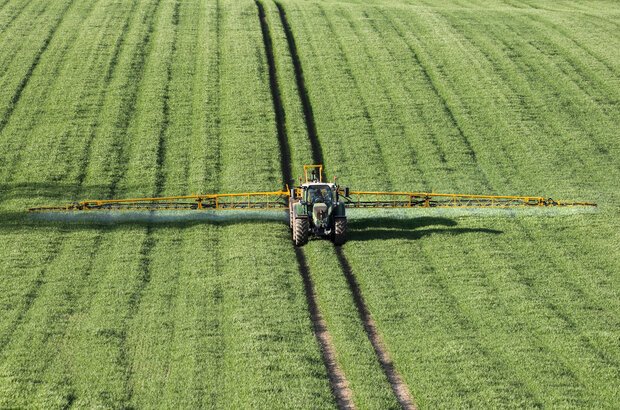
Last month, we asked farmers and land managers to share their experiences of rising fertiliser costs and how they are affecting on -farm decisions.
Many respondents said rising and unpredictable prices have led them to buy and apply less fertiliser.
Some farmers also told us they are planning to change how they use fertiliser in future, including using alternatives or changing cropping plans.
Alongside feedback from across the industry, the responses will help inform our work.
Global events are still affecting fertiliser and energy prices.
Recent data shows prices for some fertilisers have risen by more than 40%, although they have stabilised over the past two weeks as demand has slowed.
This reflects global market conditions rather than supply problems in the UK.
Although supply remains stable, we know higher prices and market volatility are making it harder for you to plan and manage budgets.
We want to support you to use nutrients more efficiently, reduce reliance on artificial fertilisers and improve resilience to global shocks. This can also improve soil health, soil structure and water quality.
In this post, we’ll share tools and tips to help you plan nutrient use with more confidence for the season ahead.
Tools and guidance
Milling wheat application guidance
At this time of year, milling wheat growers are likely to be applying their final fertiliser applications to help improve grain protein content.
AHDB has guidance to help milling wheat growers decide how much nitrogen to apply based on weather, crop analysis, previous results, and fertiliser and grain prices.
According to RB209, decisions about applying extra nitrogen should:
- follow RB209 recommendations to achieve the target yield and provide adequate levels of all nutrients
- estimate the premium needed to meet the protein specification to help determine break-even ratios
- consider the farm’s previous success in meeting grain quality specifications, not just protein
- estimate how much previously applied nitrogen the crop is likely to have taken up, particularly after a dry spring
AHDB’s nitrogen adjustment calculator for arable

AHDB’s Nitrogen fertiliser adjustment calculator can help you work out the most economical nitrogen rate for cereals and oilseeds.
The calculator shows how changes in fertiliser and grain prices can affect the most economical nitrogen rate for your crop.
Based on RB209 guidance, the tool allows you to enter information such as fertiliser price, grain price, crop type and typical nitrogen rate.
It then estimates:
- adjustments to nitrogen application rates (kg/ha)
- the break-even ratio, showing how much yield is needed to justify each unit of nitrogen
- the likely impact on yield and income
- potential fertiliser cost savings
- total fertiliser requirements across your cropped area
You can test different scenarios and better understand the financial impact of nutrient decisions.
When fertiliser prices are high, the calculator may suggest reducing nitrogen rates to avoid applying more than is economically justified.
AHDB’s nitrogen adjustment calculator for grassland
AHDB’s cost benefit calculator for nitrogen fertiliser use on grassland can help you decide whether it’s more cost effective to apply fertiliser or buy feed.
The tool calculates the:
- cost of nitrogen fertiliser and application (£/kg)
- grass feed value (£/kg dry matter)
- benefit-cost ratio
- cost-benefit result
The results can help inform decision-making. The tool is intended as a guide, so you may still need to make adjustments to suit local conditions and your specific circumstances.
Defra’s Nutrient Management Planning Tool
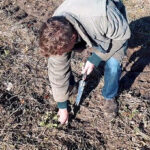
Defra’s Nutrient Management Planning Tool is designed to help make nutrient planning simpler and more effective.
It uses information from your farm, including soil analysis, cropping and expected yields, alongside RB209 guidance to provide tailored recommendations for fertiliser, manure and lime applications.
By matching nutrient applications to crop and soil need, the tool can help you make the best use of inputs, improve efficiency and avoid unnecessary applications.
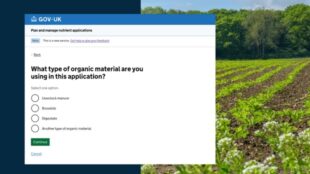
You can also use the tool to build and update a nutrient management plan throughout the season, while keeping digital records of applications and soil data in one place.
The tool can also help with compliance by producing reports that assess compliance against ‘Nitrate Vulnerable Zone’ rules, helping you meet regulatory requirements while protecting the environment.
The Crop Nutrient Management Guide (RB209)
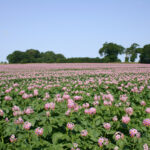
AHDB's Crop Nutrient Management Guide (RB209) remains the foundation for nutrient planning.
RB209 provides independent, science-based guidance to help you match nutrient applications to crop need, soil supply and field conditions.
Using RB209 can help you:
- apply nutrients at the right rates for each crop
- take account of nutrients already available in the soil
- support yields while reducing waste and losses
Used together, RB209 guidance and the nitrogen adjustment calculator can help you take a more informed and practical approach to nutrient management.
Tips
Planning ahead is important every year, but especially this year.
If you are planning to buy fertiliser for next year, consider ordering some of your requirements earlier. This can help spread risk, improve planning and lock in prices.
Although fertiliser is produced year-round, most on-farm use takes place within a relatively short period. Buying regularly throughout the year can help smooth demand across the supply chain and improve availability when you need it most.
The conflict in the Middle East has caused significant disruption to global supply chains and production volumes, and markets may take time to stabilise.
Focus on efficient use, not just input levels
When fertiliser prices rise, it’s natural to look at reducing inputs. But the aim is not simply to apply less fertiliser. It’s to make the best use of the nutrients you apply.
Nitrogen plays an important role in crop growth, yield and quality. But as costs change, the most economic application rate may change too.
Put simply, applying more fertiliser does not always lead to higher profits.
Growers should focus on increasing efficiency wherever possible and economical to do so.
This includes following the 4Rs of nutrient stewardship:
- Right time
- Right place
- Right rate
- Right source
It also means ensuring you match the fertiliser requirement to the crop need for all nutrient inputs and using available tools and qualified advice to help monitor, check and adjust your nutrient management plans.
Make planning part of your wider resilience approach
Maintaining a reliable supply of fertiliser is important for UK farming.
While the UK imports 60% of its inorganic and mineral fertilisers, these provide around half of the nitrogen used to grow crops nationally. Organic materials such as manures and slurries provide the other half.
You could consider:
- reviewing soil analysis and organic matter levels to improve nutrient availability
- making the best use of manures and other organic nutrient sources
- timing applications carefully to improve nutrient uptake
- keeping up to date with fertiliser market information
To help with this, AHDB is now publishing fertiliser price data more frequently to support better decision-making.
Explore the Sustainable Farming Incentive (SFI)
The new SFI26 offer contains several actions which encourage the reduced use of inorganic fertilisers in favour of more sustainable and environmentally friendly options.
The offer includes actions which can help build soil fertility and increase nutrient availability in future crops, as well as improve nutrient efficiency and availability in current crops. For example:
- PRF1 - Variable rate application of nutrients. Using precision farming equipment to apply all major nutrients reduces the over application of nutrients
- CIPM3 - Companion cropping. Planting companion crops with a main arable or horticultural crop can better manage nutrient efficiency
- CNUM2 – Legumes on improved grassland. Legumes on improved grassland help manage nutrient efficiency without the use of inorganic fertilisers
- CSAM3 – Herbal leys. Planting a mixture of grasses, legumes and herbs or wildflowers produces a high volume of forage with minimal use of inorganic fertiliser
- CNUM3 – Legume fallow. Help to manage nutrient efficiency and improve soil health without the use of inorganic fertilisers
- CSAM2 – Multispecies winter cover crops. A non-cash crop grown primarily to improve soil health and fertility and help prevent soil erosion.
- SOH3 – Multispecies summer-sown cover crop. This will improve soil health, manage weeds and build soil fertility in subsequent crops
The first SFI window (‘Window 1’) will open for applications in June 2026 for 2 groups:
- small farms
- farms without an existing Environmental Land Management (ELM) revenue agreement
The second window will open in September 2026 for all farmers and land managers.
Other funding opportunities
New opportunities in nature markets could help you develop additional revenue streams alongside food production.
For instance, our Nature Investment Standards can help you diversify your income where you can demonstrate a measurable reduction in nutrient leaching in line with the BSI Flex 704 standard.
Investment is also available through participation in private sector schemes. For example, the Soil Association’s Exchange Market or Landscape Enterprise Networks which support farmers to adopt regenerative agriculture practices, including reducing fertiliser use.
Companies are increasingly working with and investing in their farm supply chains to reduce carbon emissions and impacts on nature, with fertiliser reduction often playing an important role.
We are exploring ways to encourage further supply chain investment.
Our work
We continue to work closely with fertiliser suppliers, commodity traders and farming organisations to monitor fertiliser supply and market conditions.
We are also gathering information from across the sector to support contingency planning and identify emerging pressures.
There is still time to respond to the consultation and call for evidence on reforming fertiliser legislation, which is open until 11:59pm on 10 June 2026.