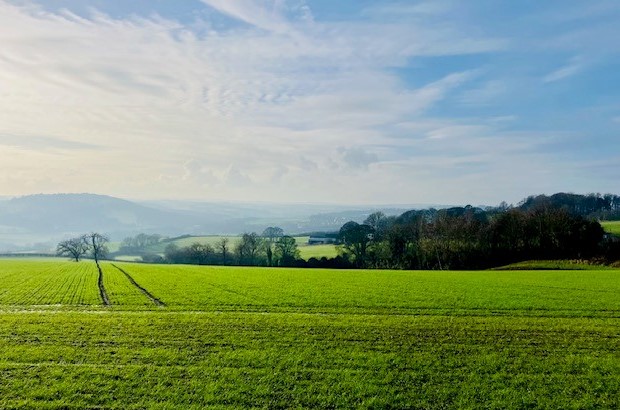
In this post, we explain what to expect from the Sustainable Farming Incentive (SFI) offer in 2026.
We also share the list of the 71 actions available in the new offer, with payment rates.
What to expect from SFI26
The overall ambition for SFI remains the same: to support farmers to manage their land in ways that deliver environmental benefits as they produce food.
We’ve worked closely with stakeholders to shape the policy design of this year’s offer.
Last year, we held workshops and forums with over 30 stakeholder organisations to discuss policy issues and the overall design principles for SFI. We used the insight from these discussions to develop options and proposals for the 2026 offer.
In early 2026, we ran another series of workshops and forums to test those options and talk through the considerations in more detail. We then used stakeholders’ feedback to refine and strengthen the policy detail within the scheme.
The SFI26 offer will be simpler, with fewer actions and less complexity while still having plenty of actions available for all farm types, so you can pick the actions that best fit your farm.
The new offer includes 71 actions, down from 102 in the SFI24 offer. In practice, this means 31 actions have been removed (around one‑third of the previous offer).
We have focused on removing actions with low uptake or those that delivered less for food production, the environment, or our wider environmental targets.
Fairness and access will improve. By reducing some payment rates, introducing an area cap for the enhanced overwinter stubble action, and applying a new annual agreement cap of £100,000, we can ensure that more farms are able to participate and benefit. These changes will also help us meet the Environmental Improvement Plan goal of doubling the number of farms delivering for wildlife.
The list of actions is at the end of this post, and we will publish the full scheme guidance and the budget for the first window before it opens.
We will provide clear updates as funding is committed in each window.
The core design of SFI will provide a stable framework for the rest of this Parliament, though we expect to make refinements and improvements where we can.
Scheme updates
Application windows and eligibility
To be eligible for SFI26 (for both Windows 1 and 2) farmers should have at least 3 hectares (ha) of agricultural land.
We set this threshold following discussions with the sector and to reflect the recommendation made by Baroness Batters in her recent Farming Profitability Review.
Window 1
Window 1 will open in June 2026 and will remain open for around 2 months – although it may close sooner if demand is high and the Window 1 budget is fully allocated.
It will be open to 2 groups:
- small farms
- farms without an existing environmental land management (ELM) revenue agreement.
Definitions
Small farm: a farm with up to 50 hectares (ha) of agricultural land.
Farm without an existing ELM revenue agreement: a farm that does not have an RPA-administered ELM revenue agreement. This includes farms with revenue agreements under previous versions of SFI, Countryside Stewardship Mid Tier (CSMT), old and new versions of Countryside Stewardship Higher Tier (CSHT), and Higher Level Stewardship (HLS). It does not include non-RPA schemes, such as private sector schemes or Landscape Recovery.
Window 2
Window 2 will open in September 2026 for all farms.
We cannot set a fixed end-date at this point, because this will depend on how many farmers apply.
The following rules apply to both Windows 1 and 2
Business registration: Farm businesses need to be registered with the Rural Payments Agency (RPA), so they have a Single Business Identifier (SBI). This is a unique reference number that identifies the business.
For Window 1, eligible farm businesses need to have been registered with the RPA by 1 January 2026. Using this date allows us to identify eligible applicants before Window 1 opens.
For Window 2, farm businesses need to be registered with the RPA and have an SBI by the point they want to apply.
Minimum 3-hectare threshold: Farm businesses should have at least 3 hectares (ha) of agricultural land.
This means that, at the point of application, the land needs to be already:
- registered with the RPA with the relevant agricultural land covers (arable land, permanent grassland or permanent crops)
- linked to the farm business’s SBI
This minimum 3ha threshold does not mean you have to enter at least 3ha into your SFI26 application. You could apply on less than 3ha.
Limits
For SFI26 agreements, caps will be placed on:
- How much an agreement can be worth. This is so funding can be shared across more farms. This will be a single cap under which no SFI26 agreement can be worth more than £100,000 per year.
- How many agreements a farm business can have. Each farm business can have only one SFI26 agreement. This rule, together with the agreement value cap, will help ensure that we can afford to offer agreements to more farmers.
- Rotational actions. Agreement holders will not be able to increase the area or value of rotational actions beyond what they included in Year 1. Farmers will still be able to move rotational actions between fields to match their crop rotation. They will also be able to increase or reduce the area from year to year, if they do not go above the Year 1 level. For example, they could do 10 hectares in Year 1, 5 hectares in Year 2, and 10 hectares in Year 3, but they could not go above 10 hectares.
- How much land can be put into AHW7: Enhanced overwinter stubble. This action will be added to the existing 25% area limit cap, which covers 10 actions. These actions cannot be done (individually or in combination) on more than 25% of the total agricultural area of the farm. This is to prevent too much land being taken out of production.
The 10 area limited actions are:
- CIPM2/IPM2: Flower-rich grass margins, blocks or in-field strips
- CAHL1/AHL1: Pollen and nectar flower mix
- CAHL2/AHL2: Winter bird food on arable and horticultural land
- CAHL3/AHL3: Grassy field corners or blocks
- CIGL1/IGL1: Take improved grassland field corners or blocks out of management
- CIGL2/IGL2: Winter bird food on improved grassland
- WBD3: In-field grass strips
- AHW7: Enhanced overwinter stubble
- AHW9: Unharvested cereal headland
- AHW11: Cultivated areas for arable plants
Payment Rates
Some payment rates have been adjusted. The revised payment rates still follow the established approach used across SFI, based on ‘income foregone plus costs’.
We will no longer offer the SFI management payment. It was intended as a time-limited payment to support farmers transitioning into the new scheme. This measure will release more funding so we can offer more agreements.
Rate increases
We're increasing payments for some moorland actions, namely 3 livestock grazing rates and 2 shepherding livestock rates.
- UPL1: Moderate livestock grazing on moorland – £35/ha (increased from £20/ha)
- UPL2: Low livestock grazing on moorland – £89/ha (increased from £53/ha)
- UPL3: Limited livestock grazing on moorland – £111/ha (increased from £66/ha)
- UPL8: Shepherding livestock on moorland (remove stock for at least 4 months) – £74/ha (increased from £43/ha)
- UPL10: Shepherding livestock on moorland (remove stock for at least 8 months) – £102/ha (increased from £48/ha)
We will apply the uplift to existing SFI agreements and SFI26 agreements. This is to ensure upland farmers are properly compensated given recent changes in livestock prices.
Rate reductions
We will reduce payment rates for:
- CSAM3: Herbal leys from £382/ha to £224/ha
- CAHL2: Winter bird food from £853/ha to £648/ha
- CNUM3: Legume fallow from £593/ha to £532/ha
Reductions are being made because initial payment rates for these actions were set too high. This made it too attractive to take highly productive land out of food production. We're recalibrating them to reflect current margins and to support, not undermine, food production.
This will help us to spread funding more widely, so more farmers can access agreements. They are also intended to help keep more land in production.
The reductions won’t be retroactive. They will only apply to SFI26 agreements. Existing SFI23 and SFI24 agreements which contain these actions will not be affected.
Turning 5-year actions into 3-year actions
Actions with a 5-year duration will become 3-year actions in SFI26. This change is designed to simplify the scheme and make these actions more accessible for short-term tenant farmers.
Base and supplemental actions
Farmers applying for the SFI26 offer will only be able to apply for a base action and its supplemental action together, in the same agreement, at the same time.
Supplemental actions can only be done alongside a base SFI action because they are designed to add to the base action and do not work on their own. Keeping them on the same timescales will improve value for money and help deliver better environmental outcomes.
The SFI26 offer
The tables below set out the 71 actions in the SFI26 offer, alongside the actions from SFI24 that will not be included.
We've grouped the actions by theme.
We’ve designed the SFI26 offer to be simpler, while still giving farmers plenty of choice and supporting sustainable food production.
We’ve prioritised actions that offer strong value for money and contribute to the government’s Environmental Improvement Plan targets for water quality and biodiversity. This includes the ambition to double the number of farms providing year-round resources for farm wildlife by December 2030 (compared with 2025).
Number of SFI26 actions by theme
|
Theme |
Number of SFI26 actions |
Number of SFI24 actions removed from SFI26 offer |
|
Agroforestry |
2 |
0 |
|
Boundary features |
3 |
2 |
|
Buffer strip |
4 |
4 |
|
Farmland wildlife (arable/horticulture) |
13 |
2 |
|
Farmland wildlife (grass) |
9 |
2 |
|
Heritage |
2 |
3 |
|
Integrated pest management (IPM) |
3 |
1 |
|
Moorland |
7 |
4 |
|
Nutrient management |
2 |
1 |
|
Organic |
11 |
3 |
|
Precision farming |
3 |
1 |
|
Species recovery/ management |
2 |
2 |
|
Soil health |
4 |
3 |
|
Waterbodies |
6 |
3 |
|
Total |
71 |
31 |
Actions and payment rates by theme
Table 1: Agroforestry
|
Included/removed |
Action code |
SFI action |
Annual payment |
|
Included |
AGF1 |
Maintain very low density (30-50 trees/ha) in-field agroforestry on less sensitive land |
£248/ha |
|
Included |
AGF2 |
Maintain low density (51-130 trees/ha) in-field agroforestry on less sensitive land |
£385/ha |
Reason for inclusion: AGF1 and AGF2 were first introduced in SFI24. Currently they have low/moderate uptake, but we expect this to increase over time. They have potential to make a moderate/high contribution to our environmental targets.
Table 2: Boundary features
|
Included/removed |
Action code |
SFI action |
Annual payment |
|
Included |
CHRW2 |
Manage hedgerows |
£13/100 m (one side) |
|
Included |
BND1 |
Maintain dry stone walls |
£27/100m (both sides) |
|
Included |
BND2 |
Maintain earth banks or stone-faced hedgebanks |
£11/100m (one side) |
|
Removed |
CHRW1 |
Assess and record hedgerow condition |
£5/100m (one side) |
|
Removed |
CHRW3 |
Maintain or establish hedgerow trees |
£10/100m (both sides) |
Reason for including: CHRW2 has very high uptake and makes a moderate/high contribution to biodiversity targets. It provides an important habitat corridor across farmland for birds, mammals, butterflies and bees.
BND1 and BND2 have moderate uptake and form part of the SFI26 offer for upland farmers, and lowland farmers, for example in Devon and Cornwall. These actions are also part of our commitment to the historic environment.
Reason for removing: CHRW1 has very high uptake, but it is being removed because it does not deliver direct environmental benefits and therefore gives very low value for money. CHRW3 also has very high uptake and low value for money. The removal of CHRW3 means we will no longer pay specifically for the maintenance of existing hedgerow trees (which gives limited additional environmental benefit because most farmers maintain these trees anyway). However, farmers will still be able to manage hedgerows through CHRW2, which is being retained. There are capital grants (BN11 and TE1) which pay for the creation of new hedgerows, and the planting of new hedgerow trees.
Table 3: Buffer strips
|
Included/removed |
Action code |
SFI action |
Annual payment |
|
Included |
CAHL4 |
4m-12m grass buffer strip on arable and horticultural land |
£515/ha |
|
Included |
CIGL3 |
4m to 12m grass buffer strip on improved grassland |
£235/ha |
|
Included |
BFS1
|
12m-24m watercourse buffer strips on cultivated land |
£707/ha |
|
Included |
BFS6 |
6m to 12m habitat strip next to watercourses |
£742/ha |
|
Removed |
BFS2 |
Buffer in-field ponds on arable land |
£681/ha |
|
Removed |
BFS3 |
Buffer in-field ponds on improved grassland |
£311/ha |
|
Removed |
BFS4 |
Protect in-field trees on arable land |
£553/ha |
|
Removed |
BFS5 |
Protect in-field trees on intensive grassland |
£295/ha |
Reason for including: CAHL4 has high uptake and the other 3 buffer strip actions have moderate uptake. All 4 actions deliver high-very high value for money and make a moderate/high contribution to our environmental targets.
Reason for removing: All of these actions had low or very low uptake and alternative actions will remain in the SFI26 offer which can be used to deliver similar aims. For example, BFS1: 12m-24m watercourse buffer strip on cultivated land can be used to buffer ponds and CAHL3: Grassy field corners or blocks can be used to protect in-field trees.
Table 4: Farmland wildlife (arable/horticultural land)
|
Included/removed |
Action code |
SFI action |
Annual payment |
|
Included |
AHW2 |
Supplementary winter bird food |
£732/t (max 1t per 2ha CAHL2) |
|
Included |
AHW3 |
Beetle banks |
£764/ha |
|
Included |
AHW4 |
Skylark plots |
£11/plot (min 2 plots/ha) |
|
Included |
AHW5 |
Nesting plots for lapwing |
£765/ha |
|
Included |
AHW6 |
Basic overwinter stubble |
£58/ha |
|
Included |
AHW7 |
Enhanced overwinter stubble |
£589/ha |
|
Included |
AHW8 |
Whole crop spring cereals and overwinter stubble |
£596/ha |
|
Included |
AHW9 |
Unharvested cereal headland |
£1,072/ha |
|
Included |
AHW10 |
Low input harvested cereal crop |
£354/ha |
|
Included |
AHW11 |
Cultivated areas for arable plants |
£660/ha |
|
Included |
CAHL1 |
Pollen and nectar flower mix |
£739/ha |
|
Included |
CAHL2 |
Winter bird food on arable and horticultural land |
£648/ha (reduced from £853/ha)* |
|
Included |
CAHL3 |
Grassy field corners or blocks |
£590/ha |
|
Removed |
AHW1 |
Bumblebird mix |
£747/ha |
|
Removed |
AHW12 |
Manage woodland edges on arable land |
£428/ha |
* Decreased payment rate will apply to new SFI26 agreements only
Reason for including: Most of these actions have moderate to high uptake and deliver moderate to high value for money. Some (for example, AHW3: Beetle banks and AHW4: Skylark plots) are niche actions with low uptake but deliver high to very high value for money. Overall, this package of farmland wildlife actions makes a strong contribution to our environmental targets.
Reason for removing: AHW1 and AHW12 have low uptake and alternative actions will remain in the SFI26 offer which deliver similar aims (for example, CAHL1: Pollen and nectar mix, CAHL2: Winter bird food, and CAHL3: Field corners and blocks).
Table 5: Farmland wildlife (grassland)
|
Included/removed |
Action code |
SFI action |
Annual payment |
|
Included |
GRH1 |
Manage rough grazing for birds |
£121/ha |
|
Included |
GRH7 |
Haymaking supplement |
£157/ha |
|
Included |
GRH8 |
Haymaking supplement (late cut) |
£187/ha |
|
Included |
GRH10 |
Lenient grazing supplement |
£28/ha |
|
Included |
CLIG3 |
Manage grassland with very low nutrient inputs |
£151/ha |
|
Included |
CIGL1 |
Take grassland field corners or blocks out of management |
£333/ha |
|
Included |
CIGL2 |
Winter bird food on improved grassland |
£515/ha |
|
Included |
SCR1 |
Create scrub and open habitat mosaics |
£588/ha |
|
Included |
SCR2 |
Manage scrub and open habitat mosaics |
£350/ha |
|
Removed |
GRH6 |
Manage priority habitat species-rich grassland (endorsed) |
£646/ha |
|
Removed |
GRH11 |
Cattle grazing supplement (non-moorland) |
£59/ha |
Reason for including: Like the arable farmland wildlife package, most of these grassland actions have moderate to high uptake and deliver moderate to high value for money. Some (for example, GRH1: Manage rough grazing for birds) currently have low uptake but deliver high to very high value for money. They also support important grassland habitat for birds in the uplands. Overall, this package of farmland wildlife actions makes a strong contribution to our environmental targets.
Reason for removing: GRH6 had moderate uptake. It was the only endorsed action in the SFI24 offer. It’s being removed as part of the simplification of SFI26 as it required bespoke Natural England adviser endorsement. An equivalent of GRH6 is in the CS Higher Tier offer.
GRH11 is a supplemental action with moderate uptake. It makes little contribution to our water and biodiversity targets. Also, it is more suited to CS Higher Tier (which includes an equivalent action) where advice can be given on the suitability of sites and management can be tailored to suit the sites.
Table 6: Heritage
|
Included/removed |
Action code |
SFI action |
Annual payment |
|
Included |
HEF1 |
Maintain weatherproof traditional farm or forestry buildings |
£5/sq m |
|
Included |
HEF6 |
Manage historic and archaeological features on grassland |
£55/ha |
|
Removed |
HEF2 |
Maintain weatherproof traditional farm or forestry buildings in remote areas |
£8/sq m |
|
Removed |
HEF5 |
Control scrub on historic and archaeological features |
£215/ha |
|
Removed |
HEF8 |
Maintain designed or engineered waterbodies |
£2,512/ha |
Reason for including: While these actions make a smaller direct contribution to our environmental targets, we’re keeping them to recognise and support the historic rural environment.
Reason for removing: HEF2 has very low uptake, gives little or no contribution to our water quality or biodiversity targets. Also, we’re retaining the more popular alternative action (HEF1).
HEF5 has very low uptake. Also, it is more suited to CS Higher Tier (which includes an equivalent action) where advice can be given on the suitability of sites and management can be tailored to suit the sites.
HEF8 has low uptake and makes little to no contribution to our environmental targets. Also, there are alternative SFI actions which partially deliver the same aims (for example, buffer strip actions).
Table 7: Integrated pest management
|
Included/removed |
Action code |
SFI action |
Annual payment |
|
Included |
CIPM2 |
Flower-rich grass margins, blocks or in-field strips |
£798/ha |
|
Included |
CIPM3 |
Companion crop on arable and horticultural land |
£55/ha |
|
Included |
CIPM4 |
No use of insecticide on arable crops and permanent crops |
£45/ha |
|
Removed |
CIPM1 |
Assess integrated pest management and produce a plan |
£1,129/ assessment & plan |
Reason for including: These 3 actions all have high or very high uptake and contribute to our environmental targets. CIPM2 and CIPM3 both have very high value for money, with CIPM4 having moderate value for money. CIPM2 creates habitats for pollinators. CIPM3 and CIPM4 both support sustainable crop production.
Reason for removing: CIPM1 has very high uptake, but (like other planning actions) it does not deliver direct environment benefits and therefore delivers poor value for money.
Table 8: Moorland
|
Included/removed |
Action code |
SFI action |
Annual payment |
|
Included |
UPL1 |
Moderate livestock grazing on moorland |
£35/ha (increased from £20/ha)* |
|
Included |
UPL2 |
Low livestock grazing on moorland |
£89/ha (increased from £53/ha)* |
|
Included |
UPL3 |
Limited livestock grazing on moorland |
£111/ha (increased from £66/ha)* |
|
Included |
UPL5 |
Keep cattle and ponies on moorland supplement (min. 70% GLU) |
£18/ha |
|
Included |
UPL6 |
Keep cattle and ponies on moorland supplement (min. 100% GLU) |
£23/ha |
|
Included |
UPL8 |
Shepherding livestock on moorland (remove stock for at least 4 months) |
£74/ha (increased from £43/ha)* |
|
Included |
UPL10 |
Shepherding livestock on moorland (remove stock for at least 8 months) |
£102/ha (increased from £48/ha)* |
|
Removed |
UPL9 |
Shepherding livestock on moorland (remove stock for at least 6 months) |
£45/ha |
|
Removed |
CMOR1 |
Assess moorland and produce a written record |
£10.60/ha |
|
Removed |
UPL4 |
Keep cattle and ponies on moorland supplement (minimum 30% GLU) |
£7/ha |
|
Removed |
UPL7 |
Shepherding livestock on moorland (no required stock removal period) |
£33/ha |
* Increased payment rates will apply to existing SFI and new SFI26 agreements
Reason for including: We are keeping 8 moorland actions, all of which are actions first introduced in SFI24. Whilst uptake for these actions is either low or very low, many moorlands are still in legacy agri-environment agreements, which limits their access to similar actions in SFI.
- UPL1-3 indirectly contribute to our water quality and biodiversity targets. They work alongside farming by grazing moorland with a moderate/low/limited number of livestock, which also helps to maintain moorland habitats for wildlife and insects.
- UPL5 and UPL6 support grazing moorlands with cattle (and ponies) instead of sheep. Doing this contributes positively to biodiversity.
- UPL8 and UPL10 have an indirect contribution to our water quality and biodiversity targets by managing livestock to avoid areas which are sensitive to damage from grazing. This also helps to improve moorland habitats for wildlife and insects.
Reason for removing: CMOR1 has moderate uptake but (as with other planning actions) it does not deliver direct environmental benefits and therefore is likely to deliver poor value for money. UPL4, UPL7 and UPL9 have low uptake and alternative actions exist in the 8 moorland actions we are keeping.
Table 9: Nutrient management
|
Included/removed |
Action code |
SFI action |
Annual payment |
|
Included |
CNUM2 |
Legumes on improved grassland |
£102/ha |
|
Included |
CNUM3 |
Legume fallow |
£532/ha (reduced from £593/ha)* |
|
Removed |
CNUM1 |
Assess nutrient management and produce a review report |
£652/ha |
*Decreased payment rate will apply to new SFI26 agreements only.
Reason for including: CNUM2 and CNUM3 have high uptake and deliver very high and medium value for money respectively. Both actions contribute strongly to our water quality and biodiversity targets and support food production by helping improve soil health.
Reason for removing: CNUM1 has very high uptake but (as with other planning actions) does not deliver direct environmental benefits and therefore delivers poor value for money.
Table 10: Organic
|
Included/removed |
Action code |
SFI action |
Annual payment |
|
Included |
OFC1 |
Organic conversion - improved permanent grassland |
£187/ha |
|
Included |
OFC2 |
Organic conversion - unimproved permanent grassland |
£96/ha |
|
Included |
OFC3 |
Organic conversion - rotational land |
£298/ha |
|
Included |
OFC4 |
Organic conversion – horticultural land |
£874/ha |
|
Included |
OFC5 |
Organic conversion - top fruit |
£1,920/ha |
|
Included |
OFM1 |
Organic land management - improved permanent grassland |
£20/ha |
|
Included |
OFM2 |
Organic land management - unimproved permanent grassland |
£41/ha |
|
Included |
OFM3 |
Organic land management - enclosed rough grazing |
£97/ha |
|
Included |
OFM4 |
Organic land management - rotational land |
£132/ha |
|
Included |
OFM5 |
Organic land management - horticultural land |
£707/ha |
|
Included |
OFM6 |
Organic land management - top fruit |
£1,920/ha |
|
Removed |
OFA1 |
Overwinter stubble (organic land) |
£264/ha |
|
Removed |
OFA3 |
Supplementary winter bird food (organic land) |
£935/t (max 1t per 2ha CAHL2) |
|
Removed |
OFA6 |
Undersown cereal crop (organic land) |
£380/ha |
Reason for including: We are keeping 11 specialist organic actions, even though currently they have relatively low uptake. This includes 5 organic conversion actions to support farmers in the process of conversion, and 6 organic management actions. Organic farmers can also apply for conventional SFI actions.
Reason for removing: We are removing OFA1, OFA3 and OFA6 because they have very low uptake, and alternatives are available (AHW6: Basic overwinter stubble, AHW2: Supplementary winter bird food, and CIPM3: Companion crops).
Table 11: Precision farming
|
Included/removed |
Action code |
SFI action |
Annual payment |
|
Included |
PRF1 |
Variable rate application of nutrients |
£27/ha |
|
Included |
PRF2 |
Camera or remote sensor guided herbicide spraying |
£43/ha |
|
Included |
PRF4 |
Mechanical robotic weeding |
£150/ha |
|
Removed |
PRF3 |
Non-mechanical robotic weeding |
£101/ha |
Reason for including: We are keeping 3 precision farming actions, all of which were introduced in SFI24. PRF1 has high uptake and very high value for money. It makes a moderate/high contribution to our water quality target and supports food production by helping improve nutrient use efficiency. PRF2 and PRF4 currently have low uptake but are being kept in the offer because they have potential to deliver for the environment and support food production (for example, by improving soil health and reducing use of herbicides).
Reason for removing: PRF3 is being removed because it has very low uptake. Very few contractors and farmers have the necessary equipment to do this action.
Table 12: Soil health
|
Included/removed |
Action code |
SFI action |
Annual payment |
|
Included |
CSAM2 |
Multi-species winter cover crop |
£129/ha |
|
Included |
CSAM3 |
Herbal leys |
£224/ha (reduced from £382/ha)* |
|
Included |
SOH1 |
No-till farming |
£73/ha |
|
Included |
SOH3 |
Multi-species summer-sown cover crop |
£163/ha |
|
Removed |
SOH4 |
Winter cover following maize crops |
£203/ha |
|
Removed |
CSAM1 |
Assess soil, test soil organic matter and produce a soil management plan |
£6/ha |
|
Removed |
SOH2 |
Multi-species spring-sown cover crop |
£163/ha |
* Decreased payment rate will apply to new SFI26 agreements only
Reason for including: CSAM2 and CSAM3 have very high uptake, while SOH1 and SOH3 have moderate uptake. All 4 actions deliver high to very high value for money. They make a moderate/high contribution to our environmental targets. Also, they all support food production by helping improve soil health.
Reason for removing: CSAM1 has very high uptake but (as with other planning actions) does not deliver direct environmental benefits and therefore delivers poor value for money. SOH2 and SOH4 have low/moderate uptake. Also, alternative actions are available that deliver similar benefits (for example, SOH3: Multi-species summer sown cover crop, CIPM3: Companion crop, and CSAM2: Winter cover crop).
Table 13: Species recovery and management
|
Included/removed |
Action code |
SFI action |
Annual payment |
|
Included |
SPM3 |
Keep native breeds on grazed habitats supplement (more than 80%) |
£146/ha |
|
Included |
SPM5 |
Keep native breeds on extensively managed habitats supplement (more than 80%) |
£11/ha |
|
Removed |
SPM2 |
Keep native breeds on grazed habitats supplement (50-80%) |
£92/ha |
|
Removed |
SPM4 |
Keep native breeds on extensively managed habitats supplement (50-80%) |
£7/ha |
Reason for including: These 2 native breeds actions have low/moderate uptake and do not contribute directly to our water quality or biodiversity targets. However, we are keeping these actions to help show the government’s commitment to supporting the preservation of native breeds.
Reason for removing: SPM2 and SPM4 have low uptake and do not help us move towards our water quality or biodiversity targets. Also, we are keeping the 2 alternative versions of these native breeds actions.
Table 14: Waterbodies
|
Included/removed |
Action code |
SFI action |
Annual payment |
|
Included |
WBD1 |
Manage ponds |
£257/pond (max 3 ponds/ ha) |
|
Included |
WBD2 |
Manage ditches |
£4/100m (both sides) |
|
Included |
WBD3 |
In-field grass strips |
£765/ha |
|
Included |
WBD4 |
Arable reversion to grassland with low fertiliser input |
£489/ha |
|
Included |
WBD6 |
Remove livestock from intensive grassland during the autumn and winter (outside SDAs) |
£115/ha |
|
Included |
WBD7 |
Remove livestock from grassland during the autumn and winter (SDAs) |
£115/ha |
|
Removed |
WBD5 |
Manage intensive grassland adjacent to a watercourse |
£311/ha |
|
Removed |
WBD8 |
Manage grassland to reduce nutrient levels in groundwater |
£396/ha |
|
Removed |
WBD9 |
Nil fertiliser supplement |
£156/ha |
Reason for including: We are keeping these 6 actions because most of them deliver high value for money and make a vital contribution to our water quality and biodiversity targets.
Reason for removing: WBD5, WBD8 and WBD9 are being removed as part of the simplification of the SFI offer. All have low uptake.
Stay up to date
To follow progress on all this work, subscribe to the Farming Blog. We will keep you informed as details are confirmed and as new opportunities and guidance become available. There is more to do, and we will continue to share updates openly as we move forward.
Do bookmark the Funding for Farmers, growers and land managers page on GOV.UK. It lists grants and other funding to increase productivity, manage land to benefit the environment and support agricultural businesses.



229 comments
Comment by G Cromwell posted on
Hello Defra
In working towards (hopefully) there being a Sept round of SFI 26, we have three specific questions to resolve by clarification please.
Many thanks in advance for your help on these.
Q1: In our HLS agreement (ending 31 Aug 2026) we have
"HD2 - Taking archaeological features out of management" (which has meant turning it to grassland).
Would that be replaced in an SFI26 application (September) by "HEF6 Manage historic and archaeological features on grassland"?
Q2: On an adjoining field we have HD3 low depth cultivation on arch features. It is arable (not grassland).
I do not see a specific option in SFI26. How would it now be covered? Or does it revert to 'normal' cultivation and not feature in SFI26?
Q3: "HK10 Maintenance of wet grassland for wintering waders and wildfowl" has been an important part of our HLS, with snipe and woodcock in particular regularly seen in winter months. Is this going to be available in SFI26?
Many thanks. I look forward to your replies.
Comment by Sarah Stewart posted on
Hello,
Thank you for getting in touch.
Unfortunately, HD2 is not available through SFI. If the land meets the eligibility requirements, you may wish to consider HEF6 as an alternative. Another option could be CSHT, which includes CHS2: Take historic and archaeological features out of cultivation.
Unfortunately, HD3 is also not available through SFI. You may wish to explore CSHT, which offers CHS3: Reduce cultivation depths on historic and archaeological features.
Likewise, HK10 is not available through SFI. However, CSHT may provide a suitable alternative through CGS19: Manage wet grassland for wintering waders and wildfowl.
I hope this helps,
Best wishes,
Sarah
Comment by Lyn Langford posted on
Very disappointed that GRH6 has been removed as an option in SFI. Removing it to CSHT will severely limit the number of people who will get payment for this action.
I understand that part of the reason it has been removed is because not many people went for this option. You need to understand that many people like ourselves were already being paid for GR6 in a Mid Tier CS agreement but would have been looking to put it into SFI when our CS agreement comes to an end 31st Dec 2026.
These species rich grasslands are incredibly important for soil health, livestock health, flood management, carbon capture and so much more.
Please put it back into SFI
Comment by The Team posted on
Hi Lyn,
Thanks for getting in touch. We've passed your comment on to the policy team.
Best wishes,
The Team
Comment by Elaine posted on
Please could you clarify the definition of 'agricultural land' in terms of the 50ha limit for the June SFI application window?
Our farm is 52ha but that includes some woodland/tracks/ponds etc. so if 'agricultural' means just arable/horticultural/grassland we may still be eligible.
Comment by The Team posted on
Hi Elaine,
Here's a link to the guidance: https://www.gov.uk/government/publications/sustainable-farming-incentive-2026-sfi26/sfi26-scheme-rules-and-guidance#annex-b
Best wishes,
The Team
Comment by Emma Harbord posted on
I would like to echo my concern about removal of SFI support for species rich grasslands. This is an mis step. We should be doing everything we can to support management of species rich grassland. Critical for pollinators, small mammals and birds, rare where once common. CSHT is not a widely available replacement. I very much hope Defra will reverse this change. If budgets have to be cut then a smaller amount across the board is surely more sensible then axing whole habitats.
Comment by The Team posted on
Thanks for getting in touch, Emma.
We've shared this comment with the SFI policy team.
Best wishes,
The Team
Comment by Rob Rowe posted on
I am deeply disappointed that GRH6 has been removed from SFI.
Species rich grassland is one of our most precious and rarest habitats and I fear that this will result in many of the few remaining sites being lost for ever.
A very short sighted move at a time when strong incentives are needed
Comment by The Team posted on
Thanks for your comment, Rob. We've shared this with the team working on SFI.
Comment by Rosemary Johnston posted on
WBD40 conversion of arable to permanent grassland. Please can you tell me if this is just for the duration of the 3 year option or will the arable become permanent grassland in perpetuity ie. You can never go back to arable? Many thanks
Comment by The Team posted on
Hi Rosemary,
It is just for the duration of your contractual agreement. Once the agreement ends, you are free to return the land to arable cultivation, provided you are not in a separate, longer-term agreement or located on a designated historic feature that prevents it (such as a Scheduled Monument).
Hope that helps,
The Team
Comment by Mark Baker posted on
When SFI option GRH6: manage priority habitat species-rich grassland was introduced in 2024 it was a huge win for nature restoration.
With its removal, under the guise of ’simplification’ and 'low uptake', the UK’s rare meadows and the meadows of the future are facing a crisis. Defra has suggested that high-quality sites could be supported through Countryside Stewardship Higher Tier. However, this scheme is notoriously difficult to access and operates by invitation only.
Semi-improved meadows - the vital 'middle-ground' habitats that are neither pristine nor industrial - are being left behind. These fields are just beginning to shed the high nutrients of past farming to allow wildflowers like red clover, eyebrights, greater-birds’-foot trefoil and orchid species to return. Semi-improved meadows were eligible for GRH6, as the action explicitly covered both the maintenance of existing priority habitat and the restoration of species-poor grassland. However without fair funding, these grassland lifeboats for many species are at risk of being ploughed up for high-paying herbal leys or falling into neglect. Let’s be clear, a herbal ley, though it might be flowery is not a species-rich grassland. Herbal leys are temporary, ploughed on average every 3 years and reseeded with agricultural species of grass and flowers, whereas species-rich grasslands are permanent, stable, long-term ecosystems.
In Defra’s own 2024 guidance, the government hailed the action GRH6 as a vital tool to 'benefit priority species, such as bumblebees, butterflies, birds or bats' and to 'increase the frequency of important plant species’. By removing this action just two years later, they are effectively abandoning the very species they pledged to protect. You cannot 'arrest the decline' of nature while simultaneously withdrawing the funding designed to do exactly that. The Government’s recent landmark national security assessment warned that biodiversity loss is putting the ecosystems we all depend on at risk.
We cannot afford to make meadow restoration a luxury.
These grasslands are not only a refuge for wildflowers but a primary lifeline for our insects. According to the Bugs Matter 2024 Report, recorded flying insects in the UK crashed by 62.5% between 2021 and 2024. This collapse triggers a ripple effect: insects are the fundamental food source for our birds and as their prey vanishes, so do the birds; the State of Nature 2023 report shows a 43% decline in specialist farmland birds since 1970. Food security doesn't just start with the tractor, it also starts with pollinators. If we lose the species-rich grasslands that act as the 'engine room' for our insects, we lose the foundation of our food system - the bees, hoverflies, beetles, moths and many other insects that pollinate our flowers, fruits, and vegetables.
Please can the farming option GRH6: managing priority habitat species-rich grassland be reinstated!
Comment by The Team posted on
Thank you for taking the time to set out your views so clearly. We’ve passed your comments on to the policy team.
Best wishes,
The Team
Comment by Sarah posted on
Hello Team,
I read with interest the SFI uptake statistics.
Could you advise how many field vegetable businesses (if too narrow, edible horticulture) have taken up SFI since 2023, under which SFI options, please.
Thanks in advance for your reply.
Comment by Sarah Stewart posted on
Hello,
Thanks for getting in touch. Please could you email your query to defra.helpline@defra.gov.uk, and the team will be happy to help.
Best wishes,
Sarah
Comment by Peter Dennis posted on
Is common land eligible under the new scheme ?
Comment by The Team posted on
Hi Peter,
Thank you for your question. For technical reasons, commons groups will not be able to apply for an SFI26 agreement at this stage. RPA is working on a solution to this issue and we will provide an update when Commons groups can apply for SFI26. Many common land farmers will also farm their own land. The inability to apply for common land will not affect their ability to apply with respect to their own (owned or tenanted) land.
Best wishes,
The Team
Comment by Kate O'Sullivan posted on
Like many others The Exmoor Society is deeply concerned by the removal of the GRH6 option. Species-rich grassland is critically rare and we should be making it easier, not harder, to protect what is left. This is particularly true in the National Parks. If the Natural England visit is a barrier and administrative burden, landowners could be asked to provide their own evidence with ecological surveys and soil nutrient tests. The proposal to limit availability of this option to the extremely hard to access 'invitation-only' Higher Tier scheme will end the work of many of Exmoor farmers to turn semi-improved grasslands into the meadows of the future and reduce their capacity to deliver nature recovery . Your 2024 guidance, identifed GRH6 as a vital tool to 'benefit priority species, such as bumblebees, butterflies, birds or bats' and to 'increase the frequency of important plant species’. By removing this option just two years later, you are effectively abandoning the very species you pledged to protect. You cannot 'arrest the decline' of nature while simultaneously withdrawing the funding designed to do exactly that.
Kate O'Sullivan
Chair, The Exmoor Society
Comment by Sue Wise posted on
Hi Team, I have a small field about 4 and half acres in North Devon, I have already a set aside area, for small trees, the fences are now 50 years old, and are very dilapidated, will there be help for fencing this year. I would also like to plant more trees alongside putting up stock proof fencing. Would there be help for that. Thanks Sue
Comment by The Team posted on
Hi Sue,
Thank you for getting in touch. The 2026 Capital Grant offer will open in July and will fund a range of items from hedgerow and tree planting through to works that improve water quality. The Applicant’s guide and list of which items are available will be published in May. We recently published this blog post to explain how you can get ready to apply: https://defrafarming.blog.gov.uk/2026/03/19/the-2026-capital-grants-offer/
Hope that helps,
The Team
Comment by Hilary Marshall posted on
Removing GRH6 from SFI is a backward step and goes against policies to protect species and habitats . Every long-established species-rich grassland is precious and it is vital that such sites are protected. By ceasing to fund their management, the message about their importance is less clear particularly for new owners. Once destroyed their complexity cannot be re-created in our lifetimes. I ask for the removal of GRH6 to be reconsidered.
Comment by Stephen Powles posted on
I am dismayed that GHR6 has been removed.
When SFI option GRH6: manage priority habitat species-rich grassland was introduced in 2024 it was a huge win for nature restoration.
With its removal, under the guise of ’simplification’ and 'low uptake', the UK’s rare meadows and the meadows of the future are facing a crisis. Defra has suggested that high-quality sites could be supported through Countryside Stewardship Higher Tier. However, this scheme is notoriously difficult to access and operates by invitation only. I fear that ’simplification’ and 'low uptake' are a smoke screen it is not the whole truth behind the change.
Here in Mid Devon, I and others have spent two years encouraging farmers to take up this incredibly valuable option only to see it pulled. This reflects poorly on DERFA and further undermines the rural community's confidence in DEFRA's working practices as regards SFI.
In your own 2024 guidance, GRH6 was said to be a vital tool to 'benefit priority species, such as bumblebees, butterflies, birds or bats' and to 'increase the frequency of important plant species’. By removing this action just two years later, you are effectively abandoning the very species you pledged to protect.
Please reintroduce GRH6 asap for the benefit of DEFRA, wildlife and the rural community.
(Much of the above taken from Donna Cox's excellent post above).
Comment by The Team posted on
Hi Stephen,
Thank you for sharing your concerns.
We recognise the strength of feeling on this issue and the important role that actions like GRH6 have played in supporting species-rich grassland and wider nature recovery.
We’ve passed your comments on to the policy team.
Best wishes,
The Team
Comment by Bryony posted on
With regards to BND2 - it is now listed as both sides, whereas in the last scheme listed as per side. Could you confirm if this is correct or a typo? Particularly stone faced banks, often only on one side of a bank. Also, banks bordering neighbours' property, this would render a lot of boundaries as ineligible. Could I have some clarification please?
Comment by The Team posted on
Hi Bryony,
Thank you for raising this. Yes this is a typo. To clarify, for BND2 you would get paid £11 per 100 metres (m) for one side. We’ve updated the table in this blog post to make sure this is clear.
Best wishes,
The Team
Comment by Alice Luikinga posted on
Hi, my SFI23 ends at the end of Oct. I cannot find mention of LIG1 Low Impact Grassland. What would this fall under now?
Comment by The Team posted on
Hi Alice,
Thank you for your question. This action falls under CLIG3 - Manage grassland with very low nutrient inputs at £151/ha. It's listed in the blog post under Table 5: Farmland wildlife (grassland).
Hope that helps,
The Team
Comment by Giselle Hulme posted on
I am extremely concerned that there has been the removal of GRH6 from SFI. We are at a crucial point in our loss of precious wildflower species, insects and the wildlife they support, and species rich grassland has been playing a vital role in restoration of this valuable habitat. Please could this be reconsidered and included in SFI rather than higher tier. Every area however small or large of species rich grassland is vitally important and every effort to maintain them across the UK should be promoted.
Comment by Sarah Stewart posted on
Thanks for getting in touch, Giselle. I’ve shared your comment with the SFI policy team.
Best wishes,
Sarah
Comment by Holly Whitelaw posted on
I too am worried about the lack of improved habitat options there are. Without the GRH6 we would not be able to maintain and improve our meadows.
Apparently some orchard offer is also not getting funding too, which is sad as fruit trees are very expensive!
It is often the smaller farms that have the inclination to help wildlife and create patchworks of habitats and DEFRA also need to support market gardens.
Comment by Robin Aaronson posted on
Like many others, I am very concerned about the removal of GRH6 from the SFI list. Species-rich grassland is one of the best habitats we have for pollinators, insects in general and small mammals. Consequently it is vital to birds seeking food. This grassland is also one of our rarest habitats and needs support to counter the pressure of intensive farming.
I hope that you will reconsider and reinstate GRH6 for support under SFI.
Comment by Sarah Stewart posted on
Hi Robin,
Thank you for getting in touch and for sharing your views. Your comment has been passed on to the SFI policy team.
Best wishes,
Sarah
Comment by Jo Moser posted on
I agree with these comments. Every small patch of species rich grassland is crucial and the insects from these areas spread over to other depleted areas They punch so much bigger than their size and the rewards for protecting them are huge.
Comment by phillipa posted on
We are farming a small holding with just over 4ha of land. Permanent grassland (species rich) totals 2.95ha and broadleaved woodland totals 1.05ha. Are we eligible for the first round of SFI26?
Comment by Sarah Stewart posted on
Hello,
To be eligible for SFI26 (for both Windows 1 and 2) farmers should have at least 3 hectares (ha) of agricultural land.
Best wishes,
Sarah
Comment by Phillipa stirling posted on
Would you count the 1.05ha of woodland as agricultural land in this situation? If the overall holding size is 4ha- are we eligible?
Comment by The Team posted on
Hi Phillipa,
You will need to check if the land is registered as woodland or agricultural land with the RPA. You could give them a call, or if you sign in to the Rural Payments Service and use the digital maps to view your land parcels, you can check to see how the land is currently defined. Here's the guidance on how to check your digital maps https://www.gov.uk/guidance/digital-maps-in-the-rural-payments-service-check-and-change-mapping-updates
Hope that helps,
The Team
Comment by Donna Cox posted on
It’s extremely disappointing to see GRH6 removed under the guise of 'simplification' and 'low uptake'. The uptake is low because species-rich grassland is critically rare. We should be making it easier, not harder, to protect what’s left. If the Natural England visit is the bottleneck, the solution isn't to scrap the funding, it’s to let landowners provide their own evidence. Most would gladly pay for a private ecological survey (around £480) and a soil nutrient test (£50 from places like Mole Valley farmers in the SW) to prove their site’s value for the £646/ha payment. By pushing this into 'invitation-only' Higher Tier, which is renowned for being notoriously difficult to access, you’re abandoning the meadows of the future - the semi-improved grasslands suitable for restoration – and the wildlife that rely on them, just to save on some admin. In your own 2024 guidance, GRH6 was said to be a vital tool to 'benefit priority species, such as bumblebees, butterflies, birds or bats' and to 'increase the frequency of important plant species’. By removing this action just two years later, you are effectively abandoning the very species you pledged to protect. You cannot 'arrest the decline' of nature while simultaneously withdrawing the funding designed to do exactly that.
Chair, Moor Meadows
Comment by The Team posted on
Hi Donna,
Thank you for your feedback. We’ve shared it with the relevant policy teams.
Best wishes,
The Team
Comment by Sam posted on
Whole heartedly agree with this comment but having gone through the endorsement process for GRH6 there is room for improvement. Having witnessed much abuse of this action as it's so high paying and there is much ignorance and lack of effort on how to achieve results, why not at least keep the action as payment by results? This payment could then cover the creation & restoration retrospectively, as a one off, while accounting for ongoing maintenance. Hoping soon the satellites can deal with verification to save everyone the hassle of verification!
Comment by Mike Johnson posted on
Perfectly summarised Donna. I shall repeat your words and hope the experts revert to their original plan to save our countryside!
Comment by Elton Moulds posted on
Morning
I understand you need 3 ha of land to apply (first window).
I read somewhere that the 3ha had to be held by the business by 1st Jan 2026.
My client will be registering shortly and transferring land into the new SBI. The land is currently registered but to another business.
Will they be excluded as it wasn't held on 1st Jan.
Comment by The Team posted on
Hi Elton,
We responded to your comment earlier but could've been clearer.
For windows 1 and 2, Farm businesses need to be registered with the Rural Payments Agency (RPA), so they have a Single Business Identifier (SBI). This is a unique reference number that identifies the business. For Window 1, eligible farm businesses need to have been registered with the RPA by 1 January 2026. Using this date allows us to identify eligible applicants before Window 1 opens. Farm businesses should have at least 3 hectares (ha) of agricultural land. This means that, at the point of application, the land needs to be already registered with the RPA with the relevant agricultural land covers (arable land, permanent grassland or permanent crops) and linked to the farm business’s SBI.
Best wishes,
The Team
Comment by Nick Helme posted on
We are not part of any other scheme at present and are interested in creating an area of agroforestry on the farm. I can see that the new SFI will provide annual payment for this, but I can also see that the Capital Grant for the actual planting, AF1, is currently closed. Will this re-open for new SFI applicants in the June SFI round?
Comment by The Team posted on
Hi Nick,
Thank you for your question. The Capital Grants 2026 offer is opening in July. We are currently finalising the items that will be available. The full list will be published in May alongside the guidance. We recently published this blog post which explains how you can get ready to apply: https://defrafarming.blog.gov.uk/2026/03/19/the-2026-capital-grants-offer/
Hope that helps,
The Team
Comment by Godfrey posted on
We have an HLS agreement ending - perhaps luckily - in August, but also an Expanded SFI25 agreement that will run well beyond September 2026. As you will be aware the Expanded SFI was capped at a limited amount. We are a bit too large for the first round of SFI26
Please can I ask:
1. whether we will be eligible to apply for the September SFI26
2. when the online application system will be open online- it takes time to put together an application and I would like to suggest that it is live and possible to interact with by July or August, albeit with a submission deadline in September. This would enable emerging issues to be dealt with, produce better applications and avoid a rush in September.
Godfrey
many thanks. I look forward to hearing from you.
Comment by The Team posted on
Hello Godfrey,
Thanks for getting in touch.
All eligible farm businesses can apply in window 2. You’ll just need to make sure your business is registered with the RPA at the point of application and that you have at least 3 hectares of agricultural land.
On your second point, we recognise that preparing an application takes time. Information on when the application system will be available, including any opportunity to start applications ahead of submission deadlines, will be confirmed in advance of the next window. That said, we’ve also passed your feedback on timing and access to the application system to the SFI team.
Best wishes,
The Team
Comment by Nigel posted on
Hello
My wife inherited Approx 16 Ha of land this year. Will she be able to enter it into SFI26. She is not registered with the RPA at the moment
Comment by The Team posted on
Hi Nigel,
Thank you for your question. To apply in window 1, the business must have been registered and have an SBI by 1 January 2026. This means your wife will not be able to apply in window 1.
She will however be able to apply in window 2 so it would still be a good idea to register in advance. Before she applies, your wife will need to call the RPA to register an account to get a customer reference number (CRN), and then register the business.
Here's the guidance and contact details to register with the RPA for the first time: https://www.gov.uk/guidance/update-personal-and-business-details-in-the-rural-payments-service#using-the-rural-payments-service-for-the-first-time
Hope that helps,
The Team
Comment by David Evington posted on
Prior to the introduction of SFI there was talk of increasing public access being one of the objectives, including schools visiting farms. When are we going to hear about actions designed for this? In particular will countryside stewardship ED1 be included in the 2026 SFI?
Comment by The Team posted on
Hi David,
Thank you for getting in touch. The VED1 Educational access visits was part of the Capital Grants 2025 offer: https://www.gov.uk/capital-grant-finder/ved1-educational-access-visits
We are currently finalising the items that will be available in this year's capital grants offer and we recently posted about how you can prepare to apply: https://defrafarming.blog.gov.uk/2026/03/19/the-2026-capital-grants-offer/
The full list of 2026 capital grant items will be published in May, alongside the guidance, ahead of the offer opening in July. If you subscribe to the blog, you'll be notified as soon as the guidance is available: https://defrafarming.blog.gov.uk/subscribe/
Hope that helps,
The Team
Comment by Agent posted on
Please can you clarify - a client has a farm with more than 50 hectares, so is not classed as a small farm, however they do not currently have any ELM agreements so will they be able to apply for SFI26 in Window 1?
Comment by Sarah Stewart posted on
Hi,
When Window 1 opens in June, it will be open to 2 separate groups. Your client only needs to fall into one of these groups to be eligible to apply. It sounds as though your client falls into Group 2: Farms without an existing ELM revenue agreement.
They will be eligible to apply in Window 1 if the business:
-was registered with the RPA as of 1 January 2026, so they had an SBI
-did not have a live RPA-administered ELM revenue agreement on 1 January 2026.
Just so it's handy, ELM revenue agreements include:
an SFI agreement
a Countryside Stewardship Mid Tier (CSMT) agreement
a Countryside Stewardship Higher Tier (CSHT) agreement (both old and new versions) Woodland areas within CSHT agreements, as well as woodland-only CSHT agreements, are also included.
a Higher Level Stewardship (HLS) agreement
Best wishes,
Sarah
Comment by Elton Moulds posted on
Hello
I understand that an applicant must have 3ha of land.
On one post I saw that this land must be registered before 1st Jan 2026.
Our client will be a new business (set up after 1/1/26) and the land is registered but to another business (it will be transferred across)
Will they be able to set up a new SBI and transfer the parcels across and still apply in window 1?.
Comment by Tracey Noy posted on
Hi, I’m new to SFI and would like to apply this year if possible. When and how will I be able to get information regarding this without missing it? Can I sign up for email alerts for SFI26?
Comment by Sarah Stewart posted on
Hi Tracey,
By subscribing to the Farming Blog, you'll be notified whenever we publish an update: https://defrafarming.blog.gov.uk/subscribe/
Best wishes,
Sarah
Comment by Tracy Adams posted on
Echoing other comments, as a Farm Conservation Adviser I am deeply disappointed that GRH6 has been removed from SFI. Species rich grassland is one of our most precious and rarest farmed habitats and on many farms only exists in small areas. Many of these farms would not qualify for CSHT which is currently invitation only and I fear that this short sighted measure will result in such a valuable habitat being lost for ever.
Comment by The Team posted on
Hi Tracy,
Thank you for getting in touch. We note your feedback and comments regarding access to Higher Tier. We've passed this on to the relevant policy teams.
Best wishes,
The Team
Comment by Louise Salisbury posted on
Please can you advise when a handbook on how to do the actions for SFI 2026?
Comment by Sarah Stewart posted on
Hi Louise,
Thanks for your question. Guidance for completing SFI26 actions will be published before the first application window opens, and we’ll share that on the blog as soon as it’s available.
We’ll also promote any tools or resources that can help you complete the actions here on the blog as soon as they’re released.
Best wishes,
Sarah
Comment by Ross Cherrington posted on
Unbelievable, that GRH6 has been removed from SFI and put into Higher Tier which is almost impossible to get into. How on earth are small farmers going to get this support. Personally I think this the worst of all the changes in the scheme.
If not supported then you will lose fields
Comment by The Team posted on
Hi Ross,
Thank you for your feedback. We’ve shared it with the relevant policy teams.
Best wishes,
The Team
Comment by Rebecca posted on
Apologies if someone has already asked this, window 1 will be open to 2 groups: small farms of 50 ha or less; farms with no existing ELM agreement(s). Are these two separate groupings, in other words, if I have a small farm but with existing ELM agreements, am I eligible to apply? Thank you!
Comment by Sarah Stewart posted on
Hi Rebecca,
No problem. Two separate groups are eligible to apply in Window 1:
1. small farms (between 3ha and 50 ha) with or without an ELM revenue agreement
2. farms without an existing ELM revenue agreement
In your case, because you're a small farm, you can apply in Window 1 even if you already have an existing ELM revenue agreement. You only need to meet one of these two criteria to be eligible.
Best wishes,
Sarah
Comment by Rebecca posted on
Thanks so much!
Comment by kate posted on
Hello. i have a client with a holding of 3.07ha but only 1.87ha of the area is cropped in PG. is this client eligible to apply for June SFI26 window? kind regards
Comment by The Team posted on
Hi Kate,
If the 3.07ha is classed as agricultural land, your client can apply for SFI26 in the first window.
Best wishes,
The Team
Comment by Alison Cross posted on
Someone has already made a comment about removing GRH6 but I would like to echo my concern. We should be doing everything we can to support management of species rich grassland. Stating that it will be available in CSHT is wholly inadequate:
Firstly because CSHT is invitation only.
Secondly, a farm may only have a very small area of priority habitat grassland and it seems daft to have a separate CSHT on one small area.
Thirdly, grassland habitats can quickly become degraded through lack of management making their restoration more costly and difficult. We need to act now.
I think this it is a really backward step to remove from SFI
Comment by The Team posted on
Hi Alison,
Thank you for your feedback. It has been shared with the policy team.
Best wishes,
The Team
Comment by mick holding posted on
I completely agree with the comment on this. Given that it's controllable through endorsement and will be relatively rare, it wouldn't cost a lot to put this back in.
Comment by Andrea Meanwell posted on
Hello
If a farm has no agreement on their home farm but is part of a shared agreement on a common, can they apply in the first window? Thank you.
Comment by Sarah Stewart posted on
Hi Andrea,
Thanks for your patience. If your SBI does not have a current Environmental Land Management revenue agreement then you can apply in the first SFI application window in June, otherwise you can apply for the second window in September.
Best wishes,
Sarah
Comment by Jan Cole posted on
I know i need to know dates please thanks
Comment by Sarah Stewart posted on
Hi Jan,
The first payment will be made 4 months after an SFI agreement starts. The agreement will normally start on the first day of the calendar month following acceptance of the offer.
Best wishes,
Sarah
Comment by Jan Cole posted on
Please supply dates of sfi payments
Comment by Sarah Stewart posted on
Hi Jan,
Do you mean when payments are made? If so, they're made on a quarterly basis.
Best wishes,
Sarah
Comment by Magnus posted on
Thank you for the welcome update and details on the plans. It is also appreciated that smaller farms will be given an early window to apply. I would like to ask whether the long-promised mechanism for farms with old ELS/HLS agreements to transition these into SFI will be available as the window opens in June? Thank you.
Comment by Sarah Stewart posted on
Hi Magnus,
You're welcome! If you have HLS agreement you can apply for SFI26 in the second window (which will open in September), providing the land is eligible. More details will be shared before the SFI application windows open.
Best wishes,
Sarah
Comment by Joe posted on
Hi
What are the area payments for existing organic farmers
Comment by Sarah Stewart posted on
Hi Joe,
Current payment rates for organic actions in SFI24 are here: https://www.gov.uk/find-funding-for-land-or-farms?keywords=organic
Best wishes,
Sarah
Comment by Harry posted on
Could you clarify whether or not businesses with existing CS, SFI23 or SFI2024 Expanded Offer agreements will still be eligible to apply for SFI26 Window 2?
Also regarding the SFI26 25% Area limit options. If a business has an existing SFI 2023 or SFI 2024 Expanded Offer agreement which already has 25% of the area limited options, will these area limited options be considered? Or will SFI26 allow businesses to apply for area limited actions up to 25% of their land area irregardless of their current agreements?
Many thanks.
Comment by Sarah Stewart posted on
Hi Harry,
The second window of SFI26 is for all farms, including those that already have an Environmental Land Management agreement. However, do check the eligibility criteria which we’ll share closer the time to check the compatibility of different schemes on the same parcels.
You can enter land that’s in an existing SFI agreement into an SFI26 agreement, subject to the rules on eligibility, compatibility, and no double funding. We’ll share more information before the first application window opens. Each SFI26 action will set out which SFI23/24 actions can be done on the same area of land. It may be that you will have to apply for SFI26 on land that isn’t already in an agreement.
The 25% limited area rule for SFI26 is for those set out in this blog, previous SFI schemes limited area actions will not be changed. Again, as above, check the eligibility criteria closer the time, as you may not be able to apply for SFI26 on land already in an SFI agreement, and already subject to those limited area actions.
Best wishes,
Sarah
Comment by BRENDA WEAR posted on
I have a SFI 24 agreement that ends 31st January 2027.
Can I add SFI 26 options to the parcels of land in SFI 24?
eg GRH7, SPM3, WBD7
Comment by Sarah Stewart posted on
Hi Brenda,
To access the SFI26 actions, you will have to make an SFI26 application. You can enter land that’s in an existing SFI agreement into an SFI26 agreement, subject to the rules on eligibility, compatibility, and no double funding. We’ll share more information before the first application window opens. Each SFI26 action will set out which SFI23/24 actions can be done on the same area of land.
Best wishes,
Sarah
Comment by Andy posted on
No mention of capital items in the SFI26 blog. How will these be dealt with?
Comment by Sarah Stewart posted on
Hi Andy,
We will be providing further information on Capital Grants separately, and the Capital Grants team is preparing an update which we expect to publish in the next week or so.
Best wishes,
Sarah
Comment by John posted on
Hi
We have already accepted the extension to an earlier Countryside Stewardship agreement such that it will now end on 31.12.2026.
Our current SFI agreement also ends on 31.12 2026.
In respect of SFI26 we are a 'small farm'.
When the application window opens in June will we be able to apply for the new SFI agreement with a start date of 01.01.2027 ..i.e. to start when the current agreements finish?
If not, what will be the soonest date we will be able to apply? Thank you.
Comment by The Team posted on
Hello John,
Window 2 is open to all farms. We are currently considering how best to support farmers with expiring agreements. Further details will be announced in due course.
Best wishes,
The Team
Comment by Georgia posted on
Is SFI26 stackable on top of SFI24 or would it only begin once an existing agreement ends?
Thanks,
Georgia
Comment by Sarah Stewart posted on
Hi Georgia,
You can enter land that’s in an existing SFI agreement into an SFI26 agreement, subject to the rules on eligibility, compatibility, and no double funding. We’ll share more information before the first application window opens. Each SFI26 action will set out which SFI23/24 actions can be done on the same area of land.
Best wishes,
Sarah
Comment by Barbara posted on
It is sad that priority habitat is being removed. Personally we are claiming for one bit under CSS but have no agreement for the other two. I think the low take up may have been due to the many hoops people have had to jump through to get it recognised, and now they have done so the payment disappears. This appears to be the same with species rich and culm etc. Is in not environmentally sound to protect these areas?
Also if we have an agreement ending in Nov this year, will we be able to apply for a new one to start on 1st Dec or will they just be started depending on date applied for?
Comment by The Team posted on
Hi Barbara,
Thanks for your feedback, which we've shared with the policy team.
GRH6 is being removed as part of the simplification of SFI26, as it required bespoke endorsement from a Natural England adviser. We are currently reviewing how and where these actions can best be delivered in future schemes.
Regarding start dates, agreements will normally begin on the first day of the calendar month following acceptance of the offer.
Best wishes,
The Team
Comment by Charles Ellis posted on
it is very disappointing that GRH6 (species rich lowland hay meadows) has been removed from the SFI26. If it only had a moderate uptake surely that confirms that it is a very rare habitat and would not make much impact on the available budget. Furthermore it is no help stating an equivalent of GRH6 is available in the CS Higher Tier, when joining the higher tier is currently only operating on an invitation only basis.
Comment by The Team posted on
Hi Charles,
Thank you for getting in touch. We note your feedback and comments regarding access to Higher Tier. We've passed this on to the relevant policy teams.
Best wishes,
The Team
Comment by Lucy posted on
I heard that the Capital grant funding will be re-opening this July. Will that list of grants and payments be the same as last year or have these also been pruned?
When will information be released please?
Comment by Sarah Stewart posted on
Hi Lucy,
That’s right. The Capital Grants team is currently preparing a post, which we expect to publish in the next week or so. By subscribing to the blog, you'll be notified whenever a new post is published: https://defrafarming.blog.gov.uk/subscribe/
Best wishes,
Sarah
Comment by John Hawkins posted on
Hello
I was surprised by your statement that” By reducing some payment rates…. we can ensure that more farms are able to participate and benefit.”
How does reducing payment encourage farmers to participate? The opposite is true I would say.
Please could you give the rationale for your belief, as it certainly discourages this farmer!
Comment by The Team posted on
Hi John,
By reducing some payment rates, introducing an area cap for the enhanced overwinter stubble action, and applying a new annual agreement cap of £100,000, we aim to spread the available funding across a greater number of farms. This should enable more businesses to participate in the scheme and benefit from it, rather than a smaller number receiving a larger share of the budget.
These changes will also support delivery of the Environmental Improvement Plan commitment to double the number of farms taking action for wildlife.
Best wishes,
The Team
Comment by KJ Mcdaid posted on
Hi
We are in the convoluted process that is High Tier Application (should be completed soon) and we also have a 2024 SFI that expires in April 2027.
As a farm below 50 ha please confirm that we will be eligible for the Window 1.
Further at present "actions" in the existing 2024 SFI are clashing with the proposed HT agreement and NE report and now I see that some of these have been "removed" from the 2026 SFI offer! Aaaaaargh!
Are 2024 SFIs going to be "rolled over" excluding the items removed from 2026 SFI?
This is all very complicated and expensive both for the RPA to resolve and me in man hours at the computer to resolve.
Katie
Comment by The Team posted on
Hi KJ,
Thanks for your patience. As a farm between 3ha and 50ha you will be eligible to apply in Window 1. We’ll share more information ahead of the first application window, including the rules on eligibility, compatibility and double funding.
Each SFI26 action will explain which SFI23/24 actions can be carried out on the same area of land, which should help clarify how your existing SFI24 actions fit alongside your proposed High Tier agreement.
To confirm, SFI24 actions will not be removed from existing agreements — they will continue for the full length of the agreement.
Best wishes,
The Team
Comment by Andrew Bailey posted on
Under the previous SFI schemes I believe it was possible to convert the remaining duration of an existing ELM agreement into a new SFI. Assuming this would relate to one of the new endorsed SFI26 actions, will this be possible within the new scheme application.
Thank you.
Andrew.
Comment by Sarah Stewart posted on
Hello Andrew,
There was one endorsed action under SFI24 that has been removed from the SFI26 offer. Existing agreements cannot be 'converted' into a new agreement, so a new application for SFI26 will therefore need to be submitted.
I hope that helps clarify things - do let me know if not!
Sarah
Comment by Laura posted on
Hi
We have a current SFI agreement so would not be looking to renew for another year or so. It states here that there is a limited pot of money for SFI2026 and once that has been used up the scheme will close, so will there be an SFI2027 and beyond? We really need some clarity asap to enable future planning. The constant changes and withdrawal/reintroduction of these schemes creates so much uncertainty.
Thank you
Comment by The Team posted on
Hi Laura,
Thanks for getting in touch and for sharing your concerns. We are committed to bringing greater stability and predictability to the Sustainable Farming Incentive. We intend to keep the core SFI offer consistent for the remainder of this Parliament, and we’ve already set out multi‑year funding for farming schemes through to 2028/29. We will also provide updates on the budget as we go.
Alongside this, our 25‑year Farming Roadmap reflects our long‑term commitment to supporting farmers and the environment, and SFI is very much part of that long‑term picture. While we aren’t yet in a position to confirm the exact format of future SFI offers, what we can say is that the scheme is not planned to end in 2026.
We genuinely appreciate the need for clarity, and we will keep working to give farmers the confidence they need to plan for the future.
Best wishes,
The Team
Comment by Mark Ravnkilde posted on
Half of my farm is in SFI. The other half was in CS, which lapsed in Dec 2025. Will I need a separate SFI agreement for that half of the farm, or can it be added to the old SFI?
Comment by The Team posted on
Hi Mark,
Thank you for your question. We’re currently looking at the best ways to support farmers with current SFI agreements. We’ll share more information as soon as we can.
Best wishes,
The Team
Comment by Alan posted on
Hi,
My HLS agreement was given a short extension to this year when it was hoped that someone would come and visit to give guidance as to what could be done under a future Countryside Stewardship/SFI scheme. I do not know if that visit will take place before Window 1 closes for under 50ha, so do I need to also make an SFI application, or wait and risk not being accepted into any scheme ?
Thanks
Alan
Comment by Sarah Stewart posted on
Hi Alan,
Window 2 of SFI26, which opens in September, is available to all farms. You’re welcome to apply during this window if you wish.
Best wishes,
Sarah
Comment by Oliver A G Berney posted on
Hello, the new guidance states only 1 SFI agreement per holding. If a farmer has 2 current SFI agreements with different end dates, ie 01/27 and 10/27 will the later date scheme be cancelled and combined into one new application? Thanks
Comment by The Team posted on
Hi Oliver,
Thank you for getting in touch. There will be a rule of only one SFI26 agreement per farm business. We’re currently looking at the best ways to support farmers with current SFI agreements that are coming to an end. We’ll share more information as soon as we can.
Best wishes,
The Team
Comment by Anna David posted on
I can only assume that the removal of GRH6 is to reduce cost of the endorsement activity and is nothing to do with the benefits that the action provides. I have no doubt that removing this subsidy for the remaining species rich grassland we have in England will result in further loss of this habitat. Stating that this is available through Higher Tier is laughable, as it is so difficult to access these schemes that there is little point trying in my experience, especially for small farms with species rich grassland, but little else of interest which would increase points for HT scoring.
Is there any chance that this option will be included again in future SFIs? Perhaps there is a more sensible way of administering this option if it was considered too costly in terms of endorsements. For instance having them endorsed previously, or already existing as a habitat layer in MAGIC? To completely remove this option feels like a very regressive step and very dissappointing during the biodiversity crisis we are facing.
Comment by The Team posted on
Hi Anna,
GRH6 was the only endorsed action within the SFI24 offer. It’s being removed as part of the simplification for SFI26, as it required bespoke Natural England adviser endorsement. As you mentioned, there is an equivalent to GRH6 available through the CS Higher Tier offer. We’re currently reviewing how and where these actions can best be delivered in future schemes.
Best wishes,
The Team
Comment by Mark Ravnkilde posted on
I was part of the SFI Pilot, and I am pleased by the manner in which farmers were consulted throughout the process. The new SFI appears to be simple, and has developed well over the process.
Comment by Sarah Stewart posted on
Hi Mark,
Thank you for your kind feedback. I will share this with the SFI policy team, who will be very pleased to read it.
Your input, along with that of other farmers, has played an important role in shaping the scheme, so thank you very much for the time, expertise and commitment you’ve given us.
With best wishes,
Sarah
Comment by Juliet Thorne posted on
Regarding Orchard options, I was given approval for BE4 Orchard Management option and BE7 Supplement for restorative pruning of fruit trees for Lower Heltor Farm Juliet Thorne - SBI 108110616
“The parcel met the eligibility criteria of a traditional orchard and there are a total of 3 trees that have been identified as requiring restorative pruning.was given “
Will I be able to add this to my current SFI Agreement t that commenced in April 2025? I’d really like to get on with the restorative pruning.
Thank you.
Comment by John posted on
Good morning, is CNUM3 Legume Fallow subject to a 25% area cap? I can't see that it is but can you confirm please?
Comment by Sarah Stewart posted on
Hi John,
No problem. It is not subject to the area cap. The 10 area limited actions are:
CIPM2/IPM2: Flower-rich grass margins, blocks or in-field strips
CAHL1/AHL1: Pollen and nectar flower mix
CAHL2/AHL2: Winter bird food on arable and horticultural land
CAHL3/AHL3: Grassy field corners or blocks
CIGL1/IGL1: Take improved grassland field corners or blocks out of management
CIGL2/IGL2: Winter bird food on improved grassland
WBD3: In-field grass strips
AHW7: Enhanced overwinter stubble
AHW9: Unharvested cereal headland
AHW11: Cultivated areas for arable plants
Best wishes,
Sarah
Comment by Paul posted on
A considerable number of agreement holders will exit CS at the end of 2026.
Will they be able to apply for SFI26 in September for a start date of 1st January 2027 so that there is no funding nor habitat gap between the 2 schemes ?
Thanks
Comment by The Team posted on
Hi Paul,
We’re currently looking at the best ways to support farmers with agreements that are coming to an end. We’ll share more information as soon as we can.
Best wishes,
The Team
Comment by Helen posted on
Hi,
There are many farmers who have been offered an extension to their Mid Tier agreement until December 2026. Would you say they are at risk of not being able to apply for SFI 26 if the uptake is high? Would it be best for a farmer to decline the offer of an extension to their MT agreement and have a few months without an agreement instead?
Or if they accept the MT extension would they then be able to apply for the SFI 26 in September for a January '27 start date? Or would they not be eligible as they would have a live agreement?
Thanks
Comment by The Team posted on
Hi Helen,
We’re currently looking at the best ways to support farmers with agreements that are coming to an end. We’ll share more information as soon as we can.
Best wishes,
The Team
Comment by Lucy posted on
Hi,
There were several NE endorsed actions due to be coming out in SFI (as listed below) that are not mentioned above. Please can you explain what has happened to these actions?
Manage wet grassland for breeding waders GRH2 Endorsed
Manage wet grassland for wintering waders and wildfowl GRH3 endorsed
Manage species-rich floodplain meadows GRH4 endorsed
Supplement: Manage scrapes and gutters GRH5 endorsed
Supplement: Rush control GRH9 endorsed
Manage wood pasture and parkland (endorsed) WOD1 endorsed
Manage traditional orchards (endorsed) ORH1 Endorsed
Manage ditches of high environmental value (endorsed) WBD10 endorsed
Manage coastal sand dunes (endorsed) COH2 Endorsed
Manage coastal vegetated shingle (endorsed) COH3 Endorsed
Manage coastal saltmarsh (Endorsed) COH1 Endorsed
Take historic and archaeological features out of cultivation HEF3 Endorsed
Reduce cultivation depths on historic and archaeological features HEF4 endorsed
Restrict cultivation depths and grow cover crops on scheduled monuments (endorsed) HEF7 Endorsed
Comment by The Team posted on
Hi Lucy,
These endorsed actions will not be included in the SFI26 offer. We are reviewing how and where they can best be delivered in future.
Best wishes,
The Team
Comment by Ann Sanders posted on
Could you tell me if you will still be paying the SFI Management Payment in the new 2026 SFI offer please?
Thank you
Comment by Sarah Stewart posted on
Hi Ann,
No - the SFI management payment will no longer be offered. Under the 'Payment Rates' section in the post, we've included some rationale.
Best wishes,
Sarah
Comment by Derek posted on
Hi,
Please include a printer friendly version of this page.
Many thanks
Derek
Comment by Sarah Stewart posted on
Hi Derek,
If you right-click anywhere on the page (avoiding the photo) and select ‘Print’, you should see a print-friendly version of the page. This will strip away the surrounding content and leave just the post itself.
Best wishes,
Sarah
Comment by Izzy Moser posted on
Glad that its a simpler scheme with fewer options, but I'm very disappointed to see that species rich grassland management has been removed and there is no option for traditional orchards, which was supposed to be added ages ago. I don't believe Natural England CSHT has capacity to take on 100s of small sites species rich grassland sites and traditional orchards. What will happen to them? They are some of the most biodiverse sites across England. Very worrying. It's also a big shame that farms below 3ha cannot apply.
Comment by The Team posted on
Hi Izzy,
GRH6 has been removed as part of the SFI26 simplification process. The action had only moderate uptake and required bespoke endorsement from a Natural England adviser. However, a comparable option to GRH6 remains available through the Countryside Stewardship Higher Tier offer.
The 3-hectare minimum threshold was introduced following discussions with the sector and reflects the recommendation made by Baroness Batters in her recent Farming Profitability Review.
We recognise that these changes may be disappointing for some, but we hope they will help make SFI fairer and improve overall access to the scheme.
Comment by Izzy Moser posted on
Hello Defra Team
Thanks very much for your reply about the removal of the GRH6 species rich grassland option.
You have said these can be taken up by Higher Tier; however, the Higher Tier officers that I'm in communication with are struggling to get schemes through as it is. I don't see how there is any capacity to cope with any additional sites.
I believe reason the option uptake was low, is because there are so few species rich grassland sites remaining in the landscape. To me, this gives far greater reason to protect and fund them. Not remove them.
If the option was for existing Priority Habitats then it wouldn't require any additional endorsement, which counteracts the point on endorsement.
I accept perhaps the payment level could be reduced under SFI, as it was very high paying compared to other options and I accept that the option criteria needed tweaks, but it was a fantastic option put forward by the Conservatives.
Many thanks
Izzy
Comment by The Team posted on
Thank you for your detailed reply and for taking the time to share your concerns. Your comments have been passed on to the policy team to note. We appreciate your feedback.
Best wishes,
The Team
Comment by Hannah Vickers posted on
Hi
Please can you tell us when SFI26 guidance will be published?
Many thanks
Hannah
Comment by Sarah Stewart posted on
Hi Hannah,
It'll be available before the first window opens in June. As soon as it's available, we'll publish a blog post. By subscribing to the Farming Blog, you'll receive a notification as soon as a new post is published: https://defrafarming.blog.gov.uk/subscribe/
Best wishes,
Sarah
Comment by Charlotte Faulkner posted on
Where an Action Remains in SFI26 does the details of that Action remain unchanged?
Specifically, do semi-wild equines continue to be exempt from the seasonal removal required by the Shepherding livestock Actions UPL8 and UPL10?
Comment by Sarah Stewart posted on
Hi Charlotte,
We can't say that wording of an SFI26 action will be exactly the same as the corresponding action in the SFI24 offer. Some changes may need to happen, such as payment rates and updating links. However, we expect the overall structure and layout of the actions to remain broadly the same. We will publish more details on the actions when we publish the scheme guidance ahead of window 1 opening in June. If wording does change, we will do our best to be clear about where it has and explain the reasons for any updates, to help agreement holders and applicants understand what is different and why.
Best wishes,
Sarah
Comment by Kate posted on
Hi there, do you know if there will be any support/schemes available to those farms under 3ha, especially horticultural businesses? Our CS Mid Tier is due to run out at the end of 2026, and we will not currently be eligible for the new SFI26 as we're under 3ha, depite producing tonnes of fresh food every year & doing great wildlife & biodiversity actions?
Thanks.
Comment by The Team posted on
Hi Kate,
Thanks for getting in touch.
To be eligible for SFI26, you need to have at least 3 hectares of agricultural land. However, you do not need to enter all 3 hectares into an agreement - you can choose which land to include. This may not apply in your circumstances, but highlighting just in case.
We recognise the important role that smaller and horticultural businesses play, and we’ll continue to share updates on future support as they become available. This page lists all the funding opportunities https://www.gov.uk/guidance/funding-for-farmers and is worth bookmarking.
Thanks again for getting in touch.
The Team
Comment by Joss Hibbs posted on
Where an Action Remains in SFI26, does the detail of that Action remain unchanged?
Specifically, does SPM3 continue to be offered on Moorland, including common land?
Comment by Sarah Stewart posted on
Hi Joss,
I think a colleague of yours, Charlotte, asked the same question, which I've replied to above.
Best wishes,
Sarah
Comment by Jamie BG posted on
It is incredibly disappointing to see GRH6 Manage priority habitat species-rich grassland removed, as it should be more widely accessible for many farmers, not just Higher Tier. A habitat that has seen >97% declines should be a priority.
More guidance and support for this action could have made a real difference for this valuable habitat, which in your words: 'is not just an important part of the character of our landscape. It is home to a large variety of wildflowers, supporting many threatened plants, invertebrates, and birds.'
We won't achieve nature recovery without a concerted push for more species-rich grassland across the landscape. Pollinators and their much-needed habitat are not expendable, but essential to food production and ecosystem function.
Comment by The Team posted on
Hi Jamie,
Thank you for your detailed reply and for taking the time to share your concerns. Your comments have been passed on to the policy team. We do appreciate your feedback.
Best wishes,
The Team
Comment by Fraser posted on
Will there be SFI application windows yearly?
Or will the next application window be in 2029 once these SFI26 agreements have concluded?
Comment by The Team posted on
Hi Fraser,
Thank you for your question. We aren’t yet in a position to confirm the exact format of future SFI offers, what we can say is that the scheme is not planned to end in 2026. We intend to keep the core SFI offer consistent for the remainder of this Parliament, and we’ve already set out multi‑year funding for farming schemes through to 2028/29. We will provide updates on the budget and future SFI offers as we go.
Best wishes,
The Team
Comment by Fraser posted on
Afternoon,
Thanks for getting back to me. Happy to see funding continued for a number of years.
I understand it may not be possible to confirm any timelines. But do you know roughly when we could expect a further update on the exact format of the SFI scheme?
This would help greatly in the planning process.
Comment by Sarah Stewart posted on
Hi Fraser,
As soon as the guidance is available (before the first window opens), we'll publish a blog post with the link. By subscribing to the Farming Blog, you'll be notified whenever a new post is published: https://defrafarming.blog.gov.uk/subscribe/
Best wishes,
Sarah
Comment by George posted on
If a farm is over the 50ha threshold, can they apply for an SFI2026 agreement even if the have an existing agreement on part of the holding, or would they need to be merged?
Comment by The Team posted on
Hi George,
Thank you for your question. There will be a rule of only one SFI26 agreement per farm business. So it depends if you have one SBI or two; a separate one for the other part of the holding. If an SBI has a current Environmental Land Management (ELM) revenue agreement, and falls over the 50ha threshold, you will have to wait to apply in the second window in September.
We’re currently looking at the best ways to support farmers who fall in window 2 with expiring ELM agreements. We’ll share more information on this as soon as we can.
Best wishes,
The Team
Comment by Steve berry posted on
Hi
Having an 2023 agreement that ends in October 2026.will I be able to apply in September for a new agreement to start in November 2026? To have continuity of current options.
Comment by The Team posted on
Hi Steve,
We're considering how best to support farmers with expiring agreements as part of our ongoing work on the Sustainable Farming Incentive. Further details will be announced in due course. Usually, an agreement start date will normally be the first day of the calendar month, following acceptance of the offer.
Best wishes,
The Team
Comment by Hugh posted on
As a farm with existing HLS agreements and being greater than 50 hectares, am I able to apply for SFI26?
Comment by Sarah Stewart posted on
Hi Hugh,
Yes, but only in Window 2.
Best wishes,
Sarah
Comment by Andrea Meanwell posted on
Hello. That's great if those with old HLS agreements are able to apply for SFI as this was not previously the case and will affect a lot of upland farms.Can you confirm that this is definitely the case, and it will not just be those with existing SFI or CS schemes.
Comment by Sarah Stewart posted on
Hello Andrea,
If you have HLS agreement you can apply for SFI26 in the second window (which will open in September), providing the land is eligible. More details will be shared before the SFI application windows open.
Best wishes,
Sarah
Comment by Sarah posted on
In the original list for the new SFI/CS options summer 2024 under the 'Grass, Wildlife & Habitats' aims, there was an option called 'Species rich floodplain meadows'. What has happened to that option? It's not included or removed?
Comment by Sarah Stewart posted on
Hi Sarah,
Thanks for getting in touch. The manage species rich floodplain meadows action (CGS18) is included in the Countryside Stewardship Higher Tier offer: https://www.gov.uk/find-funding-for-land-or-farms/cgs18-manage-species-rich-floodplain-meadows
Best wishes,
Sarah
Comment by Sarah posted on
Is the CS Higher Tier offer open for applications at the moment?
Comment by Sarah Stewart posted on
Hi Sarah,
Yes - however, at the moment, it is being rolled out in a controlled way by invitation so applicants can receive the appropriate support.
You can only apply for Countryside Stewardship Higher Tier if you have received pre-application advice and been invited to apply. Groups of farmers and land managers are being invited every month.
This post provides more detail and links to the GOV.UK guidance: https://defrafarming.blog.gov.uk/2025/09/18/csht-opens-for-applications/
Best wishes,
Sarah
Comment by Sarah posted on
So how would I go about starting a new CS Higher Tier application, having never had one before. Are you inviting everyone?
Comment by Sarah Stewart posted on
Hello,
The guidance sets out the application process here: https://www.gov.uk/government/publications/countryside-stewardship-higher-tier-csht/csht-applicants-guide#what-to-do-before-you-apply-for-acshtagreement
Please note that section 1.2 of the guidance explains which groups of applicants are prioritised first. If you haven’t had a CS Higher Tier agreement before, you won’t be included in the current priority groups.
We recognise that some people who would like to apply are not yet able to. Work is underway to plan the next phase, including confirming which groups will be invited next, and we’ll share more details as soon as we can.
Best wishes,
Sarah
Comment by Alex Lock posted on
Please can you advise me of the 10 codes that are to be less than 25% of the total area combined.
Comment by Sarah Stewart posted on
Hi Alex,
No problem. The 10 limited-area actions are:
CIPM2/IPM2: Flower-rich grass margins, blocks or in-field strips
CAHL1/AHL1: Pollen and nectar flower mix
CAHL2/AHL2: Winter bird food on arable and horticultural land
CAHL3/AHL3: Grassy field corners or blocks
CIGL1/IGL1: Take improved grassland field corners or blocks out of management
CIGL2/IGL2: Winter bird food on improved grassland
WBD3: In-field grass strips
AHW7: Enhanced overwinter stubble
AHW9: Unharvested cereal headland
AHW11: Cultivated areas for arable plants
I'll add the list to the post.
Best wishes,
Sarah
Comment by toby posted on
re25% rule. please explain.
if say ,you put 25% of your total eligible land of 100ha in Cigl2 in one field ,so 25ha
can you still also apply for eg grass buffer strips 10ha and watercourse buffer strips 5ha, on a completely different fields areas , even though when both areas are added together it will cover more than 25% of your eligible land being ha 25 +10+5=40ha
or is 25% rule only applied to those specific limited reduced area options alone.
Comment by Sarah Stewart posted on
Hi Toby,
The 25% limit applies only to the combined area of all limited area actions across your farm - meaning that you can select as many limited area actions as you wish, but the total eligible area you enter into them must not be more than 25% of the total agricultural area of your farm.
Best wishes,
Sarah
Comment by Derek Noble posted on
If it is only possible to have one agreement per farm, what happens to those CS agreements which expire in future years.? If these are renewed under SFI, in future years, will they be classed as another agreement and therefore disqualified or do we have to apply for all SFI26 actions this year , expired or not, in this first year of SFI26 so that only one agreement is in issue.?
Kind regards
Derek
Comment by The Team posted on
Hi Derek,
We're considering how best to support farmers with expiring agreements as part of our ongoing work on the Sustainable Farming Incentive. Further details will be announced in due course. Usually, an agreement start date will normally be the first day of the calendar month, following acceptance of the offer.
Best wishes,
The Team
Comment by DaveW posted on
If your Mid Tier agreement finishes this year (31/12) can you apply for the SFI when it opens as I guess it will start on 1/1 so you have the chance to have no break in income?
Comment by The Team posted on
Hi Dave,
We’re currently looking at how best to support farmers whose agreements are coming to an end as part of our ongoing work on the Sustainable Farming Incentive, and we’ll share more details as soon as we can.
In most cases, agreements will begin on the first day of the calendar month after the offer has been accepted.
Best wishes,
The Team
Comment by Tommy Neeld posted on
Could you clarify if action details will change.
If action codes are not being adjusted in SFI 2026 i.e., CSAM3 is still called CSAM3 in SFI 2026, will the details of the action (what to do, when to do it, evidence to gather etc.) remain the same? Will the only change be to the payment rate?
Thanks,
Tommy
Comment by Sarah Stewart posted on
Hi Tommy,
Thanks for your question. We can't say that wording of an SFI26 action will be exactly the same as the corresponding action in the SFI24 offer. Some changes may need to happen, such as payment rates as you say, and updating links. However, we expect the overall structure and layout of the actions to remain broadly the same. We will publish more details on the actions when we publish the scheme guidance ahead of window 1 opening in June. If wording does change, we will do our best to be clear about where it has and explain the reasons for any updates, to help agreement holders and applicants understand what is different and why.
Best wishes,
Sarah
Comment by Caroline posted on
Hello, In your Blog post it says each farm business can only have one SFI26 Agreement. If a business has an SFI23 Agreement which is ending in say early 2027, two queries;
1) I assume you will have to wait for that agreement to end before you can apply for the Actions in that Agreement to be put into another Agreement. Meaning if Window 2 closes before the SFI23 Agreement finishes you may have to wait until mid-late 2027 until a new scheme opens? A potential funding gap for early adopters?
2) If you add some Actions into an SFI26 Agreement this autumn, does this 'freeze' you out of entering the scheme next year after the 'main'SFI23 agreement ends, or will next year's scheme be called SFI27 and be classed as a new Round? i.e is it better to wait until the 'main' SFI Agreement ends and put all the Actions on one Agreement?
I understand more detail will be available when the Guidance is published, but these possible funding gaps are crucial to know now for planning, tendering and setting-up Contract Farming Agreements etc
Thank you.
Comment by The Team posted on
Hi Caroline,
Thank you for taking the time to get in touch. I've shared your questions with the policy and delivery teams to consider. We understand your concern about a potential funding gap and how important planning is for farm businesses. We're currently looking at the best ways to support farmers with current agreements and we'll share more details on this as soon as we can. To note when considering your options, there will be a rule of only one SFI26 agreement per farm business.
While we aren’t yet in a position to confirm the exact format of future SFI offers, what we can say is that the scheme is not planned to end in 2026. We intend to keep the core SFI offer consistent for the remainder of this Parliament, we will also provide updates on the budget as we go.
Best wishes,
The Team
Comment by Mark BW posted on
When will we know where we stand with current agreements that end in November or , with 2024 Agreeements whether these are taken into consideration when consolidating into 2026 SFI?
Can we transfer our current agreements , with likely adjustments done by the RPA , in September, prior to Agreement end? If not, those of in current schemes will be penalised and unlikely to get into the 2026 SFI because money might have run out?
The saving grace is that there will be many who applied quickly in 2023 and soaked up the money then. Thus, many will be coming out on the 2023 offering in November. This appears not to have been addressed at all.
Comment by The Team posted on
Hi Mark,
Thank you for sharing your detailed feedback. I've shared your comment with the policy and delivery teams to consider. We’re currently looking at the best ways to support farmers with agreements that are coming to an end. We’ll share more information as soon as we can.
Best wishes,
The Team
Comment by G C posted on
Expanded SFI agreements - running for next 3 years - are capped at £9,300 were introduced, after the sudden and unexpected closure of SFI25, for farms with a recent draft SFI plan on system but not yet submitted.
This was welcome, but the value of agreements were (as above) capped far below what the draft applications comprised.
Please can I ask you to clarify whether over 50 ha holders of such Expanded SFI agreements will be eligible to apply for the September SFI26, which has a significantly higher financial cap - enabling a far more significant engagement with the SFI26 options for positive environmental outcomes?
It would seem unjust to exclude them.
Many thanks.
Best Wishes
GC
Comment by The Team posted on
Hello GC,
Thank you for getting in touch, you raise an important point. I've shared your question with the policy and delivery teams to consider. We are looking at how best to support farmers with current agreements. We’ll share more information as soon as we can.
Best wishes,
The Team
Comment by Bridget posted on
Will the full guidance clarify which are base and supplemental actions
Comment by Sarah Stewart posted on
Hi Bridget,
Yes it will.
Best wishes,
Sarah
Comment by David Evington posted on
I farm 110ha and am in a mid tier stewardship scheme that runs to the end of 2026. I therefore infer that I will fall in window 2 and will not be able to enter SFI until 2027. Please would confirm or correct. Many thanks, David Evington
Comment by The Team posted on
Hi David,
Thanks for getting in touch. Yes you are correct, you would fall in window 2. We are currently looking at the best ways to support farmers with expiring CS Mid Tier agreements. We’ll share more information on this as soon as we can.
Best wishes,
The Team
Comment by Nick Brown posted on
Will farms which have an existing woodland management CS agreement, but not an agricultural agreement be eligible for phase 1? In this case the farmland element is less than 50ha, but the total land registered with RPA . 50 ha, including woodland
Comment by Sarah Stewart posted on
Hi Nick,
There will be an initial application window from June 2026 for small farms (those between 3 and 50 hectares of agricultural land) and for farms without existing Environmental Land Management revenue agreements. If your farm is over 50 hectares, you will be able to apply in Window 2, which opens in September and is available to all farms.
Best wishes,
Sarah
Comment by Nick Brown posted on
Thanks Sarah, but does the farm's existing Woodland CS agreement count as an existing Environmental Land management agreement?
Comment by Sarah Stewart posted on
Hi Nick,
Thanks for your patience - yes. A Woodland Countryside Stewardship (CS) agreement is treated as a ELM revenue agreement.
Best wishes,
Sarah
Comment by J Mace posted on
Where can we find the technical prescriptions for the Action codes i.e. CIPM3 - "what you must do and advice on how to do it" or will these be the same as SFI24 which are already readily available on the site?
Comment by Sarah Stewart posted on
Hello,
Full details will be set out in the 2026 guidance, which will be published on GOV.UK before Window 1 opens.
Best wishes,
Sarah
Comment by charlotte posted on
Anything for breeding waders/birdlife on flooded ground or restoration of marshland?
Comment by Sarah Stewart posted on
Hi Charlotte,
In SFI26, there aren’t any actions specifically aimed at breeding waders, flooded‑ground bird habitat, or marshland restoration. To achieve those outcomes, the most suitable routes remain Higher Tier Countryside Stewardship or Landscape Recovery, depending on the scale of the project and what you’re aiming to deliver.
Best wishes,
Sarah
Comment by Amy Cooper posted on
Thank you for the update! Just a couple of queries - if a farm has an existing Agri-Environment Scheme agreement, but is under 50 hectares, does this mean they fall into the June wave?
Also, if a new farm is registered after 1st January 2026, does this still mean that they can apply for SFI26?
Comment by Sarah Stewart posted on
Hello Amy,
You're welcome! Yes. Farms with between 3 and 50 hectares (ha) of agricultural land can apply in Window 1 (June), including those with an existing agri-environment scheme agreement.
Regarding newly registered farms, eligibility will depend on meeting the scheme requirements set out in the SFI 2026 guidance, including land eligibility and registration details. If these requirements are met, they will be able to apply. As soon as the guidance is published (before June) we'll publish a post to let people know.
Best wishes,
Sarah
Comment by edward posted on
My SFI ends 31st March 2027. The September 26 application window will have closed by then. How can I ensure continuity?
Comment by The Team posted on
Hi Edward,
Thanks for getting in touch. We understand how important continuity of payments are for farm businesses, especially when costs are ongoing. We are currently looking at the best ways to support farmers with expiring agreements. We’ll share more information on this as soon as we can.
By reducing some payment rates, and applying a new annual agreement cap of £100,000, we aim to spread the available funding across a greater number of farms. This should enable more businesses to participate in the scheme and benefit from it. We will provide updates on the budget as we go.
Best wishes,
The Team
Comment by James Stretton posted on
Hi
For window 1, can I confirm that farms under 50ha WITH existing agreements, e.g. with an existing SFI or CS agreement, will be eligible to apply?
Thanks!
Comment by Sarah Stewart posted on
Hi James,
Farms between 3ha - 50ha with an existing ELM agreement will be eligible to apply, yes.
Best wishes,
Sarah
Comment by Bryony posted on
Can we have clarity on the following:
Those that can apply in June have to be both a small farm under 50ha and have no existing ELM agreements.
OR Is it two groups.
*Small farms (with or without an existing agreement) between 3-50 ha.
*Any sized farm without an ELM agreement (as long as over 3ha).
Many are interpreting the guidance given differently - so can you spell it out so it is clear for all farmers
Comment by Sarah Stewart posted on
Hi Bryony,
Thank you very much for raising this - the wording could have been clearer. It’s open to two separate groups - the post has now been updated.
Best wishes,
Sarah
Comment by Bryony posted on
Thank you for confirming it consists of two groups
Comment by Bryony posted on
Can I also ask:
The 71 actions listed above for SFI26, will they be exactly the same criteria as the expanded 2024 offer? And as seen currently on 'funding for land and farms'?
Or will there be new variations in the finer details of each of the actions? In which case when will this information be anticipated and where can farmers find it? Will there be an additional SFI26 filter section in the funding search tool?
Comment by Sarah Stewart posted on
Hi,
We cannot confirm that the wording of an SFI 2026 action will be exactly the same as the corresponding action in the SFI 2024 offer. Some changes may be needed, for example to payment rates or to update links. However, we expect the overall structure and layout of the actions to remain broadly the same.
We will publish further details about the actions when we publish the scheme guidance ahead of window 1 opening in June. If wording does change, we will aim to be clear about where it has changed and explain the reasons for any updates, to help agreement holders and applicants understand what is different and why.
The actions will be available in the Find funding for land or farms service, and the team is working to make the SFI24 and SFI26 actions as straightforward as possible to distinguish.
Best wishes,
Sarah
Comment by Ed Ogborne posted on
Disappointed to see GRH11 being removed, cattle grazing is widely recognised as benefiting biodiversity and being far superior to grazing with sheep
Comment by The Team posted on
Hi Ed,
Thanks for your feedback. GRH11, a supplemental action had moderate uptake and its overall contribution to water and biodiversity outcomes is limited at a national level. The thinking was that action is likely to be more effective within Countryside Stewardship Higher Tier, where a similar option is available and where delivery can be supported by site-specific advice and more tailored management.
Best wishes,
The Team
Comment by Ed Ogborne posted on
My current 2023 SFI expires January 2027, will I be able to apply in Window 2 for a new SFI26 agreement to start February 2027?
Comment by The Team posted on
Hi Ed,
We are currently considering the best ways to support farmers with expiring agreements as part of our ongoing work on the Sustainable Farming Incentive. Further details will be announced in due course.
Typically, an agreement start date will be the first day of the calendar month following acceptance of the offer.
Best wishes,
The Team
Comment by Caroline posted on
Hi, Please can you confirm, if you are a small farm but already have an ELM revenue agreement are you eligible to apply in Window 1 for an SFI26 agreement?
Thank you.
Comment by Sarah Stewart posted on
Hello Caroline,
Yes. Farms between 3ha - 50ha with an existing ELM revenue agreement will be eligible to apply in Window 1.
Best wishes,
Sarah
Comment by Simon Ward posted on
Removal of assessments is sensible. However, other than reduction in diffuse pollution other objectives are not clear and not aspirational.
Low uptake is not justification for removal. The justification is lack of delivery. It might in some cases justify a higher payment rather than removal if only to help develop an environmentally sound technology. It is disappointing that there are no supplements for introduction of particular regionally appropriate species or statment on what is expected to be achieved.
Comment by The Team posted on
Hi Simon,
Thank you for taking the time to share your views. The points raised about scheme objectives, uptake, payment levels and the role of supplements in supporting environmentally beneficial practices are noted. This feedback will be shared with the policy team.
Best wishes,
The Team
Comment by Ann posted on
If you have an Mid-tier agreement that ends on 31st December 2026. can you apply for a new SFI that starts on 1st January in the September to replace it to continue funding?
Comment by The Team posted on
Morning Ann,
We’re considering how best to support farmers with expiring agreements as part of our ongoing work on the Sustainable Farming Incentive. Further details will be announced in due course.
Usually, an agreement start date will be the first day of the calendar month following acceptance of the offer.
Best wishes,
The Team
Comment by Chris Hayward posted on
Still no information on how those of us with a Countryside Stewardship agreement that will not end until 1st Jan 2027 can enter any land under this CS agreement into SFI 2026. The SFI2026 funds will I suspect be long gone by 2027 as many got their fingers burnt by the sudden unannounced withdrawal of the scheme last year. Compounded by the administration system refusing to allow me to enter parcels of land under CS agreements into SFI even though it was different areas of that parcel that would be in different schemes
Comment by The Team posted on
Hi Chris,
Thanks for your feedback, we've shared it with the policy team. We’re currently looking at the best ways to support farmers with expiring CS agreements. We’ll share more information on this as soon as we can. By reducing some payment rates, introducing area caps, and applying a new annual agreement cap of £100,000, we aim to spread the available funding. We will provide updates on the budget as we go.
Best wishes,
The Team
Comment by christopher hayward posted on
Thank-you for acknowleding my comment, but please note I still havn't ever had any explanation as to why your system wouldnt historically accept an SFI option on any land parcel in my CS agreement. Your system kept throwing any SFI option out saying it wasnt allowed on that parcel. Im not the only one either, I know this as it was raised by several participants at the Catchment sensitive farming meeting on the 21st feb 2025 at South Forest Edwinsowe held by your agency partners (Catchment Sensitive Farming (CSF) is led by Natural England, in partnership with Defra, the Environment Agency and the Forestry Commission) where Andrew Wells stated the 'RPA knew of these problems, didnt know how to solve the issue but that we should keep on trying to apply and dont worry the funding is safe'. Low and behold the funding was pulled just 18 days later and I was left high and dry. Very disillusioned. Even more so that my appeal to DEFRA/the RPA was refused because I didnt myself keep dated and timed records of conversations I'd had with your agents when I raised this problem with them. Will the SFI 2026 application be any different? It will be too late to find out in September that the system still doesnt work for me.........
Comment by Peter mawson posted on
I have questions regarding whether or not some actions would be available to me; who can I contact to ask?
Thank you.
Comment by Sarah Stewart posted on
Hi Peter,
Thanks for getting in touch. The SFI26 guidance hasn’t been published yet, so it may be best to wait until it’s live, as this will be the official and most up-to-date information. Once the SFI 2026 guidance is available, if you still have any queries, you can always ask in the comments.
In the meantime, I’ll share a link to Catchment Sensitive Farming (CSF) for you to keep handy. CSF advisers can provide free, confidential advice tailored to your farm: https://www.gov.uk/guidance/catchment-sensitive-farming-reduce-agricultural-water-pollution
Best wishes,
Sarah
Comment by Guy posted on
Having only one agreement per farm makes for a very restrictive scheme. The inability to start multiple agreements in one year depending on personal cropping arrangements and rotation.
Farmer A applies for 5 options and has an agreement value of £99,999, so under the threshold and one single agreement.
Farmer B wants to apply for 3 options with a total value of £10,000 but cannot apply on some parcels of land because of commitments to previous schemes not expired yet. Therefore locked out of SFI 2026 even though it’s using 10% of the budget of farmer A.
I fully support a cap of £100,000 but the restrictions from only being allowed one single agreement per year/farm seems ludicrous and not flexible to the farming calendar and weather.
Comment by The Team posted on
Hi Guy,
Thank you for your feedback, we've shared it with the policy team. We’re currently looking at the best ways to support farmers with expiring agreements. We’ll share more information on this as soon as we can. By reducing some payment rates, introducing area caps, and applying the agreement cap of £100,000, we are aiming to spread the available funding, so more farmers can access agreements. We will also provide updates on the budget as we go.
Best wishes,
The Team
Comment by Tom Jewers posted on
Are you going to index link these payment rates, or will the burden of cost price inflation be left for the farmer to bear?
Comment by The Team posted on
Hi Tom,
As with previous schemes, SFI26 payment rates will follow the established approach of being based on “income foregone plus costs.” We will keep all rates under review.
Best wishes,
The Team
Comment by Jon Bell posted on
This is the best DEFRA can come up with? Appalling payment rates for a scheme that doesn't work, particularly for those actually trying to farm and produce food. Absolutely no understanding of the industry you are governing. You have a twisted logic regarding income forgone. You seem to want the world for the price of a packet of peanuts.
I am in the 2023 scheme but won't be in the next one. I really do despair.
Comment by The Team posted on
Hi Jon,
Thank you for taking the time to set out your views so plainly.
It may be helpful to share some context about what farmers are currently delivering through the Sustainable Farming Incentive (SFI), Countryside Stewardship (CS) and Higher Level Stewardship (HLS).
Across these schemes, farmers and land managers are delivering:
837,000 hectares of low input grassland
3,879,000 hectares tested for organic matter and under a soil management plan
977,000 hectares of arable crops grown without insecticide
460,000 hectares of herbal leys
381,000 hectares of cover crops
534,000 hectares using precision application of fertilisers and manures
269,000 hectares of companion cropping
240,000 hectares of species-rich and wet grassland habitats
12,000 hectares using camera-guided spraying
69.7 million metres of hedgerows managed for the benefit of birds and insects
None of this land has been taken out of food production. Instead, it reflects farmers adapting how they produce food: improving soil health, reducing reliance on synthetic fertilisers and plant protection products, and strengthening long-term resilience.
Thousands of farm businesses are choosing to take part and are integrating these actions alongside productive farming. That breadth and scale demonstrate that the schemes are supporting both food production and environmental outcomes in practice. On the point about understanding the industry, SFI has been developed with ongoing input from farmers, land managers and representative bodies. Practical feedback from tests, trials and discussions has helped shape the scheme and continues to inform how it evolves.
We recognise these are important issues for farm businesses, and we will continue to share evidence about how the schemes are being delivered on the ground.
Best wishes,
The Team
Comment by Jane Clement posted on
Very disappointed that NUM1, IMP1 and soil testing have been removed from SFI 2026. These options served farmers well and in combination were a great aid to better nutrient management. A very unwise move.
Comment by Sarah Stewart posted on
Hi Jane,
Thank you very much for your feedback. I've shared this with the SFI policy team.
Although these actions are not included in the SFI 2026 offer, there are tools and guidance to support nutrient management which we'll continue to promote:
AHDB soil health and assessment guidance: Measuring soil nutrients, pH and organic matter — https://ahdb.org.uk/knowledge-library/measuring-soil-nutrients-ph-and-organic-matter
IPM guidance and template: Integrated Pest Management (IPM) in farming — https://www.gov.uk/guidance/integrated-pest-management-ipm-in-farming
Plan and manage Nutrient Applications Tool: https://plan-and-manage-nutrient-applications.service.gov.uk/
Best wishes,
Sarah
Comment by Jane Clement posted on
Thank you Sarah
I am aware of these tools as I'm FACTS qualified.
I would like to be included in the response from the SFI team.
Good husbandry starts with knowing your soil through monitoring and soil testing. Lime applications are more often applied when soil testing is done regularly and this speedy response to correct soil pH and other indices is invaluable in stabilising soils and retaining fertility. It is short - sighted to remove these options from SFI 2026 because the soil is the starting point for all other options eg CSAM3 requires a lower pH in order to thrive. I would be interested in learning the reasoning behind this move.
Jane
Comment by Hauxwell Estate posted on
Thank you for a clear statement and for a scheme with lots of possibilities.
Please ensure sufficient staff in RPA to improve current payment turn-round times. Too many are left dangling, waiting for funds to come in while costs mount.
Comment by Sarah Stewart posted on
Hello,
Thank you for getting in touch. We understand how important timely payments are for farm businesses, especially when costs are ongoing. Ensuring payments are processed as efficiently as possible is a priority for us and the RPA, and feedback like yours helps highlight how vital this is on the ground. I've shared your comment with the team.
Best wishes,
Sarah
Comment by Denise posted on
Thank you. It would be so helpful if all the actions could be downloaded into an XLS spreasdsheet, Table + desc, Code, Action, link to prescription, Rate, per Ha or per M, How does a farmer select and identify requirements? No not from the selector tool - hopeless, sorry!!
Comment by Sarah Stewart posted on
Hi Denise,
I shared your request with the policy and content team so they are aware that people would find an XLS version (including details such as codes, descriptions, payment rates and prescription links) helpful.
Best wishes,
Sarah
Comment by Matthew Quirk posted on
Hi, a question of timing. I have an SFI 24 agreement that lasts until May 2027; Can I apply for an SFI26 agreement that starts when my current one expires? - this will avoid me facing a possible gap in agreement continuity.
Comment by The Team posted on
Hi Matthew,
We’re currently looking at the best ways to support farmers with agreements that are coming to an end. We’ll share more information as soon as we can.
Best wishes,
The Team