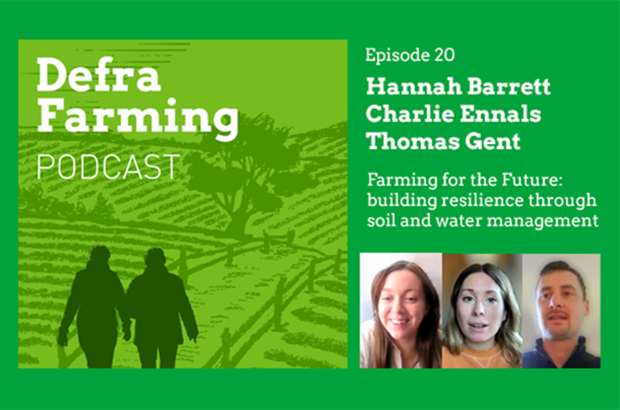
In this episode, Catchment Sensitive Farming (CSF) adviser Hannah Barrett speaks to two arable farmers. Charlie Ennals farms in Norfolk and Thomas Gent farms in Cambridgeshire.
They discuss how natural processes, like soil and water management, can help farms reduce costs and be more resilient to extreme weather.
Farming in a changing climate
Both farmers say conditions are becoming harder to predict.
For Thomas, who farms heavy land below sea level, managing excess winter rainfall and drainage is a major challenge.
For Charlie, working on lighter soils, the issue is retaining moisture through increasingly dry springs.
Despite these differences, both say healthy soils can help manage both very wet and very dry conditions.
Hannah and CSF also echo this, and support farmers across England to restore and maintain healthy soil, especially in high-priority flood catchments.
Charlie explains how introducing cover crops, increasing diversity of the cover-crop mix, and more recently grazing livestock, have improved soil structure and water infiltration on her farm.
In one example, infiltration tests on nearby fields showed a clear difference. The field managed with soil-improving practices absorbed water quickly. The other struggled to drain.
Thomas has practiced no-till farming since 2008 and emphasises that soil improvement takes time.
Both say there is no one solution. It’s about making small changes and adapting as you go, field by field.
Thomas and his family set up Gentle Farming, where you can learn more about their approach.
A new approach to farm finances
A main theme in the episode is how environmental practices affect farm finances.
Thomas says getting the highest yield at all costs just doesn’t stack up like it used to. His production costs are now around 20–30% lower than before. This is mainly because he doesn’t use machinery as much.
Charlie highlights the importance of understanding costs, using variable rate applications, soil and plant testing, and avoiding spending too much. She wants to see how far she can go to reduce inputs, while still producing good quality, decent yielding crops, alongside diversification.
These approaches help farmers use inputs more efficiently, protect margins and reduce environmental impact.
Collaboration and new opportunities
Both farmers say working with others, such as sharing machinery and exploring new markets, can make a real difference.
Thomas says cutting machinery costs has made the biggest difference to his farm. He thinks more farmers may need to share equipment in future.
Charlie also talks about trying different crops and markets, such as premium crops, to reduce risk and support changes on the farm.
Further support
We’ve worked with farmers and advisers in the east of England to create case studies and guidance. These show how farmers are improving soil management, using cover crops and buffer strips to increase yields and reduce inputs.
You can also contact your local CSF adviser for free, impartial advice. They support farmers and land managers in England to produce food, while still protecting water, soil and air.
This can include:
- soil assessments and infiltration testing
- nutrient and manure management planning
- advice on reducing pollution and improving efficiency
To contact CSF, complete the advice request form and send it to your local team.

1 comment
Comment by Peter Drake posted on
A fascinating article. Whatever the outcome the direction of travel should be farmer led
Peter Drake science teacher Hexham Northumberland