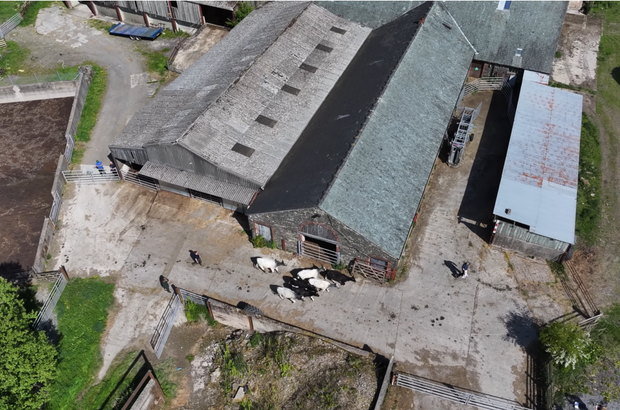
The Capital Grants 2026 offer is now closed as the budget has been allocated.
This year, £225 million was made available through Capital Grants 2026 to support practical environmental improvements on farms and across the countryside, representing a 50% increase on the 2025 budget.
We've received approximately 17,000 applications from every corner of England, covering a wide range of projects that will help deliver benefits for the environment, support nature recovery and strengthen sustainable farming practices.
The number of applications we received shows the appetite across the sector to invest in projects that will improve water quality, strengthen climate resilience, enhance biodiversity and protect the character of our rural landscapes.
We are now moving into the next stage of the process and have begun assessing applications and issuing agreements. Due to the high volume of applications received, it's likely that agreement offers will continue to be issued throughout the remainder of the year.
We will process applications as swiftly and efficiently as we can, but to help avoid delays, please ensure any requested supporting evidence and documentation is submitted as soon as possible.
All supporting information should be provided to the Rural Payments Agency (RPA) within 10 working days of your application form being submitted.
As set out in the scheme guidance, any applications that were started but not submitted before the offer closed will not be processed.
If you have received a Capital Grant offer through this or a previous round but, due to a change in circumstances, no longer intend to carry out the work or claim the funding, please contact the RPA.
An early look at the data
The RPA monitors application data regularly. I wanted to share an early overview of what the early numbers indicate.
Figures have been rounded for clarity. As the scheme has only recently closed, application totals are still being finalised and may change slightly as remaining checks are completed.
Size of farms

From habitat creation and boundary restoration to water quality and resource management projects, applications reflected the important contribution farms of all sizes make to nature recovery and sustainable land management. One-third of applications have come from farms under 50 hectares (ha).
First-time applicants

One of the most encouraging figures we've seen is the number of first-time Capital Grant applicants this year. Of those who applied, approximately 9,500 were applying for a Capital Grants agreement for the first time. We're pleased to see so many new applicants engaging with the scheme, demonstrating growing awareness of the support available and the opportunities it offers to make practical improvements.
Popular items
Of the 80 items available in the offer, the most popular items were:
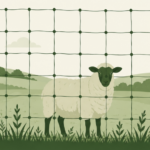
FG2 (Sheep Netting) is by far the most popular item, featuring in just over 11,000 submitted applications and accounting for approximately 20,000 km of fencing, roughly 1.5 times the Earth's diameter. The item is designed to protect sensitive habitats from grazing pressure, improve water quality by preventing livestock access to watercourses, and support the restoration and long-term management of priority habitats.
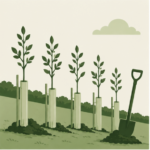
BN11 (Planting New Hedges) appears in approximately 5,000 applications, representing around 2,500 km of new hedgerows, roughly equivalent to the distance from Newcastle to Naples. These hedgerows will create vital wildlife corridors, providing food, shelter and nesting opportunities for birds, mammals and pollinators while helping to reconnect habitats across the landscape. Established with locally native species, they will create valuable new habitat, support biodiversity recovery and contribute to carbon capture, helping to protect, restore and enhance nature on farmland.

FG12 (Wooden Field Gate) featured in just over 4,500 applications. These gates support effective livestock management by controlling stock movement and preventing animals from entering sensitive areas where they could cause environmental damage. They also help protect important environmental, historic and archaeological features. In addition, wooden gate wings can provide secure, stock-proof crossing points over ditches, helping to maintain robust boundary management.

BN5 (Hedgerow Laying) appeared in around 2,500 applications, representing approximately 1,300 km of hedgerows, almost enough to stretch from Land's End to Hadrian’s Wall and back. The option restores mature hedges that have become gappy or overgrown, promoting healthy growth from the base to create dense, stock-proof boundaries. This helps reconnect hedgerow networks, providing valuable habitat and food sources for birds, bees and other pollinators, while supporting biodiversity recovery, carbon storage and the enhancement of nature across the farmed landscape.
Investing in the future
Although applications are still being processed, these figures provide an early indication of the ambition shown by farmers and land managers across England.
From restoring habitats and enhancing biodiversity to improving water quality and protecting historic features, the projects proposed have the potential to deliver lasting benefits for local communities, the natural environment and the long-term resilience of farm businesses.
As climate and weather-related pressures continue to grow, these practical improvements will help create a more sustainable and resilient countryside for future generations.
Next steps
While our immediate focus is on assessing applications and issuing agreements, we're also taking the opportunity to learn from this year's offer.
Working closely with colleagues in Defra, we're gathering feedback and reviewing customer experiences to understand where we can make improvements.
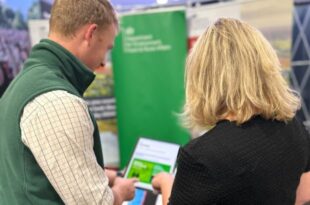
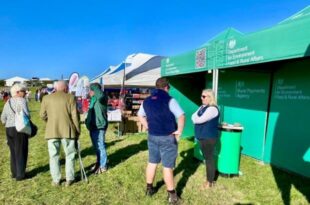
Whether it's feedback given when applicants call us, comments on our blog posts, or conversations with farmers and land managers at agricultural shows, we're listening carefully to what customers are telling us.

22 comments
Comment by Agent posted on
I submitted a Capital Grants application for my client on 30th July 2026 when the application window opened. We have not yet heard whether the application has been successful or not. When can we expect to hear back with an offer?
Comment by Tom Goss posted on
Hi there,
Thanks for your comment. Applications are processed in date order and decisions issued once the application is processed. If you've submitted any required supporting evidence, I'd recommend getting in contact with the RPA to check progress of the application.
I hope that helps,
Tom
Comment by David posted on
My application was submitted in January, if you are processing in date order from first received will you wait until all applications have been processed? Or do you agree to support applications as you go along ? Subsequently very late applications are more likely to miss out or is this not the case ?
Comment by Tom Goss posted on
Hi David,
There are processed in date order and decisions issued once the application is processed. The RPA do not wait until all applications are processed before issuing agreements- the first agreements have now been issued.
The Capital Grants offer opened in July. The offer closed once the budget was fully allocated so there will be budget available for the applications received later in August.
Thanks,
Tom
Comment by David Shering posted on
Thanks Tom , so bottom line then , if I applied for a small grant for a small amount of fencing on a small farm but applied through an agent in January the doesn’t sound promising then for the little minnow such as me !
Comment by Tom Goss posted on
Hi David,
I'd suggest following up with your agent directly. As I mentioned above, the Capital Grants Offer didn't open until July so your agent wouldn't have been able to submit an application in January.
If you or your agent haven't heard back from an application submitted in January, I'd suggest contacting the RPA directly as you should have heard back by now.
Thanks,
Tom
Comment by Stuart posted on
You stated you’ve received approx. 17000 applications. How many have you processed with offers since with window opened in July? It would be good if you issued weekly updates.
Also how are you processing the applications - are they in the same order of when they were submitted or have some later applications been approved out of sequence?
Comment by Tom Goss posted on
Hi Stuart,
Thanks for your question. I'm afraid we can't give an update on how many applications have been processed / offers accepted in comments of this blog. But thanks for your feedback. I'll work with the Capital Grants team to see if we can provide an update in coming weeks on applications.
I can confirm, however, we're processing the applications in date / time order from when they were received.
Thanks,
Tom
Comment by Anna posted on
Hi, if our capital grant application is still being processed when the SFI application window opens toward the end of Sept, will this affect our ability to apply for SFI26?
Comment by Tom Goss posted on
Hi Anna,
No, having a Capital Grant application pending with the RPA will not prevent you from applying when the Sustainable Farming Incentive 2026 (SFI26) Window 2 opens.
Thanks,
The Team
Comment by CK posted on
Except that what we can apply for in an SFI application may be different if we knew our Capital Grants application was not successful.
Comment by Tom Goss posted on
Hi Claire,
Thanks for your comment. Do you have any specific examples where the capital items in your application would affect what you'd apply for in SFI?
If you have any immediate concerns ahead of SFI opening, I'd advise ringing the RPA helpline - 03000 200 301
Thanks,
Tom
Comment by Gillian Wood posted on
I applied yesterday and have an email saying the transition was successful. Does that mean my application has been accepted?
Comment by Tom Goss posted on
Hi Gillian,
Thanks for your comment. Once you’ve completed and submitted your application, you’ll receive an e-mail confirming it’s been received. Then you will be notified if your application has been successful once processed. We’re currently processing applications and assessing on a case-by-case basis, working in date order. We will contact you to notify you on the outcome of your application in due course.
Many thanks,
Tom
Comment by Mick Holding posted on
Would it be possible to indicate roughly when the next window will open?
Comment by Sarah Stewart posted on
Hi Mick,
We do not yet have a confirmed opening date for the 2027 Capital Grants offer but we will share details on the blog as soon as they are available.
Best wishes,
Sarah
Comment by The Team posted on
Hi Stephen,
Thanks for getting in touch. Leaving the EU meant the end of BPS payments across the UK. As agriculture is a devolved policy area, each UK nation has since developed its own approach to farm support. In England, rather than continuing area-based payments, government introduced a range of schemes and grants designed to support food production, farm businesses and environmental outcomes.
We recognise that every farm has different priorities. Our approach is to support profitable, productive, sustainable and resilient farm businesses through a combination of grants and revenue payments. Grants help farmers invest in equipment, infrastructure and innovation, while revenue payments reward the delivery of environmental outcomes alongside food production.Together, these schemes are designed to support farm businesses, strengthen resilience and help the sector adapt to challenges such as climate change and volatile global markets.
On your specific point about drainage, there may be relevant options within the Sustainable Farming Incentive 2026 offer (with the second application window opening in September) and Countryside Stewardship Higher Tier, including actions relating to water management, water quality and resilience.
Best wishes,
The Team
Comment by John w. Baxter posted on
Glad to see feedback from DEFRA re: capital grants, and looking forward to hearing how applications re water and water related features are regarded after such a testing summer. If it is expected that restoration works are to take place in the autumn regarding ponds and waterways is there a priority in place to approve of these applications?
Comment by Sarah Stewart posted on
Hi John,
Thanks for getting in touch. I shared your comment with the RPA team this morning. They confirmed that the current plan is to continue processing applications in the order they are received. If this changes, we'll post an update on the blog.
Best wishes,
Sarah
Comment by Stephen Ridsdale posted on
Just some thoughts...
Drainage grant would be useful.
TBH the old style BPS was better because the farmer could decide to spend it on what they needed rather than what was on the DEFRA list.
e.g. I can manage nicely without a robot weeder, but ify grain trailer or grain drill is at end of its life then I need to replace those essential items. Or a basic fertiliser spreader. Or larger grain trailers. Or newer tractor. I could also buy those items second hand using BPS money.
England is the only country in the UK or EU which doesn't have a BPS style support payment. We can't compete under those circumstances.
Comment by The Team posted on
Hi Stephen,
Thanks for getting in touch. Leaving the EU meant the end of BPS payments across the UK. As agriculture is a devolved policy area, each UK nation has since developed its own approach to farm support. In England, rather than continuing area-based payments, government introduced a range of schemes and grants designed to support food production, farm businesses and environmental outcomes.
We recognise that every farm has different priorities. Our approach is to support profitable, productive, sustainable and resilient farm businesses through a combination of grants and revenue payments. Grants help farmers invest in equipment, infrastructure and innovation, while revenue payments reward the delivery of environmental outcomes alongside food production.Together, these schemes are designed to support farm businesses, strengthen resilience and help the sector adapt to challenges such as climate change and volatile global markets.
On your specific point about drainage, there may be relevant options within the Sustainable Farming Incentive 2026 offer (with the second application window opening in September) and Countryside Stewardship Higher Tier, including actions relating to water management, water quality and resilience.
Best wishes,
The Team
Comment by Jason Hamar posted on
I agree with Stephen- it’s not a level playing field with Europe-many farmers now in the UK are on the verge of financial collapse.