The Small Research and Development Partnerships competition is now open, with £13 million available to support collaborative projects.
This is round 5 of the competition, delivered through the Farming Innovation Programme in partnership with Innovate UK.
It forms part of the government’s Industrial Strategy commitment to allocate at least £200 million to the programme up to 2030.
The competition gives research organisations and businesses the opportunity to work alongside farmers, growers and foresters to develop new farming products or services, bringing them closer to commercial use.
Projects must benefit England’s agricultural, horticultural or forestry sectors by improving productivity, environmental sustainability and resilience.
Overview
Small R&D Partnerships support collaborative projects that show an idea already works in practice. The funding can help project teams develop their product or service further and bring it closer to market.
We have not set specific topics or themes for projects. Instead, we want to support solutions that respond to the priorities identified by the industry.
A UK-registered business must lead the project. It can last up to 30 months and must have total eligible costs of between £1 million and £3 million.
Projects should develop practical solutions that can:
- improve productivity
- reduce emissions and the environmental impact of farming
- strengthen the resilience of farming businesses
- deliver positive outcomes for farmers, growers or foresters in commercially relevant settings
The project team must include at least one other business or research organisation, and farmers, growers or foresters must be involved throughout.
How to apply
Before applying, read the competition guidance on the Innovation Funding Service to check the full eligibility, scope and funding rules.
You can also learn more about R&D Partnerships through the Farming Innovation Programme, including how to build a project team and involve farmers, growers or foresters.
To help you prepare your application, Innovate UK recently recorded an applicant webinar to learn about the aims, scope and content of the competition. Watch the recording.
The window to apply closes 14 October 2026.
Case studies
The following projects showcase a range of work supported through previous Small R&D Partnerships rounds.
Developing a vaccine to protect pigs from Streptococcus suis
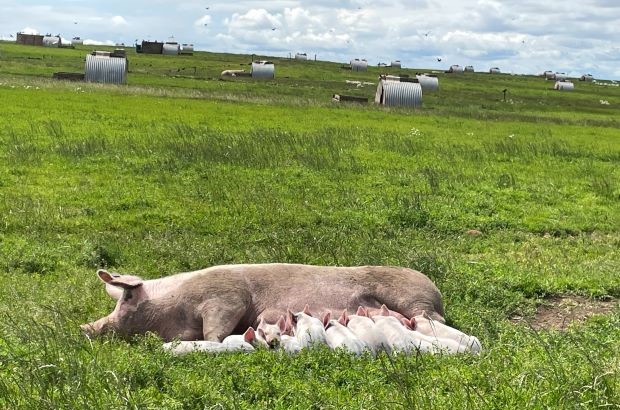
Disease remains a significant challenge for pig producers, affecting animal welfare, productivity and farm costs.
Streptococcus suis can cause serious and sometimes fatal disease in pigs and people. Outbreaks can increase antibiotic use and contribute to antimicrobial resistance.
Led by The Vaccine Group (TVG), this small R&D funded project developed a vaccine to protect pigs against multiple strains, or serotypes, of Streptococcus suis.
It used a harmless virus to deliver a protein shared by different serotypes, prompting an immune response without exposing pigs to the disease-causing bacterium.
The vaccine showed protection against serotype 2, the strain responsible for most Streptococcus suis in UK pigs, as well as immune responses to other serotypes. The project tested whether the vaccine could also protect against serotype 1, including through studies involving commercial pig breeds.
The Vaccine Group reported that a trial conducted at Moredun Scientific Ltd has already shown great results, with the vaccine outperforming a leading commercially available vaccine.
Using hoverflies to control aphids in soft fruit
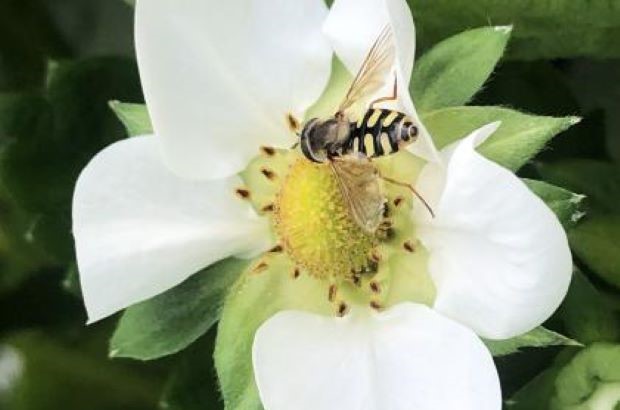
Berry growers face increasing pressure from aphids and other pests, while fewer conventional chemical controls are available. Aphids can be particularly difficult to manage in crops grown under tunnels, glass or other protected environments, where dense foliage can make infestations harder to reach.
Led by Pollinator and Orchard Management, also known as Olombria, FLYTHRIVE is developing a new approach to pest management using native hoverflies. Adult hoverflies can move through dense crops and lay eggs near aphid colonies. Their larvae then feed on the aphids, with a single larva able to consume hundreds during its development.
The project is testing blends of native hoverfly species against aphids that damage protected soft fruit crops. It combines this biological control with vision machines that can detect pests, monitor predators and natural attractants. This means that hoverflies can be directed towards infestations at an early stage.
The project brings together commercial growers, applied researchers and agritech specialists, including Niab, the Natural Resources Institute at the University of Greenwich, Asplins Producer Organisation and The Summer Berry Company. Field and controlled-environment trials are helping the team test and refine the system in commercial growing conditions.
By strengthening natural pest control and supporting earlier, more targeted intervention, FLYTHRIVE aims to help growers protect yields, reduce labour and chemical inputs, and produce fruit more sustainably. The approach could also have applications in other fruit crops and protected growing systems.
Developing bio-derived fungicides to protect wheat from septoria
Septoria, caused by the fungal pathogen Zymoseptoria tritici, is one of the most damaging diseases affecting UK winter wheat. It can significantly reduce yields if left unmanaged. As resistance to some existing fungicides increases, growers need new ways to protect crops and maintain productivity.
Led by Bactobio, the project is developing bio-derived fungicides using compounds produced by microbes. Its technology combines next-generation sequencing, machine learning and bioengineering to culture microbial species that have historically been difficult to grow and study in laboratory conditions.
Researchers are expanding the company’s microbial library and building a system to identify compounds that could control Zymoseptoria tritici. The most promising microbes are being profiled, tested and scaled up to support further development.
The project aims to produce 3 to 5 potential fungicides. The team will then test them in small-plot field trials. This will help identify the strongest candidates for further testing, commercial development and eventual on-farm use.
By creating new bio-derived fungicides, the project aims to help wheat growers protect yields, manage fungicide resistance and reduce the environmental impact of crop protection.
Subscribe to the Farming Blog
We’ll publish further updates when new innovation competitions open. To stay informed, subscribe to the Farming Blog.