The Farming Innovation Programme (FIP) helps farmers, growers and businesses test and adopt practical new ideas. These farmer-led innovations are designed to reduce costs, improve productivity and strengthen the resilience of farm businesses.
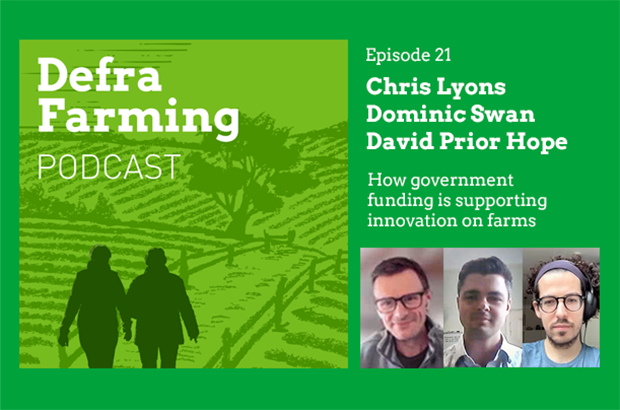
In this episode, Chris Lyons from Innovate UK, which delivers FIP with Defra, talks to 2 guests about how innovation funding has helped their businesses.
Dominic Swan from Catalyst Farming and David Prior Hope from Fibe discuss how funding is enabling their teams to carry out research, collaborate with partners and test new ideas through on-farm trials.
Both projects are focused on finding practical solutions to real-world challenges faced by farmers, helping to improve productivity, resilience and sustainability.
Testing ideas
Dominic works with 4 farming businesses in Norfolk, covering around 8,000 ha.
He explains how a FIP Research Starter Competition helped them explore whether computer crop modelling could improve nitrogen use efficiency. They carried out the project with Niab and initially focused on around 200ha at Salle Farms.
After gathering evidence in this first phase of research, the work is now expanding through the Accelerating Development of Practices and Technologies (ADOPT) Fund. This project also involves four farming businesses with a wide range of soil types and different machinery.
Dominic believes innovation often begins with everyday challenges:
Most innovations come from a practical problem to start with. I'd say most farmers have practical problems they would like to solve that they are dealing with on a daily basis. That's a good place to start.
Meanwhile, David explains how support through the FIP Feasibility Studies competition helped Fibe.
Fibe makes textiles from potato plants. The company is made up of a team of biochemists, engineers, technicians and farmers.
Together they’ve developed what they believe is the world's first potato stem harvester.
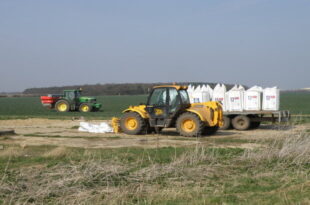
Traditionally, growers flail and spray potato stems before harvest. The new machine offers an alternative. It collects stems that would otherwise be discarded, creating an extra income stream for farmers.
After confirming their idea was feasible, they needed to test it.
To do this, they used ADOPT funding and worked with agricultural machinery manufacturer Grimme, farming contractor Century, Niab and potato growers to test the harvester.
They are comparing it with conventional flailing, measuring impacts on soil, nutrients, disease risk and crop health.
Collaboration and support
For Dominic, FIP provided access to specialist expertise that would otherwise have been difficult to access. Funding helped reduce the risk of testing a new approach, giving the business confidence to explore an idea they might otherwise have been unable to pursue.
For David, working with growers and researchers helped him turn an idea into something practical for the industry to benefit from.
As David puts it:
If you approach it with a mindset of, how can we build this together and how can we genuinely overcome issues? Then I think that there'll be a much higher chance of success.
If you’re thinking about innovation funding, this episode shows you don’t need to have all the answers.
Whether you're looking to improve nutrient use, explore new technologies or investigate a new idea, FIP can help you take the next step.
Delivered by ADAS, UK Agri-Tech Centre and the Soil Association, the hub supports knowledge sharing between projects across the programme. It can also provide guidance on project scope and application development.
If you are looking for support, collaborators or project facilitators the ADOPT Support Hub and Innovate UK Business Connect can help.
Subscribe to the Farming blog
Subscribe to the Farming Blog to receive an email notification whenever we publish a new post.