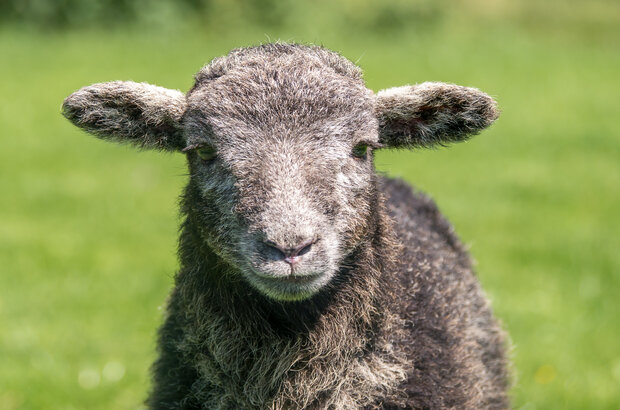
Livestock worrying can happen when a dog attacks, chases or is loose among livestock. Dogs don't need to make contact for harm to occur. Fear and stress alone can harm livestock, and, in severe cases, cause them to die.
The impact on livestock keepers can be devastating. They face financial loss as well as personal distress.
Farmers will soon have clearer and stronger legal protection against livestock worrying.
The Dogs (Protection of Livestock) (Amendment) Act 2025 has today received Royal Assent, making it law. It updates the Dogs (Protection of Livestock) Act 1953.
It will come into effect three months from today, on Wednesday 18 March 2026.
This legislation is only for England and Wales. Scotland and Northern Ireland have their own legislation on this matter.
Background
It has long been an offence to allow a dog to worry livestock. However, the legislation was introduced in 1953 and has not kept pace with changes in the countryside. Livestock numbers in England and Wales have doubled since then, and more people visit the countryside with their dogs.
The law now strengthens the tools available to police and the courts so they can respond more effectively when incidents happen.
This change to the law is not about restricting dog walking. It is about making sure people can continue to enjoy the countryside while keeping livestock safe, protecting animal welfare and supporting the work farmers do every day.
The changes
The act:
- is worded so that attacking livestock is treated separately from worrying livestock. This reframing helps make the violent nature of livestock attacks much clearer. It doesn’t create a new offence as both behaviours are already covered in the 1953 act, but it does make the distinction explicit
- extends the law to cover livestock worrying and attacks that take place on roads and paths
- includes camelids (as llamas and alpacas are commonly farmed)
- introduces a new defence for dog owners to exempt them from liability where the dog was in the charge of another person at the time of the offence without the owner’s consent, for instance if the dog was stolen
- introduces new powers allowing a court to order an offender to pay expenses associated with seizing and detaining a dog
- provides a clear deterrent by increasing the penalty from a fine of up to £1,000 to an unlimited fine
In addition, the law gives police new and improved powers to improve their investigations, including:
- the power to seize and detain a dog where they have reasonable grounds to believe there is a risk that the dog could attack or worry livestock again. The dog can be detained until an investigation has been carried out or, if proceedings are brought for an offence, until those proceedings have been determined or withdrawn
- the power to take samples and impressions from a dog or livestock where the police have reasonable grounds to believe the dog has attacked or worried the livestock, and that a sample or impression might provide evidence of an offence. The sample or impression could then be used as evidence to support a prosecution
- the powers to enter and search premises to identify, seize and detain a dog for the prevention of future incidents, to collect samples or impressions, or seize any other evidence
What this means for you
Farmers
If livestock worrying or an attack happens, report it to the police. Keep hold of any evidence. Record dates and times and take photos or videos if you can. It may not always be possible, but collecting witness details is useful.
It may be helpful to check whether signs, fencing, dog-control advice or public footpath management needs to be updated.
In addition to practical advice on its website, the National Farmers Union (NFU) offers free gatepost signs to its members. It is currently making improvements to the online form, but you can still order by calling the NFU on 0370 845 8458.
Dog owners
Responsible access to the countryside is encouraged. Be aware of your surroundings when walking near livestock.
A dog does not need to make physical contact with animals to commit an offence under the new law. Chasing or disturbing livestock can cause harm.
The Countryside Code advises that dogs should be kept on a lead around livestock. Always check local signs, as some areas require dogs to be on a lead all or part of the year.
Definitions
- “Worrying” means:
- attacking livestock, or
- chasing livestock in such a way as may reasonably be expected to cause injury or suffering to the livestock or, in the case of females, abortion, or loss of or diminution in their produce; or
- being at large (that is to say not on a lead or otherwise under close control) in a field or enclosure in which there are sheep.
- “Livestock” means cattle, sheep, goats, swine, horses, camelids, ostriches, farmed deer, enclosed game birds or poultry.
- “Cattle” means bulls, cows, oxen, buffalo, heifers or calves
- “Horses” includes donkeys and mules
- “Farmed deer” means deer of any species which are on agricultural land enclosed by a deer-proof barrier and kept by way of business for the primary purpose of meat production,
- “Enclosed game birds” means any pheasant, partridge, grouse (or moor game), black (or heath) game or ptarmigan that are being kept enclosed prior to their release for sporting purposes
- “Poultry” means domestic fowls, turkeys, geese or ducks.
Learn more
For the latest from the Farming and Countryside team, subscribe to the Farming blog.
*This post was updated on 12 Feb 2026 to include definitions.



 The
The 
27 comments
Comment by Sarah posted on
Hi, we live next to a field where sheep are sometimes kept, with our garden backing onto the agricultural land. I would like to double check that, should our dogs run around within the perimeter of our garden (inside our fence) and spook the sheep on the other side of the fence, I'm assuming this doesn't come under the definition of 'worrying'..? Thanks very much, Sarah
Comment by Sarah Stewart posted on
Hi,
In the legislation, “worrying livestock” means:
(a) attacking livestock
(b) chasing livestock in such a way as may reasonably be expected to cause injury or suffering to the livestock, or, in the case of females, abortion or loss of (or reduction in) their produce; or
(c) being at large (that is to say, not on a lead or otherwise under close control) in a field or enclosure where there are sheep.
https://www.legislation.gov.uk/ukpga/Eliz2/1-2/28/section/1#extent-E-W
Best wishes,
Sarah
Comment by Rachel posted on
I have to ask for some clarity on the term 'worrying'. My dog, for example, was born in the height of the pandemic and unfortunately had very little opportunity for socialising as a puppy. She has never been aggressive but is very vocal. We live in the countryside and I always check signage and keep her on a lead if I am aware there will be livestock in a field I am entering as I do not wish for her to chase or frighten livestock in any way.
So, I am curious whether 'worrying' livestock covers dogs on leads barking at livestock they see walking or running around? Because this is not really within the control of a lot of dog owners. My dog has only ever chased sheep once due to a lack of signage and a lack of my knowledge that there would be sheep over the hill and I was extremely concerned by it and told her off a lot and got her back on the lead ASAP so I completely understand why dogs chasing and frightening livestock, and of course any attacks on livestock, are a genuine cause for concern and are being taken seriously.
Therefore, I do think a clearer definition needs to be provided as to what 'worrying' specifically refers to to protect dog owners as well as farmers. I also think that adequate signage is absolutely vital in maintaining this legislation, as if a dog owner is not made aware of livestock on a public footpath, it would surely not be the dog owner's fault if livestock were 'worried' by their dog prior to their knowledge of the livestock being there?
Comment by Sarah Stewart posted on
Hi Rachel,
No problem. In the legislation (at the very top) it says:
(2)For the purposes of this Act, worrying livestock means:
(a) attacking livestock, or
(b) chasing livestock in such a way as may reasonably be expected to cause injury or suffering to the livestock or, in the case of females, abortion, or loss of or diminution in their produce; or
(c) being at large (that is to say not on a lead or otherwise under close control) in a field or enclosure in which there are sheep.
https://www.legislation.gov.uk/ukpga/Eliz2/1-2/28?view=plain
From what you’ve described, it sounds like you are already taking sensible precautions by checking signage and using a lead where livestock may be present. That is exactly the kind of responsible behaviour the legislation is designed to encourage.
Best wishes,
Sarah
Comment by Rachel posted on
Hi Sarah,
Thank you for replying to my comment so quickly and apologies, I completely missed that definition but thank you for clarifying, that's super helpful and reassuring.
Thank you, I definitely try my best to be a responsible dog owner and definitely recognise the importance of this issue. So long as dog owners are legally protected when adequate signage is not provided, I think this is a great piece of legislation and could work to protect both livestock and responsible dog owners.
Kind regards,
Rachel
Comment by Sarah Stewart posted on
No apology needed! If something isn't clear on the blog, that's on me. I've updated the post to include more definitions - so thank you very much for helping to improve the content!
Best wishes,
Sarah
Comment by Sarah posted on
Hello,
I am really curious about this, so I'd first like to respond by saying that I feel like we are targeted as dog owners, "worrying" livestock, I think there are alot of things that disturb live stock, cars, the use of farm equipment and a big one is fireworks yet you won't change the law of lowering the noise of them, all these have an effect on dogs too, noise can scare dogs which then escape which then can end up in a livestock area unknowingly then what happens? The dog is injured, the owner is sent to court? This is a whole situation, not just dogs going into fields. Farmers will continue to moan and judge yet have their "working" dog chase their own livestock, you can see the sheep worry and be scared because they are being chased? They also say about causing death yet they will slaughter most of their livestock? I just don't understand how dogs can be too blame, its not like the dog has gone "oh I'm going to go in there and cause mayhem". I feel like a different approach or farmers actually fencing off their live stock properly that way the dogs can't get in because some farm just have hedges and no fencing, it's all about common sense and what they can do to help the situation aswell. Can't all be one sided. I understand that no dog should chase like stock but as I said it's not done on purpose by the dog.
Comment by The Team posted on
Hi Sarah,
Thank you for taking the time to share your thoughts.
You’re right - livestock can be affected by many things, including noise and other disturbances. However, this law focuses on dogs worrying livestock because this is a common and preventable cause of injury and loss. Most incidents happen when a dog is off lead and runs into a field unexpectedly. It’s often not about a dog intending to cause harm, but about the impact of the behaviour once it happens. Even normally well-behaved dogs can react to movement and chase.
On fencing, farmers should manage their land appropriately, but the legal responsibility for preventing livestock worrying rests with the dog owner because owners are the only people who can reliably control their dog’s behaviour.
This isn’t about blaming dogs or their owners. It’s about recognising that dogs have natural instincts, and it’s up to owners to help manage those instincts around livestock. Keeping dogs on a lead near livestock, checking field signage, and maintaining good recall are practical steps that prevent incidents.
The aim is simply to reduce preventable harm to livestock and avoid situations that can be distressing for everyone involved, including the dog.
Best wishes,
The Team
Comment by Denise posted on
A farmers working dog is not ‘chasing’ sheep/cattle. The dogs are trained to only use the amount of pressure required to move the stock, they may move quickly if needed but always maintain a certain distance. The move the sheep by using ‘eye’ and don’t harass the sheep unduly. Believe it or not the sheep know the working dogs and know the won’t attack or injure.
Farmers raised livestock to feed the people in this country, it’s not an easy or financially rewarding job and any losses can mean the difference between making a living and failure. Also, imagine finding an animal that has severe bite marks or has aborted their lamb, how would you feel if it was your animal?
Comment by Fiona Hewitt posted on
What are the laws on farmers shooting dogs that are attacking livestock? Has this been updated?
Comment by The Team posted on
Hi Fiona,
While there have been updates to the law on dogs worrying livestock made by the Dogs (Protection of Livestock) (Amendment) Act 2025, these do not relate to the shooting of dogs which are worrying livestock.
Farmers do not have a legal right to shoot a dog that is worrying livestock. Under section 9 of the Animals Act 1971, a defence to civil proceedings may be available where a person kills or injures a dog in order to protect livestock where the livestock are being, or are about to be, worried by a dog.
Best wishes,
The Team
Comment by David Collings posted on
What is the full definition of livestock under the Act?
Comment by The Team posted on
Hello David,
Livestock means cattle, sheep, goats, swine, horses, or poultry.
https://www.legislation.gov.uk/ukpga/Eliz2/1-2/28?view=plain
As of last year, the act now extends to camelids.
Best wishes,
The Team
Comment by Angela Bush posted on
How does the law regard other farmed livestock such as game birds, peacocks, pidgeons etc? These can be semi ferral birds but are owned,bred & farmed? They free roam on farm fields,garden & public right of way & forestry land. Thanks
Comment by The Team posted on
Hi Angela,
Under this Act, “livestock” means cattle, sheep, goats, swine, horses, or poultry, and for the purposes of this definition “cattle” means bulls, cows, oxen, heifers or calves, “horses” includes asses and mules, and “poultry” means domestic fowls, turkeys, geese or ducks.
https://www.legislation.gov.uk/ukpga/Eliz2/1-2/28?view=plain
Best wishes,
The Team
Comment by Angela Bush posted on
Thanks, shame it doesnt include game or other farmed birds or Zoo animals
Comment by Diana posted on
I totally agree with the new legislation but want to know whether pheasants are included. When signs are up I put the dogs on leads but pheasants do just appear from nowhere or roam around generally. Can you tell me whether pheasants are covered
Comment by Sarah Stewart posted on
Hi Diana,
Thanks for getting in touch, under the Act (see section F35) “livestock” means cattle, sheep, goats, swine, horses, camelids, ostriches, farmed deer, enclosed game birds or poultry, and for the purposes of this definition “cattle” means bulls, cows, oxen, buffalo, heifers or calves, “horses” includes donkeys and mules, “farmed deer” means deer of any species which are on agricultural land enclosed by a deer-proof barrier and kept by way of business for the primary purpose of meat production, “enclosed game birds” means any pheasant, partridge, grouse (or moor game), black (or heath) game or ptarmigan that are being kept enclosed prior to their release for sporting purposes, and “poultry” means domestic fowls, turkeys, geese or ducks;] https://www.legislation.gov.uk/ukpga/Eliz2/1-2/28?view=plain
Best wishes,
Sarah
Comment by Penny Kakoulli posted on
Fantastic news
Comment by James posted on
This seems like it will give useful powers to address worrying, but the definition does seem extremely broad, and I wonder how it will be enforced... also this creates very unequal responsibilities where livestock are to be protected from any hint of disturbance, but there are no laws (at least not that anyone will enforce) to protect people or dogs legitimately using rights of way or access rights from 'worrying' by livestock. A couple of times I've been charged at by horses across a field which would definitely fall under this definition of worrying and even had a young one attempt to kick me once (which could easily have been fatal if it connected) while simply walking along a footpath. I tried reporting this dangerous livestock to the authorities and was informed that the landowner had no responsibility to prevent this danger because he was 'letting' people use the footpath (for avoidance of doubt it was a public footpath, not a permissive path or access land). A shame that this is not being addressed.
Comment by The Team posted on
Hi James,
Thank you for getting in touch. We recognise that people using public rights of way should be able to do so safely. Livestock worrying refers to the behaviour of dogs that chase, attack, or cause distress to livestock. It can result in serious injury or death of livestock.
The changes that the 2025 Act makes are about protecting livestock from attacking or worrying by dogs in line with the 1953 Act. Harm caused by livestock is out of scope.
The Public Rights of Way guidance highlights the responsibility of landowners regarding waymarking and signs such as using signs to warn users of any dangers that are not obvious: https://www.gov.uk/guidance/public-rights-of-way-landowner-responsibilities#waymarking-and-warning-signs
The Countryside Code encourages people to check local signs and to leave gates as they find them to prevent livestock from straying from where they are kept which increases the risk to the public. The Code also highlights that it is best practice where appropriate to keep dogs on a lead around any livestock to ensure dogs and walkers are kept safe: https://www.gov.uk/government/publications/the-countryside-code/the-countryside-code-advice-for-countryside-visitors
There is a careful balance to be struck between the practical need for farmers to keep animals in fields, animal welfare, public safety, and access to the countryside.
Best wishes,
The Team
Comment by Lynn Martin posted on
How does this law relate to farmers (allowed free grazing on land owned by Councils) where public have 24/7 access and part of the land is next to a beach and car park?
Comment by The Team posted on
Hi Lynn,
Thanks for getting in touch. If livestock are grazing on council land with permission, that land is treated as agricultural land for the purposes of the Act.
Best wishes,
The Team
Comment by Gary longthorp posted on
We had the very same thing happen to us,a horse galloping across the field.
It was a public footpath to use, but our first time on it, we didn't take the risk and backed away.
Comment by Julie Bolton posted on
As sheep farmers we have put up polite signs to warn of sheep grazing, most of our signage gets ripped down by disgruntled walkers who don’t like being told what to do, i know this is a problem nationwide, we now use WiFi cameras to keep our livestock safe
Comment by Sarah Stewart posted on
Hi Julie,
Thank you for sharing this. It must be upsetting and frustrating when your efforts to protect livestock are undermined, particularly when you have taken reasonable steps to inform and guide people using the countryside.
Keeping sheep safe, especially during lambing and grazing, is a real concern for farmers, and damage to signage only adds to the pressure you face. Your experience reflects issues raised by many farmers across the country, and we recognise the importance of promoting responsible behaviour and mutual respect in rural areas.
We also hope that sharing experiences like yours through this blog helps reach people who enjoy spending time in the countryside, encouraging greater understanding of the realities of farming and the care needed around livestock.
We appreciate you taking the time to highlight this, and the care you take to protect your livestock.
Best wishes,
Sarah
Comment by Freddy posted on
Hi Julie, I'm not a farmer but a horse owner living in a Devon farming community. I'm shocked by your experience that people just rip down the signs that you put up to protect your live stock as I was brought up to politely follow the requests that farmers make on their signs. And I grew up in a city environment and had only sparse contact with all things farming during the early years of my life. Wishing you and your live stock all the best
Freddy