Today we published Farming Roadmap 2050: Growing England's Future.
The Farming Roadmap brings the government's long-term strategies, reforms and commitments for farming together in one place.
It provides a flexible framework for the sector’s journey towards 2050, recognising that there is no single route to success.
It enables different farming systems and businesses to adapt in ways that best suit their circumstances as markets, technologies and environmental conditions continue to evolve.
This flexibility is essential because farmers are making long-term decisions in an increasingly uncertain and fast-changing environment.
Input costs can be influenced by events occurring thousands of miles away, while climate change is altering growing conditions across the country.
At the same time, emerging technologies are creating new opportunities to improve productivity, efficiency and resilience.
Farmers must also balance the demands of producing food with the need to strengthen environmental resilience and support nature recovery.
By providing a clear long-term direction without imposing a one-size-fits-all model, the roadmap aims to give farmers the confidence to plan, invest and innovate for the future beyond the immediate challenges of each season and harvest.
Background
The Farming Roadmap has been shaped heavily by engagement with the sector.
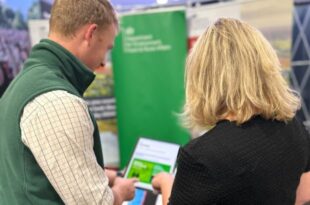
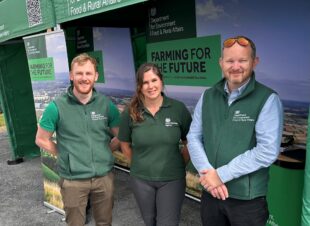
Over the past 15 months, we have held regional and national workshops, online focus groups, and spoken to farmers and other stakeholders at auction marts, conferences and agricultural shows across the country.
This targeted engagement has built on our existing relationships with farmers, land managers and representative organisations, helping us to test ideas, gather feedback and understand a wide range of perspectives.
Stakeholders and farmers called for a practical plan that reflects the diversity of farming and supports viable farm businesses.
They wanted a clearer articulation of what government, and society more broadly, wants from the sector, with a more joined-up approach to food production and environmental outcomes, stable funding, fair risk management, and improved markets and supply chains.
The result is a shared vision for a profitable, productive, sustainable and resilient farming sector through to 2050.
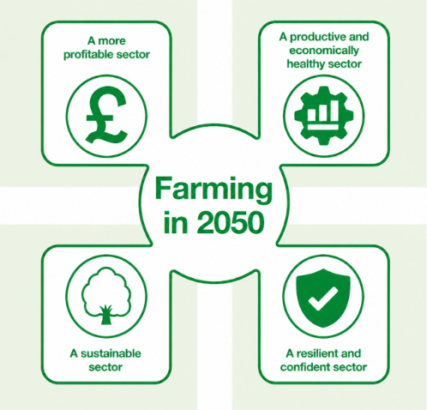
The Farming Roadmap states that our future farming system should produce food (and other agricultural outputs) as its primary purpose, be profitable and competitive, use land and resources efficiently, and protect natural systems while remaining resilient to change.
A summary
The Farming Roadmap is divided into 2 sections:
- Section 1: the context and vision for farming to 2050
- Section 2: the actions needed to deliver the vision
The actions in part 2 are organised under 3 themes:
- Theme 1 - profitable and productive: supporting farm business performance
- Theme 2 - sustainable: farming for environmental and sector sustainability
- Theme 3 - resilient: building a resilient farm business
Together they provide a framework for translating the vision into action.
Additionally, section 2 sets out a timeline with key activities to 2030.
Profitable and productive farming
This theme focusses on strengthening the economic foundations of the farming sector by improving profitability, increasing productivity and supporting long-term growth.
It aims to give farmers the confidence and capability to invest, remain competitive and diversify where appropriate.
The theme supports the adoption of innovation, technology and improved farm management practices to help farmers boost productivity and profitability.
It also seeks to improve market access, expand export opportunities and promote fairness across supply chains.
It aims to create the conditions for investment by reducing barriers through planning reform, improving access to skills and training, and supporting collaboration between government, industry and the wider food system.
For example, to support profitability and productivity across the sector, government will work in partnership with industry to develop Sector Growth Plans, beginning with horticulture and poultry.
It will also strengthen collaboration across the food system through the Farming and Food Partnership Board, bringing together farmers, retailers and investors to help encourage growth and investment.
Alongside this, government will seek to reduce trade barriers through a new Sanitary and Phytosanitary agreement with the EU, while introducing legal protections for egg and fresh produce growers against unfair supply chain practices.
Environmentally sustainable farming
This theme focuses on protecting the natural systems that underpin long-term productivity and resilience, while reducing the environmental impacts of farming.
It promotes improvements in soil health and quality, recognising the benefits this can deliver for farm businesses and the environment, including reduced pollution, emissions and input costs.
The theme also supports nature recovery and biodiversity alongside food production, encouraging the most effective use of land by protecting highly productive farmland while enabling some lower-productivity land to deliver nature and climate outcomes.
Alongside this, it sets out plans to evolve environmental land management schemes, strengthen environmental standards where needed, and support animal health, welfare and the sustainable use of natural resources.
For example, our environmental land management (ELM) schemes will become increasingly targeted towards delivering public goods.
As good environmental practices become standard across the sector, support for their adoption may reduce over time, while long-term payments will continue for outcomes such as habitat creation, nature recovery and other wider environmental benefits.
Together, these actions aim to ensure farming can continue to produce food while enhancing the environment and supporting long-term resilience.
Resilient farming businesses
This theme focuses on strengthening the sector’s ability to anticipate, adapt to and recover from climate, market and geopolitical shocks, while responding to longer-term change.
It supports action to manage the risks posed by climate change, extreme weather and disease, alongside measures to strengthen biosecurity, improve water management and promote natural flood management.
The theme also encourages farmers to build resilience through effective risk management, diversification and long-term business planning, recognising the important role that business decisions play in managing volatility.
Alongside this, the Farming Roadmap identifies the need to improve access to data, modernise government services and reduce the administrative burden on farmers. It sets out a path towards replacing multiple government services with a single digital farming account.
Improvements to data quality and standards will help farmers to make better informed decisions, respond more effectively to future challenges and take advantage of emerging private markets.
To build resilience, the roadmap sets out how farmers can reduce their reliance on costly inputs such as fertiliser through new technologies and smarter nutrient management.
It also supports adaptation to the growing impacts of climate change and extreme weather through nature-based approaches, including improved soil health and water management.
Together, these actions are designed to support a farming sector that is adaptable, resilient and better prepared for an increasingly uncertain future.
Response to the Farming Profitability Review
We've also published our response to the Farming Profitability Review.
Recommendations from the review have helped shape the Farming Roadmap, particularly around business resilience, risk management, productivity and supply chains, and the Farming Roadmap will help to support action in these areas.
Delivering the Farming Roadmap will rely on continued partnership with farmers and the wider agri-food sector.
The actions set out in the document are an important step, and we will continue to move forward in collaboration as we learn more and respond to changing conditions.
We look forward to carrying on the conversation with farmers and stakeholders as we transition to a profitable, productive, sustainable and resilient farming sector.
Subscribe
For the latest updates from the Farming and Countryside team, subscribe to the Farming Blog.
By subscribing, you'll receive an email whenever we publish a new post.