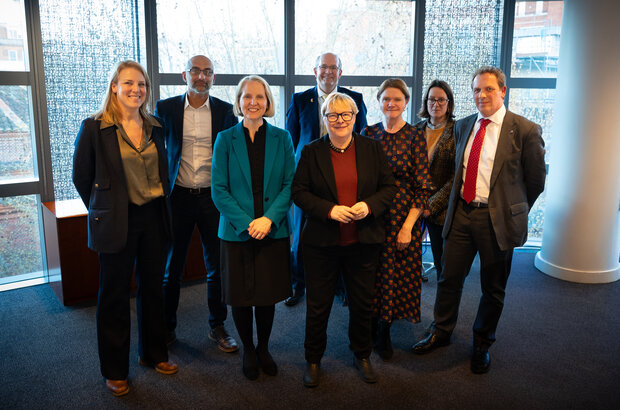
The Farming and Food Partnership Board met for the first time yesterday, bringing together leaders from farming, food and retail.
The board is chaired by Environment Secretary Emma Reynolds, with Farming Minister Dame Angela Eagle as Deputy Chair.
It brings government and industry together to improve farm productivity and profitability, strengthen food system resilience and support national security.
This post sets out what was discussed, what was agreed and what will happen next, including work on growth plans for the horticulture and poultry sectors.
Purpose of the board
The Farming and Food Partnership Board exists to increase farmers' and growers’ profitability and productivity, stimulate growth in the sector and strengthen food security. It will provide oversight and a forum to address issues.
Farmers and growers continue to face significant pressures, including rising input costs and disruption from international events such as conflict, extreme weather and supply chain pressures.
In this context, members agreed that strengthening domestic production is essential to national food security and economic stability. Closer partnership across the supply chain, from farm to fork, will support this.
The board builds on the work of Baroness Minette Batters’ Farming Profitability Review, which highlighted the need for a stronger focus on farm profitability and closer collaboration between government and industry.
The board works alongside the Food Strategy Advisory Board (FSAB), which considers the UK’s wider food system and the outcomes sought by the government’s food strategy.
The Partnership Board will not duplicate work covered by the Environmental Improvement Plan and other boards. Instead, it will focus on how sustainable farming can support investment and growth, including opportunities to attract private finance.
The board will look across the whole supply chain, with a clear focus on improving farm profitability, while recognising that good land management supports long-term resilience.
Alongside this, existing government support will continue to help farmers deliver environmental outcomes and build resilient businesses, including through environmental land management (ELM) schemes.
Attendees and future membership
The first meeting brought together a small group from across the supply chain to help shape future membership and how the board will work. It included:
- Agriculture and Horticulture Development Board (AHDB)
- Agricultural Industries Confederation (AIC)
- British Retail Consortium (BRC)
- Food & Drink Federation (FDF)
- Institute of Grocery Distribution (IGD)
- National Farmers’ Union (NFU)
- UK Hospitality (UKH)
During the meeting, members put forward names to fill the remaining places, which the Secretary of State will now consider. The board is expected to have up to 15 members.
Full membership and how the board will operate will be agreed and published on GOV.UK.
Topics of discussion
At the first meeting, members brought together experience from across the supply chain to build a shared understanding of the main challenges and opportunities.
They will use smaller groups and experts from the sector to take forward more detailed work.
Members also set some early priorities. These included completing the work to establish membership, preparing terms of reference, and agreeing the outcomes the board will work towards in the short and long term. Following the meeting, all members of the board signed a joint statement to confirm the agreed mission and purpose.
A GOV.UK page for the Farming and Food Partnership Board will be published in the summer. It will bring together information, updates and documents in one place.
Sector Growth Plans
Sector Growth Plans will be a central part of the board’s work.
Where possible, Sector Growth Plans will be developed with existing industry groups, using their experience, rather than creating new structures.
The first Sector Growth Plan will be for horticulture, with poultry to follow. Both sectors have shown potential to increase domestic production quickly.
The Horticulture Expert Growers Group, working with others including the UK Fruit and Vegetable Coalition, and the Environmental Horticulture Group, has been invited by the board to start work immediately on the first Sector Growth Plan for the horticultural sector.
Each plan will:
- set out the main barriers to growth and profitability, including regulation where relevant, and how these could be addressed
- look at how costs and returns are shared across the supply chain
- identify ways to increase productivity and sell more produce in the UK and overseas
Sector Growth Plans will reflect the wider context in which farmers and growers operate, considering both market signals and the direction of government policy.
For example, policy steers from the Farming Roadmap (once published) and the Land Use Framework, as well as ongoing environmental commitments and legal duties.
Next steps
The board will meet again at the start of summer, and updates will be shared on the Farming Blog as work progresses.
We will also share opportunities to get involved through consultations, surveys and events.
A new GOV.UK page for the board will be published in due course. By subscribing to the Farming Blog, you can stay up to date and be notified when new posts are published.

 The
The 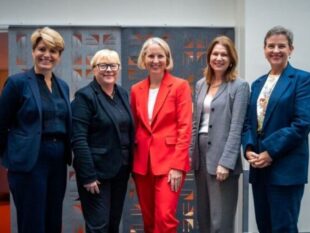
11 comments
Comment by Peter Craven posted on
Great to see wheels in motion on this initiative, and such a broad range of expertise and knowledge🙏
Comment by Martin Woodhead, Burleigh Dodds Science Publishing Ltd. posted on
As publishers of information on sustainable and regenerative agriculture we would be most interested in contributing towards any sub-groups that may be set up that focus on how these practices can best help to achieve the board's objectives.
Comment by The Team posted on
Hi Martin,
Thank you for getting in touch and offering to contribute. I’ve shared your comment with the team. We will let people know about any opportunities to participate in any sub-groups here on the blog. If you subscribe, you’ll get a notification whenever there is a new post: https://defrafarming.blog.gov.uk/subscribe/
Best wishes,
The Team
Comment by Helen Hamilton posted on
Fully support the comment from Holly Whitelaw. Very concerned to see the absence of any environmental/ecological input to this board - especially given the ambition to promote the poultry sector, one of the most polluting industries - see River Wye and the Research by the Rephokus team at Lancaster University.
Comment by The Team posted on
Dear Helen,
Thank you for getting in touch. We recognise the importance of environmental and ecological considerations, and the vital role that nature plays in underpinning sustainable food production.
To avoid duplication with the statutory Environmental Improvement Plan and the work of the Food Strategy Advisory Board, this board will focus on sustainability where sustainable farming provides opportunities for investment and growth.
FFPB's remit is intentionally narrower, centred on strengthening domestic production and farm business profitability. That said, the board is also considering its membership, including the potential for environmental representation.
Kind Regards,
The Team
Comment by Burak Yayla posted on
Hello,
how can individuals and corporates be involved into these discussions? Is there a way or process to build more capacity in this partnership?
Comment by Sarah Stewart posted on
Hi Burak,
Thanks for your interest. As mentioned in the post, subgroups are something the board is exploring to bring experts together and widen participation. We’ll also let people know about any opportunities to get involved here on the blog. We pass all comments on to the relevant teams, so you’re very welcome to share your thoughts in this way too.
Best wishes,
Sarah
Comment by Simon Barnes posted on
We would be very happy to give evidence to the Partnership Board from our experience Growing Kent and Medway, a £36m five year publicly funded food system place-based initiative. Highlighting the challenges and opportunities for growth and investment in the sector. http://www.growingkentandmedway.co.uk
Comment by Sarah Stewart posted on
Hi Simon,
Thank you for getting in touch and for sharing the work of Growing Kent and Medway – the case studies are really interesting. I’ve shared the site and your offer to contribute your experience with the FFPB team.
Best wishes,
Sarah
Comment by Holly Whitelaw posted on
It is vital that all involved in this process understand the links between soil, climate, nature, gut, mental health and our NHS costs. See https://regenerativefoodandfarming.co.uk/regenerative-downloads
I also propose that large food buyers should pay to reduce their Scope 3 emissions by supporting gleaning initiatives.
Food in educational establishments, prisons, hospitals etc should buy 10% minimum from local, organic/ agroecological producers.
Finally, smaller growers/ market gardens need SFI or other financial support.
Comment by The Team posted on
Hi Holly,
Thanks for sharing your views.
We appreciate you taking the time to highlight these points, including the links between soil, climate, nature and health, as well as your suggestions around food procurement and support for smaller growers.
Best wishes,
The Team