The application window for the next round of the Farming Equipment and Technology Fund (FETF 2026) will open on 17 March.
Guidance for FETF 2026 is now available on GOV.UK to help you prepare.
Funding available
A total of £50 million will be available to farmers, growers, foresters and their contractors to invest in equipment and technology.
Funding is split across 3 themes:
- £20 million for farm productivity
- £20 million for animal health and welfare
- £10 million for slurry management
You can apply for a grant towards the cost of specific items from approved lists within these themes. In total, 290 items are eligible for funding.
Grants range from £1,000 to £25,000 per theme. You can apply for items under more than one theme, up to a combined maximum of £75,000.
We will pay a percentage of the cost of each item. The exact amount depends on the item you choose.
These items can cut costs, improve efficiency and protect profits.
Changes in this round
We have made some changes to the fund:
- some items have been added or removed, so check the latest lists carefully
- the vet advice and new entrants score uplift has been removed
- the option to use a separate correspondence address in the Farming Investment Fund (FIF) Service has been removed. Your contact details must match those registered in the Rural Payments service
This will be the final standalone round of FETF in its current form. We intend to bring together the strongest elements of our grant schemes from 2027 to simplify the application process and target funding more effectively.
Farm productivity
This grant can help you improve efficiency on farm and strengthen profitability.
There are 70 productivity items available in this round, and you can apply for a grant towards any of them. We’ve added a range of new items this year, including autonomous UV-C light treatment.
Items include:
- weed wipers that apply herbicide directly to taller weeds instead of spraying the whole field, reducing chemical use and protecting crops and wildlife
- rainwater harvesting tanks that collect and store rainfall for on-farm use, reducing reliance on mains or abstracted water during dry periods
- camera-guided inter-row sprayers that target crops between rows, reducing chemical use and input costs
- robotic silage pushers that move feed towards livestock throughout the day, improving feed access and reducing waste
The full list of items and specifications can be found in the guidance.
Applications for productivity items are scored based on the extent to which they improve productivity, deliver environmental benefits, and how widely the items are used across the industry.
Animal health and welfare
Animal health and welfare grants are available to commercial farmers who keep pigs, sheep, dairy cows, beef cattle, laying hens or broilers.
This grant can help you invest in equipment that improves livestock health and welfare — supporting productivity, product quality and more consistent production, while strengthening profitability.
There are over 100 animal health and welfare items available in this round, and you can apply for a grant towards any of them.
Items include:
- ventilation equipment such as fans and chimneys to improve airflow in housing. This reduces temperature, humidity and harmful gases, lowering the risk of heat stress during hot weather.
- biosecurity equipment such as portable storage bins, water tanks and sheeted gates to prevent wildlife entering livestock areas and contaminating feed
We developed the list with input from farmers, vets, academics and industry groups. Following strong demand in FETF25, we’ve made only minor changes this year.
The full list of items and specifications can be found in the guidance.
Your vet can help you identify the most useful improvements for your farm and the equipment that could support them. You can take advantage of our funded vet visit to have this conversation.
Slurry management
This grant can help you improve how you collect, store, test and apply slurry.
Better slurry management supports soil health and water and air quality, while helping you make the most of valuable nutrients — which can support nature and reduce the need for purchased fertiliser.
There are 17 slurry management items available in this round, including:
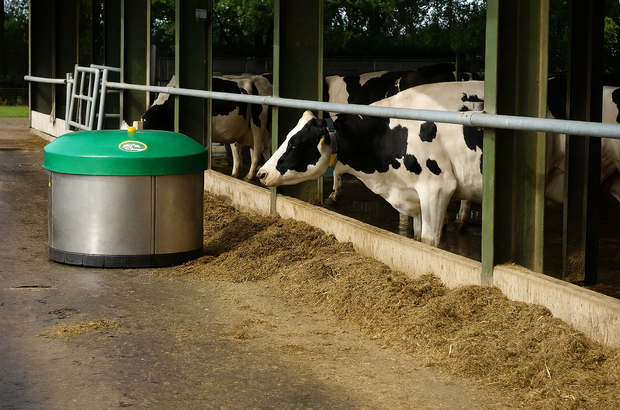
- robotic slurry collectors which automatically remove slurry from livestock housing, improving hygiene, reducing labour and helping maintain better air quality for animals and workers.
- flow-rate monitoring equipment which measures how much slurry is being applied in real time, allowing more accurate spreading. This helps avoid over- or under-application, improves nutrient use and can reduce fertiliser costs.
- low-emission spreading equipment (such as dribble bars). These apply slurry close to the ground in narrow bands rather than spraying it into the air. This reduces ammonia emissions and odour, improves nutrient retention for crops and lowers the risk of runoff into watercourses.
The full list of items and specifications can be found in the guidance.
Applications for these items are scored based on how much they improve slurry management, the environmental benefits they deliver, and how widely the items are used across the industry.
Preparing to apply
The guidance is available now, so you can decide which items best meet your business needs and start preparing your application.
The updated guidance includes:
- the full list of items, grant amounts and eligibility rules (some items have changed, so double check the specifications)
- the steps to apply
- how applications will be assessed and processed
When you apply, the contact details you enter must match the details registered in the Rural Payments service, so please check your information is up to date.
After the application window closes in late April, all applications will be reviewed and scored. As this is a competitive fund, you may not receive all or any of the funding you apply for.
Each theme has its own scoring rules to make sure public money is spent well.
Join our webinar
We will host a webinar on Thursday 12 March at 10am.
During the session, Defra and the Rural Payments Agency will cover:
- what funding is available and what is new this year
- how to apply using the Farming Investment Fund Service
- how applications are assessed
- tips for submitting a strong application
- a question and answer session
We encourage anyone planning to apply to register for the webinar.
We will share the recording in this post and on our webinars page after the event.
If you’d like to receive an e-mail notification as soon as the grant opens for applications, subscribe to the Farming Blog.




 The
The 
13 comments
Comment by George posted on
Hello,
Why does their continue to be no funding available for Goat Farming in the UK, despite having to follow the same laws as ewe and lamb trade. At the end of the day goats and sheep’s are sub species of one another. It is a great harm to the diversity of produce available to the final consumers.
Comment by Kevin Milner Farming and Estate Photography posted on
Can I apply for a grunt for a thermal imaging drone to count deer and give a report on deer management and them farms and woodland owner would be able to apply for grunts from FC and DEFRA
Thank you
Comment by The Team posted on
Hi Kevin,
Thank you for your question. Unfortunately no you can't, the item ‘FETF405 – drone for applying authorised products’ is aimed at the horticultural sector where they need large drones with tanks capable of applying authorised agricultural/horticultural products. In addition, there are specific licencing requirements for using drones beyond the visual line of sight which is why thermal imaging drones have not been included.
Hope that helps,
The Team
Comment by Jack McDill posted on
Hi
Can you confirm that sheeted gates under FETF310CA can be used for the exteroir of buildings and not anywhere else?
Many thanks
Comment by The Team posted on
Hi Jack,
Thank you for your interest in FETF26. We can confirm that FETF310CA - Sheeted gate (medium) is only eligible for funding when installed on the exterior of buildings used for housing livestock.
Hope that helps,
The Team
Comment by Lewis barraclough posted on
Hi defra team
I thought shearing trailers might have been included this year especially with the fact overseas shearers can't get a visa
Kind regards
Lewis
Comment by The Team posted on
Hi Lewis,
Thank you for sharing your suggestion. I have shared this with the FETF team. To ensure there is support available in 2026 we rolled-over the scheme and so equipment item lists are largely the same as they were in FETF25, but with 15 items removed and 4 added for AHW, and 4 new additions for Productivity.
Best wishes,
The Team
Comment by Sarah posted on
Hi Defra team,
Where have the expected average cost figures been drawn from. Have they been updated from previous rounds?
We are looking at the funding and for the robotic slurry collectors the expected average figures are off from the quotes we are receiving. £33k for an older/ smaller model or £41k for a new model. Compared to the funded expected average of under £19k We will look for other quotes but this was the market leader. Is this because the slurry collectors and scrapers have been included as one line and cost different amounts? Compared to the quoted figure of £ 18, 933 for the average cost.
Thanks, Sarah
Comment by Sarah Stewart posted on
Hello Sarah,
Thanks for your patience.
I spoke to the FETF team to confirm that we calculated an expected average cost for each item using prices from a cross-section of suppliers. For most items, including robotic slurry pushers and collectors, this average cost was established for FETF 2024.
As you noted, there is a range of costs depending on factors such as machine size, features (for example pusher or collector), level of innovation and manufacturer. Some items will therefore be lower cost, while others will be higher.
We do not stipulate particular suppliers or models, so applicants are free to purchase from any supplier as long as the equipment meets the minimum specification. This means there are inevitably instances where the grant provides a contribution towards the cost rather than covering the full intervention rate.
While FETF supports the purchase of equipment and technology, it is also designed to support the policy outcomes that the public funding is intended to deliver. In this case, the aim is quicker and more frequent removal of slurry from cattle housing, improving hoof health and ultimately helping to reduce lameness in the herd. Both slurry collectors and pushers contribute to these outcomes.
I hope this helps.
Best wishes,
Sarah
Comment by Robert Borrill posted on
Why are ducks excluded from the Animal Health and Welfare Grants? Most are produced in similar buildings and use similar equipment to broilers.
Comment by Sarah Stewart posted on
Hi Robert,
Thanks for getting in touch. This FETF grant focuses on the most commonly farmed species. There has been no amendment to the eligibility criteria for this round, so duck enterprises are not currently included.
However, the Poultry Biosecurity Review (launching later this year) will extend to ducks. This will be the first time the Animal Health and Welfare Pathway has been broadened to cover other poultry species, as it is specifically designed to address the risks associated with HPAI. This post gives some context: https://defrafarming.blog.gov.uk/2026/02/24/nfu26-how-were-building-farming-resilience/
Best wishes,
Sarah
Comment by John Hawkins posted on
Will DEFRA be re opening the Water Management Grants in 2026 please?
Comment by The Team posted on
Hi John,
No decision has yet been taken on a future round of the Water Management Grant. As with all funding opportunities, we will publish guidance on GOV.UK and share details on the Defra farming blog when a new opportunity becomes available.
Best wishes,
The Team