New guidance page for Integrated Pest Management
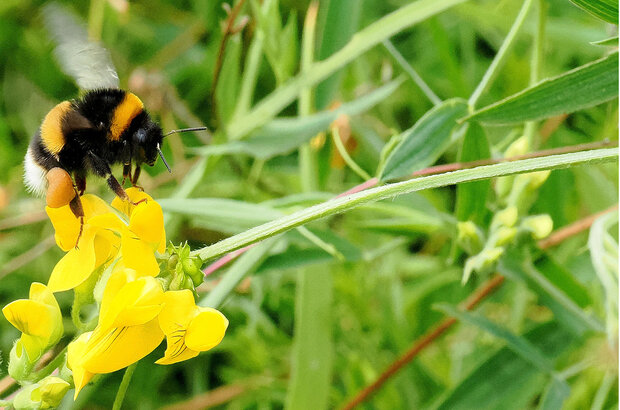
To help farmers, growers and land managers adopt different IPM approaches, we’ve published a new guidance page on GOV.UK. This post includes a link to the new guidance page and background on IPM.
We're working with farms to improve the way we regulate and support farming and the environment.
If you'd like to get in contact with the editor, leave a comment on any post.
To help farmers, growers and land managers adopt different IPM approaches, we’ve published a new guidance page on GOV.UK. This post includes a link to the new guidance page and background on IPM.
Today, Steve Reed, Secretary of State for Environment, Food and Rural Affairs, announced that the government will advance work on supply chain fairness by using the fair dealing powers in the Agriculture Act 2020. In this post, we provide background and a summary of what you can expect.
Today, at the Northern Farming Conference, Food Security and Rural Affairs Minister Daniel Zeichner shared that there will be a commissioner for the tenant farming sector in England.
To support farmers affected by Storms Babet, Henk and severe wet weather, we’re providing a one-off Recovery Payment to help cover the uninsured costs of restoring farmland. Payments will range from £2,895 to £25,000, based on the level of damage. Following our announcement this summer, we’re now able to confirm how farmers were selected for …
As outlined in the Chancellor’s announcement, we have secured a budget of £2.4 billion for the next financial year. This means we can maintain the momentum of our environmental land management (ELM) schemes, which will rise to the highest funding levels ever by 2025/26.
Today, we published a summary of recent changes to the actions and scheme information for the expanded Sustainable Farming Incentive (SFI) on GOV.UK. This post summarises the changes.
The endorsed action, GRH6: Manage priority habitat species-rich grassland, is now on GOV.UK and is available to include in your Sustainable Farming Incentive (SFI) application through the Rural Payments service. In this post, we’ll give a brief recap on endorsed actions and summarise GRH6.
It's been a while since our last post. We’re glad to be back! Over the past month, we've been welcoming Defra's new ministerial team, who are fully committed to environmental land management schemes. We've been working with them to optimise our schemes and grants for farmers, food security and nature recovery. In this post, we’ll …
By reducing the levels of endemic disease in livestock, we can increase productivity, support businesses and unlock wider benefits too — from reducing greenhouse gas emissions to slowing antimicrobial resistance. The very nature of endemic disease means it is an ongoing concern. Managing it requires the sustained effort of livestock keepers, the support of vets and …
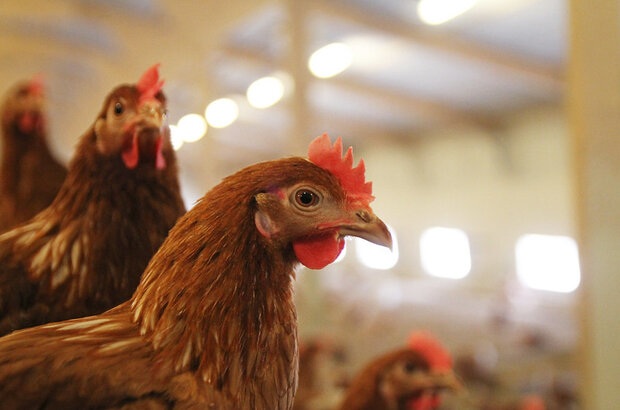
Next month, a new grant for hen housing will be available to laying hen and pullet farmers in England with flocks of 1,000 birds or more. We've just published the guidance for the grant on GOV.UK. In this post we’ll share an overview of the grant and a link to the guidance.
This blog is managed by Defra’s Farming Directorate.
We explain the reforms to agricultural policy in England.
We share what we’re working on, what we’re learning and how you can get involved. Find out more

Each month, we bring together the latest policy updates, funding opportunities, consultations, research and statistics, helping you stay informed about the issues that matter to you.

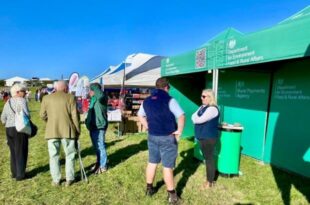
7 October Dairy Show at The Bath & West Showground, Shepton Mallet, Somerset.
10 October Alwinton Show at Gallow Law, Alwinton, Northumberland.
Find a list of the other shows and events we’re attending in 2026

Drought is putting real pressure on farmers this year. The Environment Agency is giving farmers greater flexibility by letting existing abstraction licence holders start refilling their water storage reservoirs early, a month ahead of usual schedule. This temporary change runs from 1 October to 31 October.
We recognise the difficulty in getting a long duration abstraction licence and the blocker this presents to long-term investment in sustainable abstraction practices.
As part of the package announced on 1 October to support farmers to access water, the Environment Agency have made it easier for those who don’t currently have an abstraction license to apply for licences that better support long-term investment.
Full details of the changes and information on how to be compliant can be found on the Environment Agency blog.

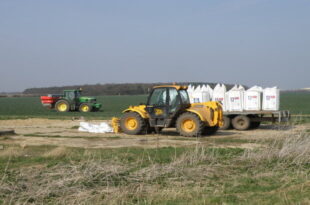
If you are ordering fertiliser for the coming season, check that it can be stored safely and securely before delivery. The action you need to take depends on the type and quantity of fertiliser.
Follow the relevant guidance to protect people, prevent contamination or deterioration, and meet the rules for storing ammonium nitrate and other substances.
Read the AIC’s guide to storing, handling & transporting ammonium nitrate and the HSE’s steps to take.

The Farming Advice Service (FAS) provides free, confidential advice to farmers and advisers.
Catchment Sensitive Farming (CSF) helps farmers in England protect water, air and soil. CSF advisers can provide advice on best practices and specific actions that will benefit your farm business and the environment.
We’ve compiled a list of organisations offering wellbeing support to those in the farming community.

Read the new guidance to understand what the changes could mean for your business and how to prepare.