A survey for the tenant farming sector

The Commissioner for the Tenant Farming Sector, Alan Laidlaw, and his team have launched a short survey to gather views on awareness of his role and the Agricultural Landlord and Tenant Code of Practice.

Alan Laidlaw is England’s first Commissioner for the Tenant Farming Sector. In this role, he works to strengthen relationships between tenant farmers, landlords, and advisers, and to support a thriving, sustainable tenanted sector.
He has over 25 years’ experience across rural, agricultural, and land management sectors, working in public, private, and charitable organisations. Alan spent more than a decade on the senior management team at The Crown Estate, managing a 250,000-acre rural portfolio, including one of the UK’s largest tenanted estates. He developed tenancy agreements and co-investment models, worked closely with tenant farmers and industry bodies, and led projects in infrastructure, renewable energy, and land transition.
Most recently, he served as Chief Executive of the Royal Highland and Agricultural Society of Scotland (RHASS), overseeing the Royal Highland Show and engaging with government and industry on sustainability, innovation, and community initiatives.
Alan studied Rural Enterprise and Land Management at Harper Adams University and qualified as a Chartered Rural Surveyor. Early in his career, he worked in rural finance and estate management. He is a founding trustee of Farmstrong Scotland, a charity supporting farmers’ wellbeing, and has served on boards and advisory councils across the UK’s agricultural sector.
The Commissioner for the Tenant Farming Sector, Alan Laidlaw, and his team have launched a short survey to gather views on awareness of his role and the Agricultural Landlord and Tenant Code of Practice.
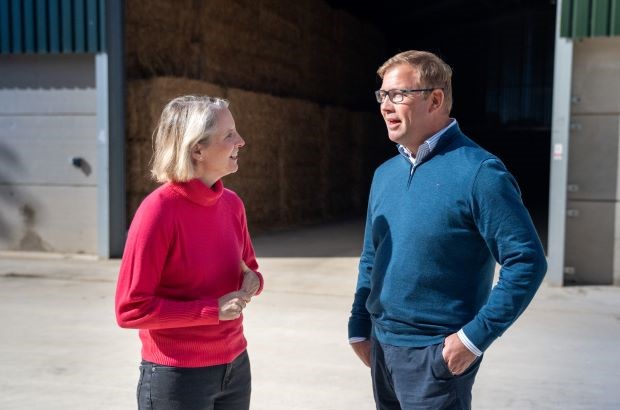
Alan Laidlaw has been appointed as England’s first Commissioner for the Tenant Farming Sector. In this guest post, he shares his background, his ambitions for the role, and how he plans to work with the sector to strengthen relationships and collaboration between tenant farmers, landlords, and advisers.

22 October How ADOPT funding can support your farm business, 11am to 12:30pm.

Each month, we bring together the latest policy updates, funding opportunities, consultations, research and statistics, helping you stay informed about the issues that matter to you.

15 October Soil Association Organic Trade Conference at the Barbican Centre, London.
30 October Borderway Agri Expo, Borderway, Rosehill, Carlisle.
Find a list of the other shows and events we’re attending.

The Environment Agency is giving farmers greater flexibility by letting existing abstraction licence holders start refilling their water storage reservoirs early, a month ahead of usual schedule. This temporary change runs from 1 October to 31 October.
We recognise the difficulty in getting a long duration abstraction licence and the blocker this presents to long-term investment in sustainable abstraction practices.
As part of the package announced on 1 October to support farmers to access water, the Environment Agency have made it easier for those who don’t currently have an abstraction license to apply for licences that better support long-term investment.
Full details of the changes and information on how to be compliant can be found on the Environment Agency blog.

The Farming Advice Service (FAS) provides free, confidential advice to farmers and advisers.
Catchment Sensitive Farming (CSF) helps farmers in England protect water, air and soil. CSF advisers can provide advice on best practices and specific actions that will benefit your farm business and the environment.
We’ve compiled a list of organisations offering wellbeing support to those in the farming community.
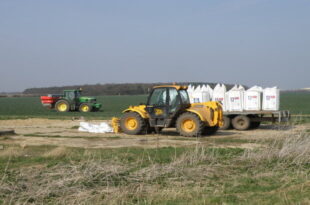
If you are ordering fertiliser for the coming season, check that it can be stored safely and securely before delivery. The action you need to take depends on the type and quantity of fertiliser.
Follow the relevant guidance to protect people, prevent contamination or deterioration, and meet the rules for storing ammonium nitrate and other substances.
Read the AIC’s guide to storing, handling & transporting ammonium nitrate and the HSE’s steps to take.