Dartmoor National Park covers 954 square kilometres of wild, open moorlands, deep, wooded river valleys, and rare wildlife.
Historically sheep on Dartmoor were farmed for wool, in addition to meat. Many of Dartmoor's towns supported the wool trade. Dartmoor had local mills where shorn wool could be processed, providing jobs for local wool spinners and weavers.
During the 19th century, coal-powered mills off Dartmoor started to produce textiles faster and cheaper than Dartmoor's wool industry. Synthetic fibres also became popular, lowering demand for natural wool.
Whilst wool production has reduced, sheep farming and grazing remains active on Dartmoor. In recent years, the cost of shearing sheep and transporting fleece has for some farmers, exceeded the market price for raw wool.
That led Twool to find innovative new uses for wool. With Farming in Protected Landscapes (FiPL) funding, Twool have trialled using Dartmoor wool as a sustainable alternative to synthetic rope in sea kelp farming.
My name’s Bea, I’m a FiPL Adviser on Dartmoor and in this blog will talk you through the project’s journey.
FiPL: from moor to sea
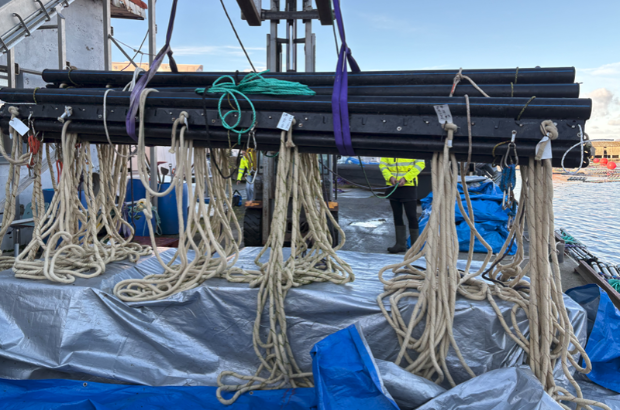
Kelp farming is the cultivation of large brown seaweeds (like sugar kelp) in coastal ocean waters. Kelp is farmed on horizontal rope lines that are submerged below the water's surface. The ropes are secured with buoys which are attached to the rope and are then anchored to the seabed. Kelp uses sunlight and nutrients from the surrounding water to grow.
Kelp is used in agriculture as an alternative to fertiliser and to help manage drought, and as an ingredient in products from skincare to packaged foods.
Twool have been innovating in the wool industry since 2012, developing a wide range of new wool-based products over that time. They wanted to build on a successful Queen’s University Belfast trial and in 2024, Twool secured FiPL funding from the Dartmoor National Park Authority (DNPA) to scale up production of rope for kelp farming, as a sustainable alternative to synthetic ropes.
At its heart, the project is collaborative, working closely with expert researchers at Queen's University Belfast, Twool as a local wool innovation business, and a number of Dartmoor farmers supplying their Whiteface Dartmoor sheep's wool. I’ll come on to talk more about collaboration in more detail.
Putting Dartmoor wool to the test
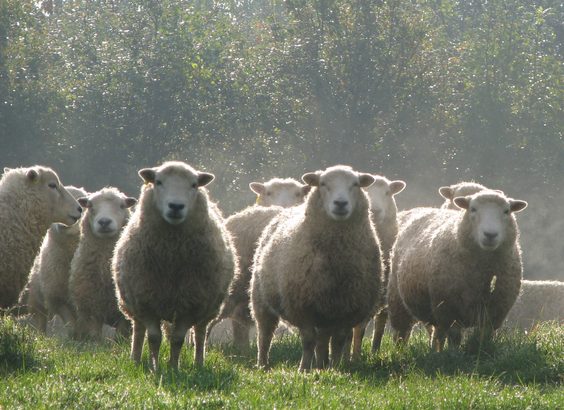
Whiteface Dartmoor sheep's wool is a strong, close lustrous wool with a durable curl/crimp and long staple length. This makes it ideal for spinning worsted (medium weight) yarn.
It’s long staple length means that this unique natural product can be braided easily into rope without getting stuck in modern milling machinery, unlike other types of sheep wool.
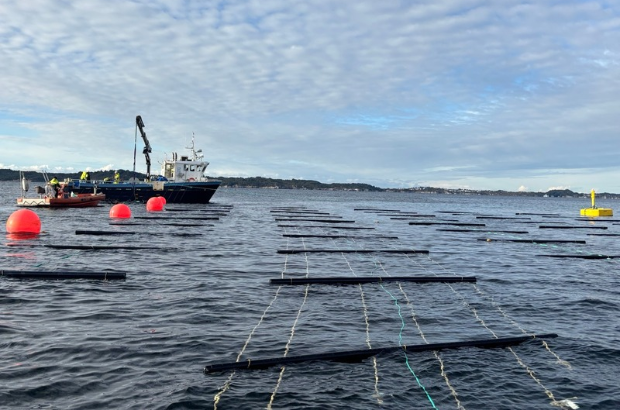
FiPL funded the processing, creation and deployment of 100m x 100m Dartmoor Whiteface wool rope lines used in Northern Ireland’s Strangford Lough in February 2024 as part of early proof of concept trials.
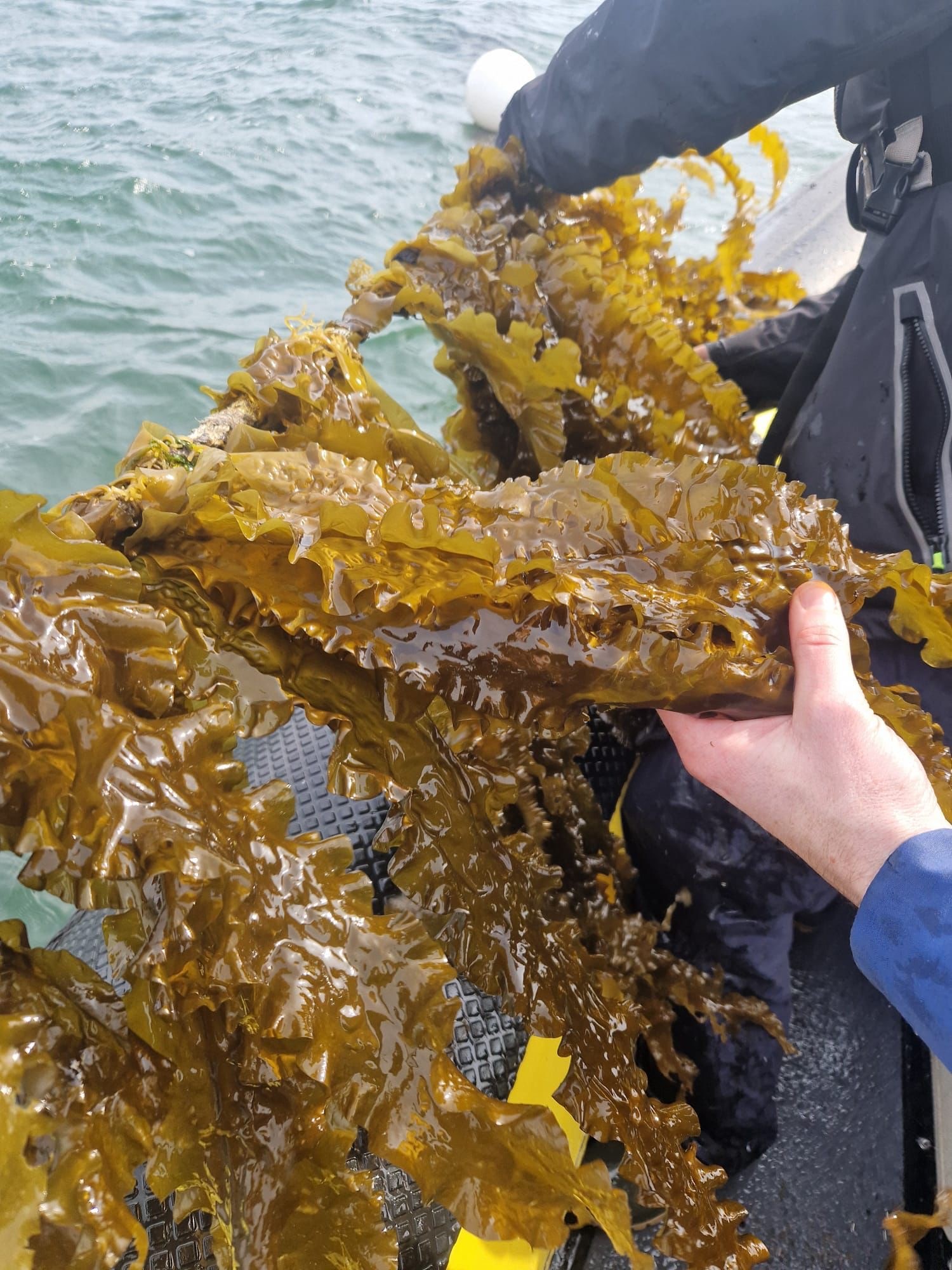
The rope was germinated with kelp seed ahead of deployment. Wool rope lines remained anchored down for six months and kelp grew well.
Strengthening a local wool supply chain
Creating a new market for Dartmoor wool requires more than developing an innovative product. It also requires the infrastructure to collect, process and store wool locally.
Since 2017, Greenwell Farm have been utilising an existing barn on site to store, pack and collect Dartmoor wool for members of the farming community, including Whiteface Dartmoor wool. Twool then buys this wool for its research trials into new uses for wool.
To the best of our knowledge, this is now the only location on Dartmoor that has the infrastructure to fully sort, press and pack wool locally.
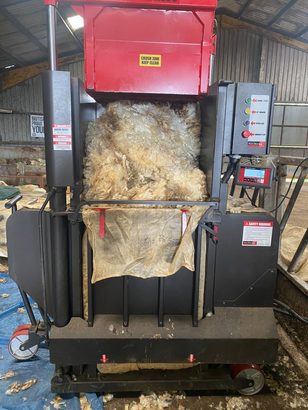
Greenwell Farm applied separately for FiPL funding to purchase a bespoke Wool Press with accompanying Weigh Bar to improve the management and efficiency of packing and storing Dartmoor sheep's wool on farm.
The farm was already an established storage hub, but additional support would enable them to build on their existing operation.
FiPL recognised the need for a designated wool storage facility on Dartmoor. Greenwell Farm was approved for funding in 2025-26. They were awarded a grant of ~£25k for their wool press and improvements to their wool processing unit. Prior to receiving funding, they stored wool on site for over 50 local farms and processed up to 50 tonnes of wool each year. This funding enables Greenwell Farm to support more smaller local farms that often get overlooked. The project also helps to increase the resilience of their own farm by allowing them to continue diversifying.
The Greenwell Farm & Twool projects, although separate, are closely connected: one was helping to provide the local infrastructure needed to process wool and the other helping create more demand for the Dartmoor wool.
Dartmoor's historic wool industry no longer exists, but through this funding we’re reviving the trade, and use of this natural material. The projects strengthen the local supply chain, build resilience and create new opportunities for Dartmoor farmers to generate income from their Whiteface Dartmoor sheep's wool.
If we can continue to build a market for Dartmoor wool, then we will add value to it as a raw material.
FiPL funding future development
FiPL supports innovative, one-off projects that:
- support nature recovery
- mitigate the impacts of climate change
- provide opportunities for people to discover, enjoy and understand the landscape and its cultural heritage
- protect or improve the quality and character of the landscape or place
The Twool project is rooted on Dartmoor and the success of this project places Dartmoor, and our farmers, at the centre of it. The initial FiPL grant provided Twool with crucial seed funding and proof of concept. This funding acted as a stepping stone, enabling them to go on to be successful in applying for a more long-term grant through Innovate UK to support the project's future development. Through Innovate UK, Twool was awarded a grant of nearly £10k for wool rope trials in 2024-25.
This is exactly what FiPL likes to see: funding which will result in outcomes that serve as evidence to apply for additional funding support beyond FiPL.
The projects contribute to maintaining the distinctive character of Dartmoor’s landscape. Both projects strongly demonstrate the ‘Place’ FiPL programme theme – helping to increase in the resilience of nature friendly sustainable farm businesses across Dartmoor, helping to build a thriving local economy.
Supporting a local wool storage facility also develops a more localised wool supply chain, reduces transport miles, fuel consumption and greenhouse gas emissions.
While FiPL operates within a defined eligibility framework, its innovative and locally tailored nature allows flexibility. Our local FiPL team are vital in providing local, contextual advice to individual projects.
Together, these projects demonstrate the importance of locally delivered grant programmes. They work at the grassroots, with local farmers and local businesses to support innovative place-based outcomes that benefit the landscape.
FiPL has been absolutely delighted to support these two creative projects, and we look forward to hearing about their successes in the future.



Leave a comment