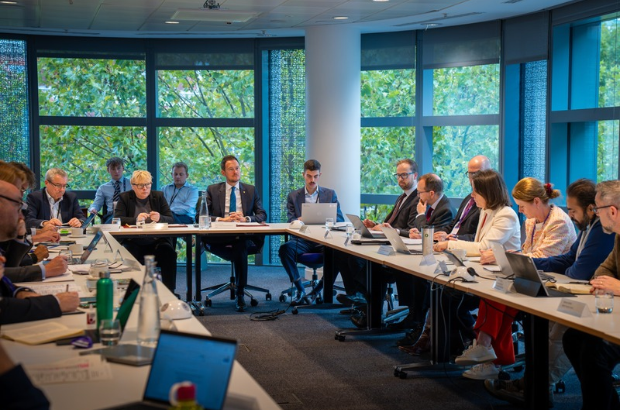
The Farming & Food Partnership Board (FFPB) was established to bring together government and industry leaders to identify strategic ways to improve productivity, profitability and food security across the farming and food sectors.
Since its launch in March, the Board has focused on tackling barriers to growth and creating the conditions for greater investment and innovation.
Working with representatives from farming, food supply chain, retail and hospitality, the Board has considered where government and industry can work together most effectively. This has focused on improving sector profitability and productivity in ways that support resilience and ensures economic and environmental outcomes can go hand in hand.
The Sector Growth Plans for horticulture and poultry are due to be published in 2027, with work continuing to be led by the sector expert groups. Through these plans, the Board has supported expert groups and supply-chain partners to develop evidence-based, market-led actions.
We will confirm plans for other Sector Growth Plans in due course.
This blog provides an update on the Board's recent work and sets out the actions that will now be taken forward to support growth across UK farming and food.
Priorities agreed at the October meeting
Planning and infrastructure, audit burdens and innovation were the focus of a package of action agreed for the poultry and horticulture sectors at the fourth Board meeting on 26 October. These actions aim to address practical barriers facing farm businesses.
The Board also endorsed proposals to tackle industry-wide challenges to building more farm reservoirs that will add water supply resilience.
Supporting growth in the poultry sector
Board members agreed for a joint working group, co-sponsored by Defra and the NFU, to conduct more work to address planning barriers affecting investment and growth in the poultry sector. This group’s work will support the development and delivery of the Poultry Sector Growth Plan.
The working group will act as a partnership between government and industry on work that includes strengthening confidence in sustainable poultry litter management and equipping planning authorities to make informed decisions on new developments. Greater clarity in planning processes can help unlock investment in modern poultry facilities.
Members also agreed that close collaboration between industry, government and regulators will be essential to finding solutions that support both environmental outcomes and growth ambitions.
Reducing audit and championing R&D for horticulture
The Board considered evidence showing fresh produce growers face overlapping audits, creating significant administrative burdens and costs.
Members agreed that industry and retailers should continue work to reduce duplication and improve efficiency. It was agreed that effective audits are critical to maintaining standards, but that greater efficiency would help free up time and resources for growers, unlocking growth and productivity.
The British Retail Consortium agreed to convene a roundtable with sector representatives and retailers to maintain confidence in assurance processes while reducing unnecessary bureaucracy for producers and processors.
Putting growers at the heart of innovation was central to the sector-led proposals for a more coordinated approach to horticultural research and development discussed by the Board. This will create opportunities for collaborative investment across the whole supply chain. It will help accelerate the adoption of new technologies, automation, robotics and other innovations to improve productivity and resilience.
Improving water resilience through on-farm reservoirs
The Board agreed that action should continue at pace to make it easier for farmers to invest in water storage, improve flexibility for abstraction and strengthen resilience to future drought conditions. Members heard about efforts across government to address barriers to reservoir construction, including planning, regulation and financing.
Defra continues to work with MHCLG and other government departments to improve the policy and regulatory environment for on-farm reservoirs.
Next steps
Taken together, these measures can help create a more productive, resilient and competitive food and farming sector.
Focus now turns to delivery. Work is already underway to take forward the actions agreed by the Board.
The agreed actions cover poultry planning barriers, reducing audit burdens in horticulture, strengthening research and innovation proposals, and improving access to water infrastructure. Officials, industry representatives and sector experts will continue developing these actions.
The Board will continue to monitor progress and identify further opportunities where collaboration between government and industry can support growth across the food and farming sectors.
The joint statement and summary of minutes from the latest meeting are published on the FFPB GOV.UK page, alongside statements from previous meetings. The Board will meet next in early 2027.
We look forward to sharing further updates as this work progresses. Please subscribe to the Farming Blog so you don’t miss our next update.


Leave a comment