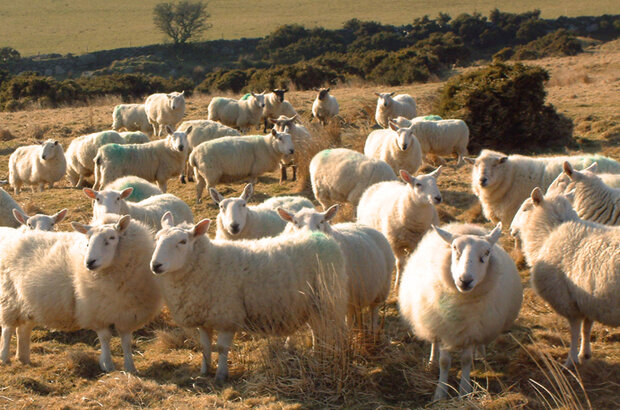
This year marks four years of the Farming in Protected Landscapes (FiPL) programme.
The programme supports farmers and land managers in England’s National Landscapes, National Parks and the Broads to farm more sustainably, protect nature, restore heritage features and make the countryside more accessible.
In this post, I’ll share the impact of that work.
In numbers
Since its launch, FiPL has supported around 11,000 farmers and land managers to deliver nearly 5,500 projects across England’s most treasured landscapes, making a real difference for nature, heritage, and communities.
Some achievements include:
- 237,000 trees planted to support biodiversity and landscape resilience
- 716 ponds created or restored to support wetland habitats and wildlife
- 781 projects to protect and improve rivers, streams and other water bodies
- 362 kilometres of new hedgerows planted, equivalent to a hedgerow from Oxford to Newcastle
- 103 kilometres of new permissive access paths created, roughly the length of the Cotswolds from north to south
- over 2,000 schools engaged
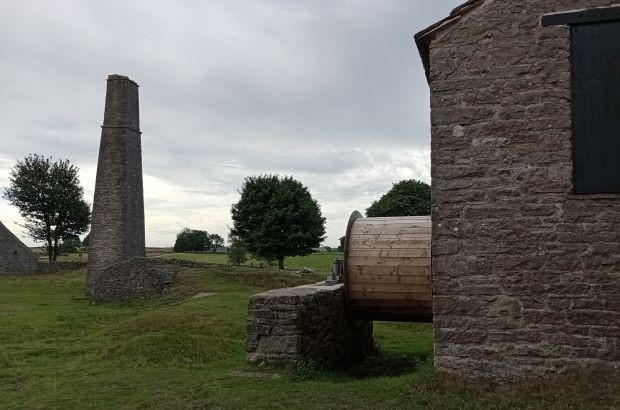
- 362 heritage assets protected, including 181 scheduled monuments
- 33 kilometres of traditional dry-stone walls restored
- 97 new farm groups created and 179 existing groups strengthened
- more than 1,300 projects to help reduce flood risk and protect communities
Together, these achievements show how the programme is working with farmers and land managers to support the care of England’s landscapes, heritage and rural communities, and improving access to and enjoyment of the natural environment.
These projects also support the priorities set out in Defra’s Environmental Improvement Plan (EIP). To date, FiPL has helped to create and restore thousands of hectares of wildlife-rich habitat, contributing towards Defra’s long-term target of 250,000 hectares by 2042.
Beyond numbers
The figures are important, but they only tell part of the story. Behind each project, wildlife benefits from new habitats, visitors discover our landscapes and school children learn where their food comes from and how to care for the countryside.
The programme has also strengthened relationships between land managers and protected landscape organisations, helping to build lasting partnerships and a shared sense of purpose.
Strong farm groups are important because they help farmers and land managers work together to deliver change at a scale that individual holdings cannot achieve alone.
By sharing knowledge, skills and experience, these groups support better decision-making, reduce duplication of effort and encourage more joined-up management across whole landscapes.
This collaborative approach is particularly effective for nature recovery, water management and flood resilience, where coordinated action across neighbouring farms delivers greater and more lasting benefits.
Over time, stronger farm groups also help build confidence, leadership and resilience within the farming community, supporting long-term stewardship of protected landscapes.
For me, the most important outcome is the commitment shown by farmers and land managers involved in FiPL. The programme supports them to develop and deliver well-designed projects, working with trusted advisers.
When I visit FiPL projects, I see work that will last, with people committed to managing and maintaining projects on their land.
Case study
I want to share an example of the programme in action.
Stag beetles are listed as near threatened and are a priority in Dedham Vale’s Nature Recovery Plan.
A group of farmers and landowners worked with Suffolk Wildlife Trust in the Dedham Vale National Landscape and Stour Valley to create 25 ‘stumperies’.
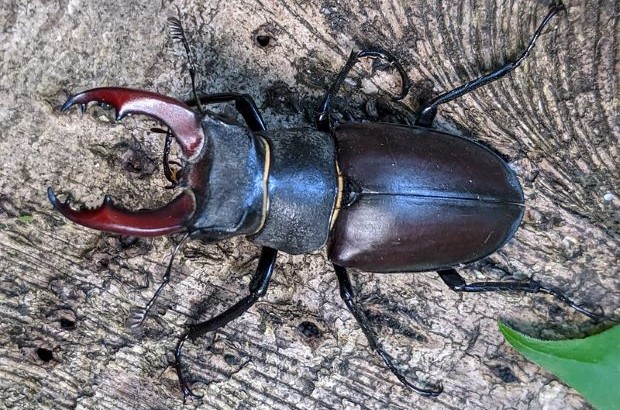
A stumpery is a simple habitat made by burying hardwood timber so it can rot over time, providing the conditions needed by stag beetle larvae. In total, 12 landowners across the Dedham Vale and Stour Valley provided sites for habitat creation, each committing land in the long-term for a species whose larvae can take up to six years to mature.
By coordinating action across a large area, the project created a connected network of habitat at a landscape scale, something no single landowner could have achieved alone.
This approach helps create connected habitat across the landscape, making it more effective than isolated action. Participants included farmers from the Dedham Vale and Stour Valley Farm Cluster, community groups and the Flatford Field Studies Centre.
The project also helped build understanding and support for nature recovery. Landowners took part in a workshop to learn more about the species. Local primary schools also took part, with children learning about the role of stag beetles in the Stour Valley. The public can learn more about the project through interpretation boards along nearby footpaths.
For me, helping people understand why this work matters is just as important as delivering the projects themselves. When members of the public encounter initiatives like the stumperies, it brings to life the role farmers and land managers play as custodians of the countryside, working every day to balance food production with care for nature.
This visibility helps build understanding and respect between farming and local communities, creating a stronger shared commitment to looking after these landscapes.
It can also encourage people to act themselves, whether that’s supporting local farming, getting involved in community projects, or creating simple habitats such as deadwood piles in their own gardens, so that nature recovery extends well beyond individual sites.
Looking ahead
The programme is scheduled to run until March 2026, and farmers and land managers in Protected Landscapes can still apply for funding. FiPL is a competitive programme, and applications may close earlier if all available funding is allocated.
FiPL’s journey so far shows what can be achieved when farmers, communities and nature work together to deliver shared benefits.
The programme forms part of the government’s wider work to improve the natural environment, including the revised Environmental Improvement Plan (EIP) published on 1 December, which sets out a 5-year approach to tackling the nature and climate crisis, improving public health and supporting sustainable growth.
To keep up to date with the work of the farming and countryside programme and projects like these, you can subscribe to the Farming blog.



 The
The 
9 comments
Comment by Bob Milton posted on
Does this apply to the proposed new areas associated with the Surrey Hills National Landscape
Comment by The Team posted on
Hi Bob,
Thanks for getting in touch. Natural England’s assessment of expanding the Surrey Hills National Landscape is still ongoing and government has not yet made a decision.
If the Surrey Hills National Landscape is expanded, farmers and land managers within the new area would be able to apply for Farming in Protected Landscapes (FiPL) funding.
In the meantime, farmers and land managers outside protected landscapes may still be able to access FiPL funding, as long as their project delivers benefits for a protected landscape or supports the objectives of the protected landscape body.
If you’d like to discuss potential project opportunities, please contact the Surrey team: fipl@surreycc.gov.uk
Best wishes,
The Team
Comment by Teresa Finch posted on
Great news to hear that the scheme will be extended for a further 3 years !
Comment by The Team posted on
It is, it is! We’re excited to receive more applications and to see the outcomes of even more great projects over the coming years.
Best wishes,
The Team
Comment by Richard Watson posted on
Hedgerows provide excellent habitat for birds and wild animals, but not if they are slashed annually with a mechanical flail to keep them 'neat and tidy'. Can landowners be required under the terms of FiLP only to cut hedgerows every second or third year (except, perhaps, where they border a public road)?
Comment by The Team posted on
Hi Richard,
Thanks for getting in touch. FiPL funds one-off projects such as hedge planting, laying, and restoration. All projects are covered by agreements that require farmers and land managers to carry out appropriate ongoing maintenance to ensure long-term environmental outcomes.
In England, there are rules in place to protect hedgerows during the main bird nesting season. In most cases, farmers and land managers must not cut or trim hedgerows between 1 March and 31 August. This helps protect nesting birds and other wildlife that rely on hedgerows in spring and summer.
There are some limited exceptions where cutting is allowed during this period, for example where it is needed for road safety or public access, for certain traditional management practices like hedge laying, or in specific circumstances linked to crop production or health and safety. Outside the restricted period, hedgerows can be cut and managed, but existing wildlife protection laws still apply, meaning nests must not be disturbed at any time.
You can find the cutting and trimming rules here: https://www.gov.uk/guidance/hedgerow-management-rules-cutting-and-trimming
Hedgerow management and protection is regulated by the RPA, so if you're concerned that hedgerow cutting rules are being breached, you can report this to them: https://www.gov.uk/guidance/hedgerow-management-rules-cutting-and-trimming#contact-details
The rules on cutting are separate from those covering hedgerow removal, which usually require permission from the local authority: https://www.gov.uk/guidance/countryside-hedgerows-regulation-and-management#report-a-suspected-hedgerow-offence
Hope that helps,
The Team
Comment by Richard Watson posted on
Thanks for the reply. It's not that I am concerned that hedge-cutting regulations are actually being breached, simply that the practice in West Cumbria is to slash hedges with a mechanical flail every single winter, causing damage and the eventual destruction of a perfectly good hedge. Presumably this is perfectly legal if done at the right time of year. My suggestion is that this practice should be discouraged or made illegal and hedges be allowed to grow a little and only be cut every few years. Ideally, of course, they would be laid professionally once every 20 years or so and not cut at all in between. You do see this on some farms, but sadly it is the exception, not the rule. The general rule is annual flailing in the name of neat-and-tidy, which is such a waste.
Comment by The Team posted on
Hi Richard,
Thank you for clarifying your concern. You are right, some practices that prioritise a neat appearance can undermine hedge structure, longevity and their value for wildlife. We've designed our policies to encourage better hedge management through guidance and incentives, alongside regulation.
We now have over 20,000 Environmental Land Management agreements in place, contributing to the management of more than 60,000 miles of hedgerows across England. Where farmers and land managers enter into agreements to manage their hedgerows, they must follow guidance on when and how hedges are cut, in addition to complying with the Hedgerow Regulations.
For example, Sustainable Farming Incentive guidance encourages hedges to be cut incrementally or on rotation to provide habitat for wildlife, rather than being cut annually: https://www.gov.uk/find-funding-for-land-or-farms/chrw2-manage-hedgerows#when-to-do-it
Under Countryside Stewardship Higher Tier, cutting frequency must be agreed with a Natural England adviser, which can include allowing hedgerows to grow uncut for extended periods or managing them through traditional techniques such as hedge laying: https://www.gov.uk/find-funding-for-land-or-farms/chrw4-manage-hedgerows#actions-aim
Many farmers and land managers already follow these approaches, often with positive outcomes for both farm resilience and biodiversity, but we recognise that changing long-established practices takes time.
We share all comments with the policy teams working on this area. Your feedback is helpful in informing how we continue to promote and encourage more sustainable hedge management.
Best wishes,
The Team
Comment by Richard Watson posted on
Thank you for taking the time to understand my concern and provide such a detailed and encouraging reply.
Kind regards,
Richard Watson